
Kazakhstan to host talks between Iran, world powers
By Sara Rajabova
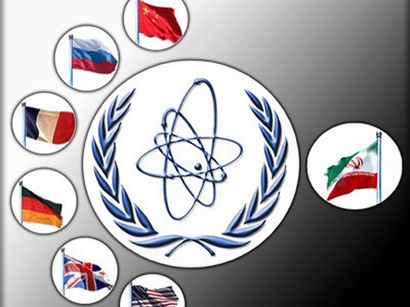
Iranian Foreign Minister Ali Akbar Salehi confirmed on Sunday that the next round of comprehensive talks between Iran and Group P5+1 comprising Russia, China, France, the UK, and the US plus Germany would be held in Kazakhstan on February 25.
Salehi made the announcement in his speech on the third day of the 49th annual Munich Security Conference in Germany.
World leaders and diplomats have gathered in Munich to attend the annual security conference, which opened last Friday.
EU officials have accused Iran of dragging its feet in weeks of haggling over the date and venue for new talks.
Salehi said Iran had "never pulled back" from the stuttering negotiations with the six powers. "We still are very hopeful. There are two packages, one package from Iran with five steps and the other package from the (six powers) with three steps."
Kazakhstan said it was ready to host the talks in either Astana or Almaty.
If a consensus is reached with all interested parties on holding a meeting of the 'Group of Six' on the Iranian nuclear program in Astana, it will be held on Feb.25, official representative of the Central Communications Service under the President of Kazakhstan, Altai Abibullayev, said on Monday.
He said Kazakhstan is ready to ensure all the conditions for the work of the "Group of Six" representatives.
Earlier, Foreign Minister Yerlan Idrisov said that Kazakhstan is ready to provide a platform and ensure comfortable conditions for holding negotiations between the international community and Iran on the country's nuclear program.
But the following is interesting: why was it decided to hold the talks in Kazakhstan?
Iran and the five permanent members of the UN Security Council plus Germany -- known as the P5+1 group -- have held several rounds of talks with main focus on the Iranian nuclear energy program. The six powers and Iran have held three rounds of talks since April of the last year in Turkey, Iraq and the last round of negotiations in Russia.
According to the Trend news agency's Iran news service chief Dalga Khatinoglu, holding the nuclear discussions in these countries is not a coincidence.
Turkey and Iraq both are Muslim countries and have friendly relations with Iran. Besides, Russia is a staunch ally of Iran.
Also, before Kazakhstan, Iran suggested Egypt as the venue, but the P5+1 countries rejected the latter as a host country of the nuclear talks.
Egypt is also a Muslim country and for a while Iran has been trying to warm up bilateral relations and hopes for alliance with this country.
As for Kazakhstan, it can play an important role for Iran in the future. Firstly, Kazakhstan accounted for 37 percent of the world's uranium production and remained the world's leading uranium producer in 2012.
Kazakhstan has 15 percent of the world's uranium resources. According to state-owned nuclear holding company Kazatomprom's report published in January, Kazakhstan increased uranium production from 19,450 tons in 2011 to 20,900 tons in 2012.
Thus, it seems that Iran's choice of countries for hosting the nuclear talks has some aims.
On the other hand, Iran said it was open to a U.S. offer for direct talks on its nuclear program.
Minister Salehi said a suggestion on Saturday by U.S. Vice President Joe Biden that Washington was ready for direct talks with Iran if Tehran was serious about negotiations was a "step forward".
"We take these statements with positive consideration. I think this is a step forward but ... each time we have come and negotiated it was the other side unfortunately who did not heed ... its commitment," Salehi said.
Besides, Germany said it will help pave the way for Iran-U.S. direct talks, expressing hope that Iran would accept the offer of bilateral talks.
"Direct talks between Washington and Tehran are in the interest of all of our security, also in our interests as Europeans, so we will make our contribution to creating the necessary atmosphere," German Foreign Minister Guido Westerwelle said after a meeting with EU foreign policy chief Catherine Ashton.
The six powers want to rein in Iran's uranium enrichment program to ensure it is geared only for civilian energy, through a mix of diplomacy and sanctions. Iran denies Western assertions it is seeking nuclear weapons capability.
Tehran stresses that the country has always pursued a civilian path to provide power to the growing number of Iranian population, whose fossil fuel would eventually run dry.
Tehran is now under four rounds of UN Security Council sanctions for turning down the West's calls to give up its right of uranium enrichment.
Tehran has dismissed the West's demands as politically tainted and illogical, stressing that sanctions and pressure merely consolidate the Iranians' national resolve to continue the path.
Here we are to serve you with news right now. It does not cost much, but worth your attention.
Choose to support open, independent, quality journalism and subscribe on a monthly basis.
By subscribing to our online newspaper, you can have full digital access to all news, analysis, and much more.
You can also follow AzerNEWS on Twitter @AzerNewsAz or Facebook @AzerNewsNewspaper
Thank you!