
Iran says will allow inspection of Parchin site if its right to enrich uranium is recognized
By Sara Rajabova
Iran will allow inspectors to visit the Parchin military complex if Western countries recognize its right to enrich uranium, Iranian Foreign Ministry spokesman Ramin Mehmanparast was quoted as saying at a press conference.
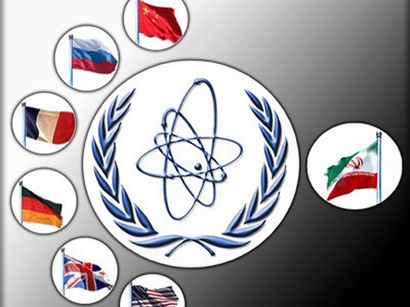
Mehmanparast, speaking at the ceremony devoted to the assassinated nuclear scientists of Iran, expressed hope for reaching results between Iran, P5+1 group -- Britain, China, France, Russia and the United States plus Germany -- and the International Atomic Energy Agency (IAEA), the UN's nuclear watchdog.
Secretary of Iran's Supreme National Security Council Saeed Jalili said earlier in January that Iran has agreed to hold talks with the six major powers about its atomic program this month but the date and venue has yet to be decided.
The six powers have failed to achieve a breakthrough in three rounds of talks since April. But neither side has been willing to break off totally, partly because of concern this could lead to war if Israel attacked its arch-foe.
The powers last met Iran for talks in Moscow. That meeting was followed by low-level technical talks in Istanbul.
Mehmanparast also said Iran is prepared to remove concerns of the IAEA if it reaches an agreement with the agency that ensures Iran's full rights to peaceful nuclear activities, Iran Daily newspaper reported.
"If we reach an agreement whereby Iran's nuclear rights are fully recognized, meaning the right to possess nuclear science and complete nuclear cycle for peaceful goals, Iran will be ready to take necessary measures to allay concerns expressed by the IAEA," he said.
While IAEA officials routinely inspect Iran's declared nuclear facilities, such as enrichment plants at Natanz and Fordow, existing treaty arrangements do not compel the country to open up peripheral facilities such as Parchin.
Mehmanparast reiterated Iran's argument that the evidence given to the IAEA by unnamed countries is not genuine, underlining that Iranian authorities, despite their requests, have not been given access to the documents. "Throughout the years the agency has never been able to share this intelligence with us and it hasn't been authenticated," he said.
The head of the Atomic Energy Organization of Iran Fereydoun Abbasi Davani said Wednesday that the future talks will yield positive outcome if representatives of the IAEA recognize Iran's rights, IRNA news agency reported.
"The fresh talks, to be held on January 16, will have fruitful outcome if the UN nuclear watchdog is determined to lighten the realities in a fair manner and recognizes the rights of the Iranian nation," Davani stressed, saying IAEA representatives should enter future talks without prejudgment.
Iranian officials have repeatedly stated that Iran will not give up its nuclear rights, reaffirming commitment to the Non-Proliferation Treaty (NPT) and the IAEA.
The United States, Israel and some of their allies have repeatedly accused Iran of pursuing non-civilian objectives in its nuclear energy program.
Iran rejects the allegations, arguing that as a committed signatory to the NPT and a member of the IAEA, it has the right to use nuclear technology for peaceful purposes.
The IAEA has conducted numerous inspections of Iran's nuclear facilities but has never found any evidence showing that Iran's civilian nuclear program has been diverted to nuclear weapons production.
Here we are to serve you with news right now. It does not cost much, but worth your attention.
Choose to support open, independent, quality journalism and subscribe on a monthly basis.
By subscribing to our online newspaper, you can have full digital access to all news, analysis, and much more.
You can also follow AzerNEWS on Twitter @AzerNewsAz or Facebook @AzerNewsNewspaper
Thank you!