
Talks on Iran’s nuclear program to continue in January
By Sara Rajabova
The long-standing negotiations over the Iranian nuclear program between Iran and the United Nations nuclear watchdog are due to continue next year.
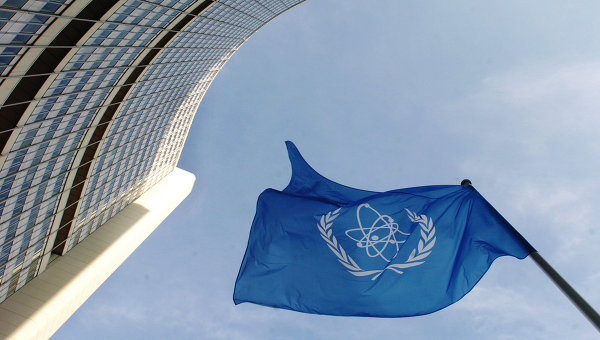
Iran and the International Atomic Energy Agency have agreed to hold the next round of talks in Tehran in January 2013, Iran's Ambassador to the IAEA Ali Asghar Soltanieh said on Thursday, Press TV channel reported.
After the one-day negotiations between Iran and IAEA delegates in the Iranian capital, Soltanieh said that the sides had agreed to have the next meeting on January 16.
He said the latest round of talks was constructive and progress was made, adding that the negotiations were "intensive". However, Soltanieh didn't mention on which issues the progress was made.
Soltanieh noted that the sides failed to reach agreement over a visit requested by the IAEA delegation to the Parchin site, which is located outside Tehran.
Iran again denied allowing IAEA experts to visit the suspected nuclear site where nuclear explosions were simulated according to Western allegations.
The IAEA says progress was made in Thursday's talks between the agency and Iran.
"We were able to make progress," Herman Nackaerts, IAEA Deputy Director General, told reporters at the Vienna airport on Friday upon return from Tehran.
Nackaerts added that he expects to reach a deal with Iran in January on the remaining issues related to the country's nuclear energy program.
Before the Tehran visit, Nackaerts said that his team would try to secure an agreement on access to sites, officials and documents involved in projects that the agency has linked with possible nuclear weapons development.
The IAEA wants an agreement that would enable it to resume a long-stalled investigation into suspected atom bomb research in Iran.
Prior to the Thursday negotiations, the sides had met and talked in Vienna on August 24, 2012.
Along with the IAEA-Iran talks, the P5+1 group of six major world powers and Iran are considering to meet again to hold talks over Iran's nuclear program.
Ali Bagheri, deputy secretary of Iran's Supreme National Security Council, and EU foreign policy chief Catherine Ashton's aide Helga Schmid have held phone talks regarding the next meeting between Iran and the P5+1 group, ISNA news agency reported on Thursday.
However, the diplomats said it is not yet clear if the negotiations would be held before or after New Year.
"We hope soon to continue negotiations with Iran over its nuclear program, and address international concerns, and try to find a diplomatic solution to the problem," Ashton's office said in a statement.
On the other hand, the U.S. has imposed more sanctions on Iran over its disputed nuclear program. The U.S. Treasury announced further sanctions on Thursday against seven more Iranian companies and five more individuals convicted of infringement upon the regime of non-proliferation of nuclear weapons, freezing any assets they may have in the U.S.
"So long as Iran continues to pursue a nuclear program in defiance of multiple UN Security Council resolutions, the U.S. will target those involved in Iran's illicit enrichment activities," the Treasury Department said in a statement.
The Treasury Department also said the newly announced sanctions were aimed at targeting international procurement operations of the Atomic Energy Organization of Iran, the Iran Centrifuge Technology Company, and Iran's uranium-enrichment program.
US Treasury Under Secretary David Cohen said that since Iran continues to develop its nuclear program amid the numerous resolutions of the UN Security Council, the U.S. will continue to cooperate with foreign partners in order to increase pressure on Iran.
Besides, Iran's ally Russia said it has fully complied with all UNSC resolutions on Iran, but considered unacceptable unilateral sanctions against Tehran imposed by certain states.
Russia's UN Ambassador Vitaly Churkin, speaking on Thursday about the effectiveness of the sanctions and the unity of the international community over settlement of the situation around the Iranian nuclear program, said that in some cases, such unilateral measures "have an extraterritorial character that is absolutely unacceptable from the international legal point of view," RIA Novosti news agency reported.
Russia supports a diplomatic settlement of the issue and believes there is no alternative to a negotiated solution of the problem.
The United States, Israel, and Western states have repeatedly accused Iran of pursuing non-civilian objectives in its nuclear energy program.
Iran argues that as a signatory to the nuclear Non-Proliferation Treaty and a member of the IAEA, it is entitled to develop and acquire nuclear technology for peaceful purposes.
Here we are to serve you with news right now. It does not cost much, but worth your attention.
Choose to support open, independent, quality journalism and subscribe on a monthly basis.
By subscribing to our online newspaper, you can have full digital access to all news, analysis, and much more.
You can also follow AzerNEWS on Twitter @AzerNewsAz or Facebook @AzerNewsNewspaper
Thank you!