
Armenia's stance on conflict threat to peace, regional development
By Sabina Idayatova
Armenian authorities' non-constructive position impedes a peaceful
settlement of the long-lasting Nagorno-Karabakh conflict with
Azerbaijan, creating a major obstacle for reaching a final decision
as well as regional development and stability.
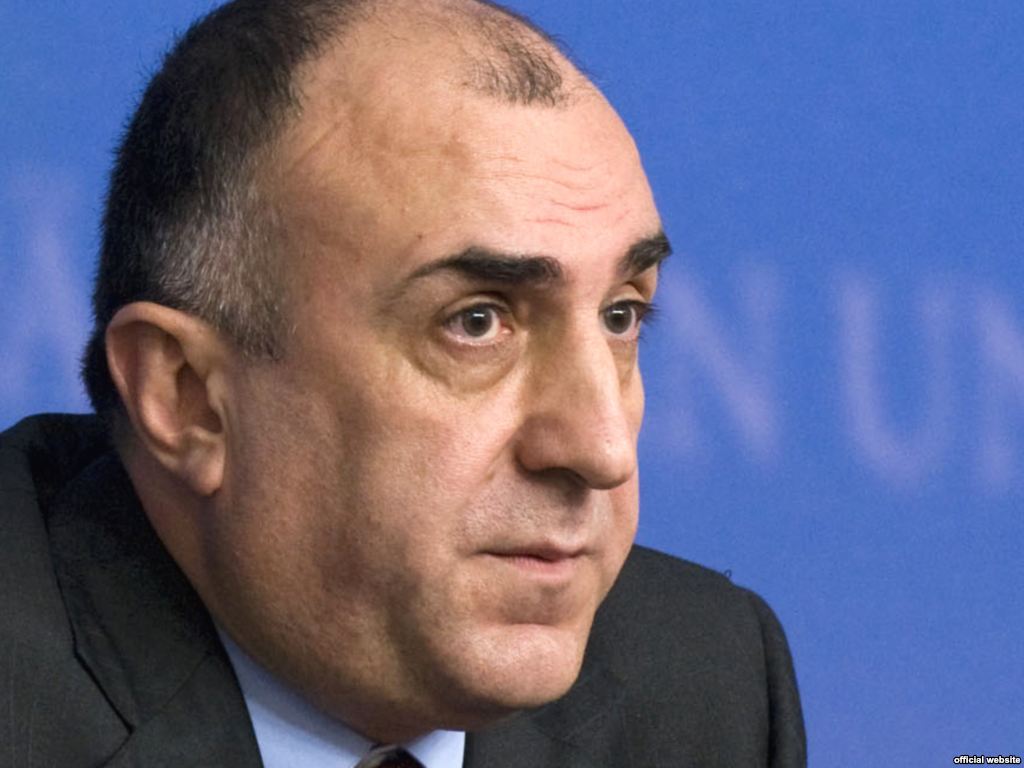
During the latest meeting of the OSCE Minsk Group co-chairs, a team of international mediators brokering Nagorno-Karabakh settlement, and the foreign ministers of Armenia and Azerbaijan, no joint statement was made due to Yerevan's non-constructive stance, Azerbaijani Foreign Minister Elmar Mammadyarov has told journalists. He was commenting on the results of the Minsk Group co-chairs' meeting held on the sidelines of the 19th annual meeting of the OSCE Ministerial Council in Dublin last week.
"Unfortunately, because of Yerevan's non-constructive position, which has a habit of renouncing its previous agreements, we could not agree on a joint statement of the co-chairs and foreign ministers," Mammadyarov said.
He stressed that the absence of Yerevan's political will and decisive steps is due to the presidential elections to be held in Armenia in February 2013.
Russian Foreign Minister Sergey Lavrov, US Secretary of State Hillary Clinton, and Minister Delegate for European Affairs of France Bernard Cazeneuve called upon the parties to the Nagorno-Karabakh conflict in Dublin to demonstrate the political will needed to reach a peaceful settlement.
Mammadyarov noted with regret that the co-chairs of the Minsk Group did not display enough persistence in this regard.
The European Union also expressed concern over the lack of progress in the settlement of the Nagorno-Karabakh conflict, in a statement at the ministerial meeting in Dublin. The statement says that the Karabakh conflict, as well as the protracted conflicts in Moldova and Georgia, continue to pose a serious threat to international security.
"The European Union stresses the importance of renewed impetus to substantial progress in resolving protracted conflicts on the way to 2015," the statement says.
Armenia's unconstructive position was in focus at the political consultations in Baku last Saturday between Deputy Foreign Minister Khalaf Khalafov and a French delegation led by Eric Fournier, Director of the Continental Europe Department at the Foreign Ministry.
Speaking about the current stability in Azerbaijan and the successfully implemented reforms, Khalafov said the conflict with Armenia is a threat to Azerbaijan and to the entire region. Khalafov said Baku supports a peaceful settlement of the long-standing conflict, but emphasized that peace talks lasting for 20 years have been fruitless so far.
Khalafov noted that Armenia ignores resolutions and decisions passed by international organizations and that more pressure should be put on the country so that it would demonstrate a constructive approach.
The deputy minister said that talks should be held "not for the sake of negotiating", and brought to the attention of France that the efforts of the Minsk Group should be directed to the liberation of the occupied territories, stressing the need of taking substantial steps.
On the same day, Minister Mammadyarov met with Fournier. Mammadyarov condemned Armenia's long-standing occupation of Azerbaijani land.
"The main obstacle to the settlement of the Armenia-Azerbaijan conflict over Nagorno-Karabakh is the presence of Armenian armed forces in the occupied territories of Azerbaijan," he said.
Mammadyarov also said starting a withdrawal of Armenian troops from the occupied territories would open up opportunities for a settlement of the conflict. He aslo noted the necessity of organizing meetings between the Azerbaijani and Armenian communities of Nagorno-Karabakh.
Azerbaijan and Armenia have been locked in conflict for over two decades, which emerged over Armenian territorial claims against its South Caucasus neighbor. Since a brutal war in the early 1990s, Armenian armed forces have occupied 20 percent of Azerbaijan's territory, including Nagorno-Karabakh and seven surrounding regions. A fragile ceasefire has been in place since 1994, but long-standing efforts by the US, Russian and French mediators have been largely fruitless so far.
Armenia has not yet implemented the U.N. Security Council's four resolutions on its pullout from the neighboring country's territories.
Hurdle to regional development
The delay in the settlement of the Karabakh conflict negatively affects social and economic development in the region as well as infrastructure.
Azerbaijani Deputy Transport Minister Musa Panahov said at the Caspian Forum held in Istanbul last week that the Armenian occupation of Azerbaijani territory is an obstacle to the use of the transit potential of the whole South Caucasus, the development of economic and cultural relations between the countries of the region.
According to Panahov, the occupation and its consequences -
complete destruction of more than 240 kilometers of rail lines and
3,000 kilometers of highways as well as destruction of other
infrastructure facilities - have significantly reduced the transit
capacities of Azerbaijan and international carriers.
Here we are to serve you with news right now. It does not cost much, but worth your attention.
Choose to support open, independent, quality journalism and subscribe on a monthly basis.
By subscribing to our online newspaper, you can have full digital access to all news, analysis, and much more.
You can also follow AzerNEWS on Twitter @AzerNewsAz or Facebook @AzerNewsNewspaper
Thank you!