
Muslim pilgrims start annual haj
Sara Rajabova
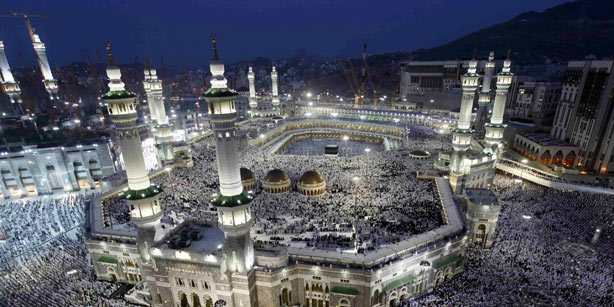
Nearly 3 million Muslim pilgrims started the first phase of the annual haj on Wednesday, travelling through packed streets from Mecca's Grand Mosque to the enormous camp at Mina just outside the Saudi Arabian city.
The Grand Mosque, the focal point of the Islamic faith, was teeming with joyful pilgrims at dawn wearing the simple white folds of cloth prescribed for haj, many of them having slept on the white marble paving outside.
All Muslims must face towards the Kaaba, the huge black cube at the centre of the Grand Mosque, five times a day for prayer, making a visit to the sanctuary a powerful experience. Pilgrims must circle it seven times when they arrive in Mecca.
In a dense sea of humanity, all clad in the same simple white robes, the pilgrims who were unable to get onto a new rail link were packed into 18,000 buses provided by the city or perched on the roofs of trucks. Others walked the 5 km to Mina in late afternoon temperatures of 35 degrees Celsius.
On Thursday the pilgrims will travel a further 7 km to Mount Arafat, a rocky hill where they must stand in prayer, a moment many Muslims see as the climax of the haj.
They will then spend the evening on the plains of Muzdalifah where they must pick up pebbles used the following day to hurl at three large walls representing Satan in Jamarat, between Mecca and Mina.
Haj must be performed at least once in their lifetime by all Muslims capable of making the expensive, difficult journey.
The mayor of Mecca, Osama Fadl al-Bar, said he expected the number of pilgrims this year to be close to 3 million people, including those from inside Saudi Arabia. The Interior Ministry said 1.75 million had arrived from abroad, Todays Zaman reported.
This year, about five million people from around the world visited Saudi Arabia for a pilgrimage.
On the other hand, Saudi Arabia's authorities have refused to allow 20,534 foreign nationals a pilgrimage to Mecca and Medina for various reasons and returned them to their home country.
The main reasons were lack of appropriate clothing for the Hajj (ehram), as well as fake visas and passports.
In some previous years the haj has been marred by disasters, including stampedes and tent fires in which hundreds were killed. But the authorities have invested heavily in better infrastructure and there have been no such incidents since 2006.
Here we are to serve you with news right now. It does not cost much, but worth your attention.
Choose to support open, independent, quality journalism and subscribe on a monthly basis.
By subscribing to our online newspaper, you can have full digital access to all news, analysis, and much more.
You can also follow AzerNEWS on Twitter @AzerNewsAz or Facebook @AzerNewsNewspaper
Thank you!