
Change of power expected to shift Georgian policy toward neighbors
By Sabina Idayatova
The October 1 parliamentary election in Georgia was a pleasant surprise to all. The world community witnessed a civilized and legitimate change in power in the post-Soviet state, which gained independence from the USSR in 1991.
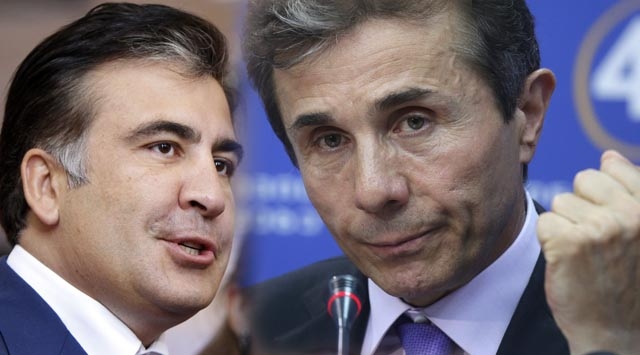
Georgia's parliamentary poll, the seventh in the country's post-independence history, was held through a mixed election system with the participation of 14 parties and two political blocs. Election tallies showed that opposition coalition Georgian Dream led by billionaire businessman Bidzina Ivanishvili won 85-seat majority in parliament, leaving 65 seats to President Mikheil Saakashvili's United National Movement. A day after the election, President Saakashvili admitted his party's defeat and announced a transfer of power to a new government to be formed by the parliamentary majority.
The parliament will have more authority in 2013, in accordance with the amendments made to the Constitution on October 15, 2010. The president will have significantly limited power, while the Prime Minister will have greater authority in the Georgian government.
In a meeting with President Saakashvili, European Union representatives and diplomats, in particular, head of EU Delegation to Georgia Philip Dimitrov, EU Special Representative for the South Caucasus and the crisis in Georgia Philip Lefort and head of EU Monitoring Mission in Georgia, Andrzej Tishkevich, stressed that the elections held in Georgia were democratic and showed that the country was committed to building a democratic state.
According to the EU representatives, Georgian people were able to freely express their will and make a choice, and the government confirmed its commitment to democratic ideals, freedoms and European values.
"The preliminary results showed that the opposition gained victory and is to form the new government," Saakashvili said in a televised speech. "I, as president, should help them with this."
Ivanishvili's victory is the most significant change in Georgia's domestic political dynamics in roughly a decade. However, Ivanishvili -- a retail and business tycoon -- has no previous political experience, and his plans for the parliament remain unclear, analysts say.
Georgia is known for its continuous positive attitude toward EU membership and rapprochement towards NATO.
Euro-Atlantic integration and normalization of relations with Russia are the main strategies of election winner Ivanishvili, a Prime Minister nominee.
"Our main strategy is Euro-Atlantic integration, and we do not intend to change this strategy, continuing our aspirations towards the European Union and the North Atlantic Alliance. As for Georgia's EU and NATO membership, in the initial stage it will be quite contradictory, but the country needs to make it work.
"We need to learn from the experience of other countries, such as the Baltic states, which have entered NATO and the EU, while managing to normalize their relations with Russia. This is going to be difficult but not impossible," Ivanishvili told Euronews TV channel.
Ivanishvili stressed that he will refuse from Saakashvili's policy that envisions Georgia's role as a global player.
"This is a wrong policy, we are going to become a regional player and improve relations with our neighbors, including Russia. We would certainly like to have strategic partners, including the U.S. But we also want good relations with neighbors, the neighborhood policy is our priority," he noted.
Ivanishvili will pay his first foreign visit in the capacity of Georgia's prime minister to Brussels, instead of his initially intended trip to the United States. He decided to visit Europe after receiving an official invitation from European Commission President Jose Manuel Barroso.
US Secretary of State Hillary Clinton said in a statement that the parliamentary election was an historic day for all Georgians and for Georgia's democratic future.
"We look forward to working with the new parliament, as well as the cabinet and president of Georgia to build upon our strong relationship and create a brighter future for the Georgian people," the statement said.
The Ivanishvili government's key priority is to restore good neighborliness relations with Russia both politically and economically.
He said normalizing relations with Russia will not be easy and will take a long time.
"Firstly, we should work on establishing cultural and trade relations," Ivanishvili says. "Only after that should we focus on the issue of the territorial integrity of our country, maintaining friendly relations with Russia."
Georgian policy toward Islamic neighbors will remain unchanged. Georgia and Azerbaijan have maintained cordial relations since the first establishment of their independent states in 1918. Relations between the two countries have always been very strong historically. The two countries are connected by several important regional projects, including the Baku-Supsa and Baku-Tbilisi-Ceyhan oil pipelines and Baku-Tbilisi-Erzurum gas pipeline. The two South Caucasus countries are also working on the Baku-Tbilisi-Kars railway, which will connect them to Europe. Azerbaijan is also one of the biggest trading partners of Georgia.
Turkey is also the main strategic neighbor of Georgia due to the two countries' geographic affinity. Bilateral economic and trade relations are well developed along with political ties. Thanks to the free trade agreement between the two countries, Turkey has been Georgia's biggest trade partner since 2007. Consequently, the two countries' bilateral trade reached $1.104 billion in 2010, making up 16.5 percent of Georgia's total foreign trade. Turkish investments in Georgia between 1997 and 2010 reached $682.3 million.
Turkey and Georgia are cooperating not only on bilateral level, but are also implementing regional projects like the Baku-Tbilisi-Ceyhan oil pipeline, the Baku-Tbilisi-Erzurum natural gas pipeline and the Baku-Tbilisi-Kars railway, which is expected to be fully commissioned in 2014.
Ivanishvili's aspirations of establishing good neighborhood relations promise more stability and peace to the South Caucasus region, which has long been suffering of inside and international ethnic conflicts. And time will show whether or not Georgia will be able to overcome these tough hurdles.
Here we are to serve you with news right now. It does not cost much, but worth your attention.
Choose to support open, independent, quality journalism and subscribe on a monthly basis.
By subscribing to our online newspaper, you can have full digital access to all news, analysis, and much more.
You can also follow AzerNEWS on Twitter @AzerNewsAz or Facebook @AzerNewsNewspaper
Thank you!