
Return to Russian market to be 'priority' for new Georgian govt
By Sabina Idayatova
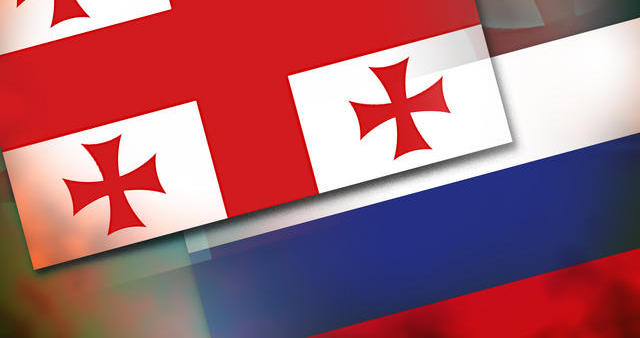
Return of Georgian goods to the Russian market will be a priority of the Georgian ministry of economy, says Giorgi Kvirikashvili, candidate for the post of economy minister in the new government that will be formed after the October 1 parliamentary elections.
Kvirikashvili told reporters that the Foreign Ministry will take the leading role in passing a decision on the issue, while the Ministry of Economy and Sustainable Development will contribute to this process.
According to Kvirikashvili, a return to the Russian market will depend on many factors and it is difficult to make any predictions now, but he said the economy ministry will strongly encourage export and investment.
Earlier Bidzina Ivanishvili, the leader of Georgian Dream coalition, which won the October 1 election, announced his intention to return Georgian goods to the Russian market. Even while on the campaign trail, Ivanishvili promised villagers that Georgian products will return to the Russian market once he comes to power.
"Nowadays a Georgian businessman is not ready to export his product to the American and European markets. At the initial stage it will be good and interesting for us to return to the Russian market. Georgian businessmen are closely familiar with the Russian market. A major problem is the lack of local production. Market is vital in business, however, this market should be unique with its product," Ivanishvili told Euronews.
After Russia initiated a blanket embargo on Georgian goods in 2006 in response to a diplomatic scandal, Georgia was forced to radically shift its export economy towards Europe and Asia -- places with vastly different market conditions. Georgia's wine industry was particularly hard hit as it had to be retooled from mass production of low quality sweet wines -- as much as 90 percent of which was consumed in Russia -- to conventional dry reds and whites that European and Asian consumers have grown accustomed to.
"Entering and finding new markets is a progressive step for any economy, however for Georgia this move could prove controversial," former Prime Minister Nika Gilauri said this September. "The administration has not always had a consistent position on this issue, and has in the past [been] criticized. The focus since the embargo in 2006 has been on seeking alternative markets worldwide to reduce dependence on our northern neighbor."
In 2010, after then-Russian President Dmitry Medvedev hinted at lifting the ban, like other industries, Georgia's sparkling water producers faced similar dilemmas with the embargo.
Nitsa Cholokashvili, public relations manager for Borjomi, Georgia's leading mineral water exporter, told Asia Times that the company would "definitely" be interested in returning to the Russian market despite the risk of another ban. "The Russian ban was a really good lesson for us and for all companies selling products just on one market," she said.
To replace the loss of its primary market, Borjomi has expanded to new markets and now exports 10% of its goods to Asian countries.
Shota Kobelia, commercial director for Teliani Valley, Georgia's leading wine exporter, also told Asia Times that while he considers a reopening of the Russian market "important" for his company he also sees much potential in Asian markets.
But the Russian market is still a very important -- and very lucrative -- place to do business for Georgians. Many Georgian businesses already operate in Russia. There is almost no language barrier, and Georgian brands are popular. Returning to Russia could be a very easy win for Georgia -- both economically, and potentially politically, too.
Representatives of Georgia's banking sector told The Financial that Georgian businesses are better off staying away.
Kakha Khizanishvili, Deputy CEO for Investments of the Georgian Partnership Fund, said, "The first scenario on the surface will have some positive influence on Georgia, but overall it will be a negative impact. The positive impact will be the opening of the Russian market for Georgian products, inflow of more Russian capital, thus some increase in jobs. But in exchange, Georgia will experience negative impact of regression of quality improvement and implementation of know-how. Turning toward the present Russia means returning to the old Soviet system which Georgia has actually been emerging from for the past eight years."
Giorgi Tsutskiridze, CEO at the Banking Association of Georgia, in turn said that if Georgia "returns to Russia's orbit", the banking sector, which is arguably the most successful sector of the Georgian economy, will encounter serious problems. "First of all, we will have an outflow of foreign capital from the banking sector, which is likely to be replaced by Russian state capital. A return to Russia's orbit will ultimately dampen the independence of the country and banking sector in general."
At the same time, some analysts and company representatives have
said that Georgian businesses will be hesitant to return to the
Russian market, fearing that if the door was slammed shut once, it
could do so again. They argue that the Kremlin has a history of
playing politics with foreign businesses and running a business in
Russia is not without risk even in good times.
Here we are to serve you with news right now. It does not cost much, but worth your attention.
Choose to support open, independent, quality journalism and subscribe on a monthly basis.
By subscribing to our online newspaper, you can have full digital access to all news, analysis, and much more.
You can also follow AzerNEWS on Twitter @AzerNewsAz or Facebook @AzerNewsNewspaper
Thank you!