
EU nuclear plants need investment of €10-25bn for safety upgrade
By Sara Rajabova
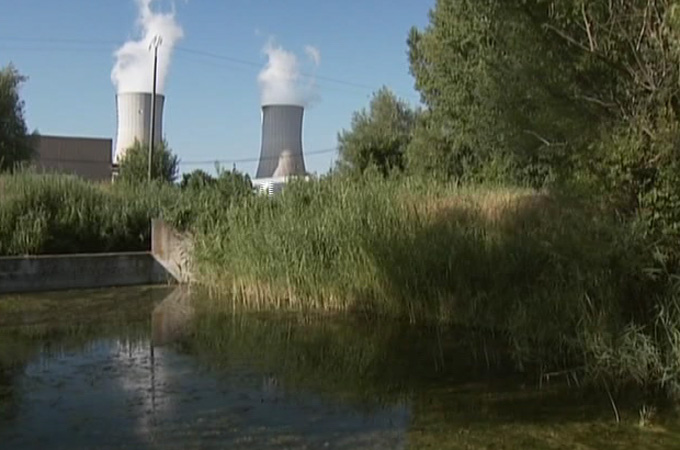
Stress tests on Europe's nuclear power plants have found that "practically all" of them require safety improvements to protect against emergencies, according to a leaked draft of the results.
The European Union ordered the tests on the ability of the region's 143 licensed nuclear plants to withstand events such as earthquakes or flooding in response to the disaster at Fukushima in Japan in March 2011, the Wall Street Journal reported on Tuesday.
The lesson of Fukushima was that two natural disasters could strike at the same time and knock out the electrical supply system of a plant completely, so it could not be cooled down.
The stress tests found that four reactors, in two different countries, had less than one hour available to restore safety functions if electrical power was lost, Reuters reported.
By contrast, four countries operate additional safety systems fully independent from the normal safety measures and located in areas well-protected against external events. A fifth country is considering that option.
The Commission is expected to finalize the stress test report by Thursday and it will be debated by EU ministers later this month.
After that, the Commission intends in 2013 to propose new laws, including on insurance and liability to "improve the situation of potential victims in the event of a nuclear accident", the draft seen by Reuters said.
Of the 134 EU nuclear reactors grouped across 68 sites, 111 have more than 100,000 inhabitants living within 30 km.
The draft says nuclear plant safety regimes vary greatly and the amount that needs to be spent to improve them is estimated at €10-25billion across all the reactors.
The main finding, the draft says, is that there are "continuing differences" between member states' safety regimes.
It also says provisions to ensure the independence of national regulators are "minimal".
The stress tests are a voluntary exercise to establish whether nuclear plants can withstand natural disasters, aircraft crashes and management failures, as well as whether adequate systems are in place to deal with power disruptions.
Most of the recommendations relate to France, Europe's largest nuclear power producer which relies on 58 nuclear reactors for 80% of its electricity, specific failings were found in all 58 nuclear reactors, BBC reported. The issues raised include the failure to ensure safety functions can be restored within an hour of an electricity blackout, the need to improve earthquake monitoring and the safe storage of emergency equipment.
Earlier this month, a blast of escaping steam burned two people at the Fessenheim power station in eastern France - one of the country's oldest nuclear reactors which have long been the target of regular anti-nuclear protests.
Fessenheim, close to France's borders with Germany and Switzerland, opened in 1977 and draws water for cooling from the Rhine, but campaigners say its location makes it vulnerable to seismic activity and flooding.
Shortcomings were also reported in the UK. Most of the country's power plants lacked an alternative emergency control room to use if the main one became contaminated by high radiation, says the report.
The UK's Department of Energy said there was no evidence UK nuclear facilities were unsafe.
While the stress tests found deficiencies in many of Europe's nuclear reactors, campaigners say they failed to address risks in crucial areas, such as ageing technology, terrorist attacks or human error.
"If this exercise was serious, the Commission should be recommending the closure of unsafe or ageing reactors," said Rebecca Harms, co-president of the Greens/European Free Alliance at the European Parliament.
"At the very least, the Commission should be pressing for the security deficiencies identified in the report to be rectified."
As of June, all 143 nuclear plants in the EU were to be re-assessed using criteria covering both natural and man-made hazards.
Some governments have reappraised their nuclear energy strategy in the aftermath of last year's Fukushima disaster, with Germany deciding to abandon nuclear energy for green technology and cleaner gas- and coal-powered plants by 2022.
Others, like France, have boosted investment in nuclear power since the meltdown at three of the reactors of the Fukushima Daiichi nuclear plant.
Here we are to serve you with news right now. It does not cost much, but worth your attention.
Choose to support open, independent, quality journalism and subscribe on a monthly basis.
By subscribing to our online newspaper, you can have full digital access to all news, analysis, and much more.
You can also follow AzerNEWS on Twitter @AzerNewsAz or Facebook @AzerNewsNewspaper
Thank you!