
Group says SCO 'Vehicle' for rights abuses
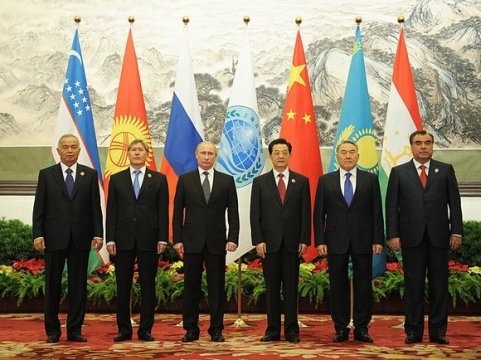
A report issued today by an international human rights group says the Shanghai Cooperation Organization is being used by its members as a "vehicle for human rights violations", Radio Liberty reported.
The Paris-based International Federation for Human Rights (FIDH) concludes that Russia and China, as well as Central Asian states, use the SCO's legal framework as an excuse to ignore international human rights safeguards.
The SCO -- created in 2001 -- includes Russia, China, Kazakhstan, Kyrgyzstan, Tajikistan and Uzbekistan.
Its charter calls for members to work together to protect human rights.
But Richard Wild, a law lecturer at the University of Greenwich who worked on the FIDH report, says the SCO is more concerned with security and border issues.
"We need to make a distinction between rhetoric and practice. There is talk of human rights within the Shanghai Cooperation Organization's charter. But actually, if we look operationally how it is being used, it is actually being used around border issues and security. All the instances are targeting of minority groups, of political oppositional groups [and] of religious groups. So there are wider human rights implications around discrimination in there as well," Wild explained.
The FIDH report says all SCO member states have "authoritarian regimes or severely repress independent voices."
It says: "These regimes associate security and stability with the need to repress religious, political and human rights activists," as well as some minorities -- "often accusing them of extremism on political grounds."
Much of the report deals with the extradition of refugees and asylum seekers who have been accused of terrorism or extremist activities.
Wild says the Shanghai Convention obliges SCO members to accept any terrorism accusation made by another member -- even without evidence to support an extradition request.
"The threat in terms of human rights comes from the SCO because, on the one hand, it is playing the international game of speaking a human rights language -- using 'human rights' within their charter -- when at the same time, it actually results in a coordinated regional form of extradition on the basis of suspicion rather than evidence. And it lacks any kind of transparency or international oversight," WIld said.
Further, the SCO's definition of "terrorism" includes crimes against the state, and it links "terrorism" to separatism and extremism.
Wild says that allows SCO members to file terrorism charges against political dissidents who have fled to another SCO country and then obtain their extradition in breach of international humanitarian law and international conventions on refugees.
One case study in the FIDH report is on Kazakhstan's 2011 extradition to China of a Uyghur journalist.
Another describes how Kyrgyzstan returned five refugees to Uzbekistan in 2005 after Tashkent charged them with terrorism in connection with the Andijon uprising.
The report shows how Kazakhstan and Kyrgyzstan used the SCO framework to prevent Chinese Uyghur activists from traveling to a political conference in Washington, D.C.
Others deal with Russia's "judicial harassment" of a rights activist from "Memorial," and the failure of Russia and Tajikistan to implement rulings by the European Court of Human Rights and the UN Human Rights Committee.
Here we are to serve you with news right now. It does not cost much, but worth your attention.
Choose to support open, independent, quality journalism and subscribe on a monthly basis.
By subscribing to our online newspaper, you can have full digital access to all news, analysis, and much more.
You can also follow AzerNEWS on Twitter @AzerNewsAz or Facebook @AzerNewsNewspaper
Thank you!