
Iran-Armenia coop promises no mutual benefits
By Sara Rajabova, AzerNews Staff Writer
Iran has warmed up its relations with Armenia after the EU imposed sanctions on Tehran. In particular, the trade turnover between the two countries increased this year compared to past years.
Iran, which has been politically defending Armenia, now seems to be as isolated as Armenia in the region.
Armenia's foreign trade amounted to roughly $5.5 billion in 2011, according to the country's statistics body. The volume of exports was over $1.3 billion and imports made up about $4.2 billion, resulting in a trade deficit of $2.8 billion.
Quite surprisingly, Armenia's trade turnover rose to $3.1 billion in January-July 2012. According to preliminary data of the National Statistical Service of Armenia, the South Caucasus republic exported goods worth $802.2 million and imported commodities in the amount of $2.3 billion with a balance of over $1.5 billion in the red.
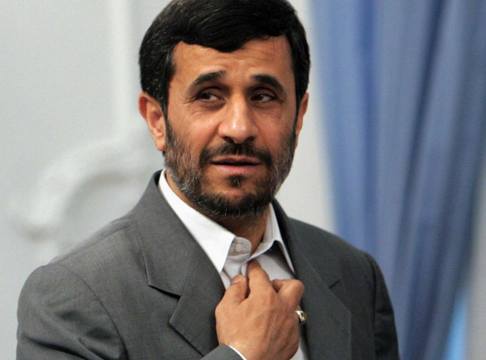
Iranian President Mahmoud Ahmadinejad said earlier that Iran accounts for 20 percent of Armenia's foreign trade. But Ahmadinejad did not disclose the reasons for the sharp tripling of the goods turnover between the two countries.
However, the reason is obvious. Iran has started to supply natural gas to Armenia in exchange for cheap electricity, which Armenia is seeking markets for.
In fact, Armenia is not of a particular interest to Iran as a consumption market, which offers low trading volumes. It's important to take into account that distributing oil intended for supplies among other trade partners in Europe has become a formidable task for Iran due to the sanctions. Furthermore, China, which increased its trade turnover with Iran by 55 percent in 2011, in January 2012 cut its daily oil imports from the country almost in half -- to 285,000 barrels.
Although India, which has a significant proportion (10.4 percent) in the list of Iran's export partners, opposed reducing imports of Iranian oil, but offered to pay for oil in rupees, which would make Iran dependent on India. In addition, the currency is not too reliable, some analysts say.
Iran's other export partner and No.3 oil buyer -- Japan -- agreed to reduce the Iranian oil imports early this year. Over 11 months of 2011, Japan imported 312,000 barrels of Iranian oil per day. The Iranian oil made up 8.8 percent of Japan's total oil purchases.
Japan's imports of Iranian crude oil fell to zero in July 2012 for the first time since 1981, trade ministry data showed last Friday, as Japan reined in its appetite to keep from falling afoul of European Union sanctions targeting insurance, Reuters reported.
Turkey reduced the imports of energy resources, including natural gas, from Iran, by 10 percent since mid-2012 due to the sanctions.
Still, there is no point to blame the partners. Roughly speaking, everything depends on the U.S. dollar. In a nutshell, Iran, like Armenia, appears to face a situation of isolation.
At the same time, Tehran is well aware that the use of Armenia, which occupies part of Azerbaijani land, as a transit country to enter world markets will not be successful. There are definite reasons for that. First, the access to world markets through Armenia is severely restricted because of the Armenia-Azerbaijan Nagorno-Karabakh conflict and Yerevan's lack of relations with Turkey. Second, Georgia certainly takes into consideration the position of Azerbaijan and Turkey, which are not interested in the expansion of Armenia's transit opportunities until the long-standing conflict is settled.
However, Armenia is not particularly happy with the Iranian president's statements. Yerevan has received a "yellow card" from the West for its cooperation with Iranian banks. It is worthy of note that this is not the first "yellow card" Yerevan received from Western powers. Armenian media reports said as early as in May 2002 the U.S. issued a list of Armenian, Moldovan and Chinese companies suspected of selling to Iran a technology that could be used in the development of weapons of mass destruction. The "black list" included two Armenian, two Moldovan and eight Chinese companies.
So, the U.S. Federal Reserve's appeals to representatives of commercial banks of Armenia on the basis of intelligence data should worry Yerevan, because it may also turn out in the "black list". Thus, a "red card" is nearing, too.
However, Armenia, at least for now, cannot abandon its "fruitful cooperation" with Iran. It looks like trading of two isolated states, as they just cannot do business with the rest of the world.
Here we are to serve you with news right now. It does not cost much, but worth your attention.
Choose to support open, independent, quality journalism and subscribe on a monthly basis.
By subscribing to our online newspaper, you can have full digital access to all news, analysis, and much more.
You can also follow AzerNEWS on Twitter @AzerNewsAz or Facebook @AzerNewsNewspaper
Thank you!