
Kazakh vote falls short on democracy – OSCE
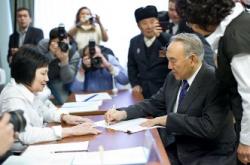
Kazakhstan's tightly controlled parliamentary election fell short of its democratic promise by limiting the number of genuine opposition parties and restricting citizens' rights, the OSCE's observation mission said on Monday, Reuters reported.
The Organisation for Security and Cooperation in Europe's election observation mission said several parties had been blocked from Sunday's election and public debate was limited in the run-up to the vote.
"If Kazakhstan is serious about their stated goals of increasing the number of parties in parliament, then the country should have allowed more genuine opposition parties to participate," said Joao Soares, leader of the short-term mission and head of the delegation of the OSCE Parliamentary Assembly.
Three parties won entry to Kazakhstan's parliament in a vote offering a small concession to democracy in the Central Asian state by guaranteeing an end to one-party rule. The ruling Nur Otan party won a landslide victory with more than 80 percent of the vote.
The OSCE mission, which comprised about 400 observers, said genuine opposition parties had been barred from the election and that some candidates had been de-registered.
"This election took place in a tightly controlled environment, with serious restrictions on citizens' electoral rights," said Miklos Haraszti, head of the OSCE Office for Democratic Institutions and Human Rights observation mission.
"Genuine pluralism does not need the orchestration we have seen. Respect for fundamental freedoms will bring it about by itself," he said.
The OSCE mission said media had operated "in an environment characterised by self-censorship" and that excessive restrictions were placed on candidate eligibility.
The election took place a month after clashes in the oil town of Zhanaozen killed at least 16 people. A state of emergency in the town was extended until Jan. 31, a decision that the OSCE said had not been publicly explained.
"The limitations imposed during the state of emergency led to a significant restriction of the freedom of expression, freedom of assembly and freedom of movement in the locality," it said.
On election day itself, the OSCE said voting was assessed positively in 91.4 percent of polling stations visited nationwide, but that flaws observed at 8.6 percent of stations indicated "serious and systematic shortcomings".
These include voters without proper identification being able to cast ballots, group voting and voting for somebody else. Twenty-two cases of ballot box stuffing were observed. It said counting and tabulation was "lacking in transparency".
The mission commended the fact that 819 international observers from a variety of organisations had been accredited and said the Central Election Commission handled technical preparations well.
But official announcements of the election and advertisements for Kazakhstan's 20th anniversary of independence on Dec. 16 were "almost identical" to Nur Otan's campaign materials, it said.
"This effectively blurred the distinction between the state and the party."
Here we are to serve you with news right now. It does not cost much, but worth your attention.
Choose to support open, independent, quality journalism and subscribe on a monthly basis.
By subscribing to our online newspaper, you can have full digital access to all news, analysis, and much more.
You can also follow AzerNEWS on Twitter @AzerNewsAz or Facebook @AzerNewsNewspaper
Thank you!