
Russian protesters mobilize via social networks, as key opposition leaders jailed
It took only hours for 15,000 Russians to sign up to a Facebook group in a promise to attend a mass nationwide demonstration on December 10 over alleged election violations, Radio Liberty reported.
It was another sign of the growing role of the Internet in bringing the groundswell of public discontent onto the streets in anti-Kremlin rallies not seen in Russia in years.
Protesters came out in their thousands on December 5-6 to protest against what they said were elections rigged to favor the ruling United Russia party on December 4 and further protests are expected in Moscow on December 7.
Dubbed a "Facebook revolution" by one privately owned media outlet and marking a new era in hitherto monochrome politics by others, simmering discontent among the young tech-savvy generation shows no sign of abating despite the jailing of key opposition leaders and beefed-up security in the capital.
Anger at vote-rigging claims
If anything, the protest movement is growing.
Ilya Klishin, a Moscow-based journalist and blogger, listed the "Saturday Revolution Square" opposition protest taking place on December 10 on Facebook after returning on December 6 from this week's second protest, where over 500 people were arrested.
By December 7, 15,000 Russians had pledged to attend.
Klishin says that "clearly falsified election results" had propelled Russia's burgeoning Internet out of its apathy and seen it come of age.
"In some districts of Moscow, United Russia took 90 percent. That's obvious falsification -- there's no way that could've happened," Klishin says. "People are worried about this and are personally insulted. Perhaps this was just the last straw before their patience snapped."
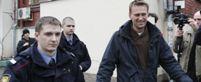
In a sign the grassroots protest movement is snowballing online, the protests are being organized in spite of the jailing of key opposition figures such as celebrity blogging activist Aleksei Navalny and Solidarity movement leader Ilya Yashin.
Klishin says he's not affiliated with any political group and simply opposes United Russia, after watching online video clips of alleged electoral violations.
Videos no laughing matter
During the polls for the State Duma on December 4, the Russian
Internet, used by over 43 million people, was inundated with dozens
of videos claiming to capture electoral violations, ranging from
"carousel voting" where United Russia supporters were caught voting
as many as 40 times, as well as ballot stuffing.
President Dmitry Medvedev, who has styled himself as a tech-savvy part-time blogger, on December 6 played down the videos. He said: "I've watched some clips, people are putting them up.... You can't see anything going on. They shout 'guards!', 'disgrace!'.... Although of course, we'll have to investigate violations."
But Aleksandr Morozov, a blogger on politics, says these videos have played a role in bringing people from behind their computers onto the streets.
"Social networks have played an enormous role in demonstrating just how the elections took place. If we didn't have social networks, we wouldn't have heard about the sheer quantity of violations," Morozov says. "Thanks to social networks, election observers for the first time were able to speak widely about the violations and disgraces that they saw at polling stations."
A snowball begins to grow?
And in a sign the authorities are nervous about the Internet's
growing sway, websites of numerous independent media, the
LiveJournal blogging platform, and the Golos election observer have
been periodically inaccessible after being hit by denial-of-service
attacks during the election protests.
One of the outlets hit, the Dozhd (Rain) Internet television station, appeared under overt pressure from the authorities after the federal communications watchdog demanded on December 7 that the privately owned station hand over recordings of its coverage of December 5 and 6.
State-friendly national television has meanwhile been conspicuously quiet on the protest movement, offering positive coverage of Medvedev and Prime Minister Vladimir Putin, who on December 7 officially registered to run in the presidential election in March.
Reuters has quoted Konstantin von Eggert, a commentator for Kommersant FM radio, as saying: "For the first time really, the online presence has transformed offline politics.... The whole thing works like a snowball. This is definitely the start of something that will stay in Russian political life."
On December 5, speaking before his arrest at a rally attended by thousands of protesters, many of them students and young professionals, Navalny slammed state-dominated television and urged his followers to make their voices heard.
"They can laugh with their 'zombie boxes' [televisions], they can call us microbloggers and little social-network hamsters," Navalny said. "I am a little social-networking hamster! And I'll gnaw through the throats of these cats! And we'll do this together...because we exist."
Observers say that his detention may transform Navalny from a blogging phenomenon into a real political force. Aleksei Venediktov, head of the independent Ekho Moskvy radio station, posted a message on Twitter saying that arresting Navalny was "a political mistake, turning him from online leader into offline one."
On December 6, amid the din of drum-beating pro-Kremlin youth groups deployed to drown out opposition cries, a group of opposition protesters chanted, "Free Navalny, free Navalny!"
Here we are to serve you with news right now. It does not cost much, but worth your attention.
Choose to support open, independent, quality journalism and subscribe on a monthly basis.
By subscribing to our online newspaper, you can have full digital access to all news, analysis, and much more.
You can also follow AzerNEWS on Twitter @AzerNewsAz or Facebook @AzerNewsNewspaper
Thank you!