
Sweden Foreign Minister: prepared to go along with Iran oil embargo
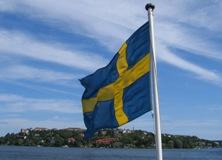
(Dow Jones Newswires, December 1) – Sweden is prepared to go along with an oil embargo on Iran, Foreign Minister Carl Bildt said Thursday, although he is wary about its likely effectiveness.
Bildt said European Union foreign ministers will be discussing a "broad range of sanctions" on Iran.
Asked if that included an oil embargo, as has been floated by France, he said his government "is prepared to go along with that."
But he said that given the way global oil markets work, an embargo may have "not much effect."
Bildt also said that while fresh measures are expected to be announced against Syria, "there are certainly no plans for military action."
Meanwhile, U.K. Foreign Secretary William Hague said his "particular focus" is on imposing financial sanctions on Iran.
He said he is hopeful that EU foreign ministers will agree an "intensification of economic pressure" on Tehran.
Asked about the possible oil embargo, he said he expects a "variety" of views on whether to extend energy sector sanctions on Iran.
Hague also expressed his thanks for the "strong solidarity" the U.K.'s EU partners had shown in responding to Iran's threat to kick out the U.K. ambassador last weekend and the attack in Tehran on the U.K. embassy.
On Wednesday, the U.K. shut its Iran embassy and expelled Iranian diplomats from London.
EU agenda
European Union foreign ministers confirmed they would place fresh
sanctions on Iran and Syria on Thursday but left open whether that
would include a call to press ahead with an embargo on Iranian oil
exports over its nuclear program.
The French call for an Iran oil embargo has split the EU, with some of the most influential countries in the 27-nation bloc backing the step but others warning of a high cost to some European economies.
In the lead-up to Thursday's meeting, the focus on Iran intensified, with EU countries denouncing the attack on the British embassy in Tehran. On Wednesday, the U.K. shut its Iranian embassy and gave Iranian diplomats 48 hours to leave Britain. Many other EU countries have recalled their ambassadors from Tehran for consultations.
The foreign ministers are set to expand current sanctions on Iran to close to 200 additional people and companies. At the same time, the EU has been trying to get Iran back to the negotiating table over its nuclear activities, which the International Atomic Energy Agency said this month seem aimed at acquiring a nuclear bomb.
On his way into the meeting, Swedish Foreign Minister Carl Bildt said he was skeptical about the effectiveness of an Iran oil embargo but that his government "is prepared to go along with" the idea.
U.K. Foreign Secretary William Hague thanked his EU partners for the "strong solidarity" they had shown over the embassy attack and said his "particular focus" is on agreeing financial sanctions on Iran to help isolate the Tehran regime.
Hague acknowledged member states had a "variety" of views on whether to impose an oil embargo but said he is hopeful of "an intensification of economic sanctions on Iran."
That was echoed by German Foreign Minister Guido Westerwelle, who said the EU must act to "dry up the financial sources" of Iran's nuclear weapons.
"Iran has a right to nuclear energy, but it has an obligation to forego nuclear weapons," he said.
Arriving at the same meeting, Austrian Finance Minister Michael Spindelegger said that the question of an oil embargo against Iran "is one of the points worth discussing," but both he and Westerwelle stressed that any new sanctions must be so shaped as to put pressure on the Iranian government, rather than its population.
Earlier in the week, the EU's foreign service produced a draft set of conclusions on Iran which specifically threatened a possible oil embargo. However, the latest draft rowed back from that after strong opposition by Greece and concerns raised by a number of other countries, diplomats say.
EU foreign policy chief Catherine Ashton said only that ministers would be discussing "a range of sanctions" on Thursday.
Also high on the agenda Thursday is the continued violence in Syria.
Ashton said pressure needs to be intensified so that President Bashar al-Assad "realizes he must step aside."
Foreign ministers were expected to endorse an export ban on equipment and software used for telecommunications and an export ban on key technology for the oil and gas sector. At least 25 companies and individuals will be added to the current sanctions list, including financial and trade-related firms, diplomats have said.
The Austrian foreign minister renewed the call for United Nations Security Council action against Syria. So far Russia has blocked that.
However, Sweden's Bildt said that while the EU is discussing with the Arab League what it could do to ease the humanitarian situation for protestors in Syria, "there are certainly no plans for military action."
Here we are to serve you with news right now. It does not cost much, but worth your attention.
Choose to support open, independent, quality journalism and subscribe on a monthly basis.
By subscribing to our online newspaper, you can have full digital access to all news, analysis, and much more.
You can also follow AzerNEWS on Twitter @AzerNewsAz or Facebook @AzerNewsNewspaper
Thank you!