
Iran says nuclear talks to resume with Brazil and Turkey
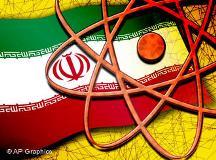
Iran said on Tuesday it would soon resume nuclear talks with
Turkey and Brazil -- a tentative first step back to international
negotiations after Tehran was hit with a new wave of sanctions over
its disputed nuclear work.
Iran has belittled the U.N., U.S. and European sanctions and
President Mahmoud Ahmadinejad said on Monday he would return to
long-frozen talks with world powers but on certain conditions only,
and not before the end of August.
His foreign minister said talks would start before then with the
two countries with which it agreed a nuclear fuel swap deal in May
- echoing a U.N.-brokered pact that Tehran backed out of late last
year - and which voted against the U.N. sanctions.
"There were some contacts with the foreign ministers of the three
countries (Iran, Turkey and Brazil)," Manouchehr Mottaki told a
news conference. "A joint meeting is on the agenda and we will
announce it in the coming one or two days."
Iran has held no substantive talks with world powers since the deal
in principle on the fuel swap struck with Russia, France and the
United States in October.
The pact would have seen Iran sending 1.2 tonnes of low-enriched
uranium (LEU) - about 70 percent of its stockpile at the time -
abroad in exchange for specially processed fuel rods needed to keep
the Tehran medical research reactor running.
In a turnabout, Iran agreed in talks in May with Brazil and Turkey
to part with 1.2 tonnes of LEU. But by then Iran's LEU reserve had
doubled in size, devaluing the swap's terms in Western eyes since
it would no longer divest Iran of enough LEU to prevent its use for
an atom bomb, if refined to high purity.
So the May agreement proved too little too late to prevent a new
batch of punitive sanctions from the United Nations, European Union
and United States.
Meanwhile, Iran has increased suspicions abroad by launching
enrichment up to a level of 20 percent purity, asserting this will
yield raw material for making the reactor fuel rods without foreign
help - but at the same time advancing much of the way down the road
towards weapons-grade enrichment.
New Iranian conditions
Russia, which backed the U.S.-led push for further sanctions but
has since complained about the United States and the European Union
issuing stricter unilateral measures, said on Tuesday it wanted to
get back to talks with Tehran.
Foreign Minister Sergei Lavrov said he wanted talks between Iran,
the United States, Russia and the watchdog International Atomic
Energy Agency focussing on providing Iran with reactor fuel rods so
it would need to escalate enrichment itself.
"In the wake of the Brazilian and Turkish initiative, Russia, along
with the United States, approached the director of the IAEA and
proposed we arrange a meeting of technical experts from our three
countries, including Iran, to discuss the possibility of supplying
fuel for the experimental reactor in Iran, so that there will be no
need for Iran to enrich the uranium to a level of 20 per cent,"
Lavrov said.
"I hope very much that Iran will respond positively and that this
will help prevent the situation from deteriorating," he told
reporters during a visit to Israel, which considers Iran's nuclear
campaign an existential threat.
On Monday, Russia complained to the U.N. Security Council about
what U.N. diplomats said was Germany's seizure of items bound for a
nuclear power plant in Iran, saying such moves were "not in line"
with U.N. rules.
On June 19, French President Nicolas Sarkozy told Russian President
Dmitry Medvedev that France was ready to talk with Iran at the IAEA
"without delay," using the Tehran declaration by Iran, Brazil and
Turkey as a starting point.
The West fears Iran's nuclear work is aimed at developing the means
to build bombs because of its history of secrecy and restricting
IAEA inspections. Tehran says it will be solely for generating
electricity and isotopes for medicine and farming.
Ahmadinejad has called on the major powers to "clarify" three
things before talks could resume: their attitude to Israel's
alleged nuclear arsenal, their stance on commitments to the nuclear
Non-Proliferation Treaty and whether they come to the table as
Iran's friend or its enemy.
World powers were likely to dismiss such conditions as irrelevant
to the main issue - Iran's refusal to negotiate limits and
transparency with respect to its nuclear activity.
"Somehow implying there's a linkage between the Iranian issue and
the Israeli issue ... will certainly not make life easier," said a
Western diplomat versed in the Iran issue.
"Saying that as a punishment that they only want talks in the third
week of August - this is posturing which we shouldn't take too
seriously ... We need to wait for Iran's official response on the
(swap) plan and the offer of talks from the EU."
Here we are to serve you with news right now. It does not cost much, but worth your attention.
Choose to support open, independent, quality journalism and subscribe on a monthly basis.
By subscribing to our online newspaper, you can have full digital access to all news, analysis, and much more.
You can also follow AzerNEWS on Twitter @AzerNewsAz or Facebook @AzerNewsNewspaper
Thank you!