
Turkey moves to counter Armenian ‘genocide’ claims
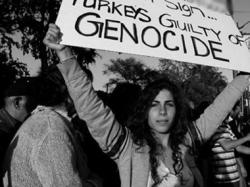
Turkey has moved to counter Armenian claims on an alleged 1915
genocide in the Ottoman Empire. At a time Armenians are stepping up
efforts against Turkey, ahead of April 24, the date they consider
to be the anniversary of the alleged mass killings, the Turkish
government has decided to take adequate steps by developing an
action plan on the issue and sending it to all institutions
representing the country abroad, Turkey’s Hurriyet newspaper
reported.
According to the Turkish media, the Foreign Ministry’s action plan contains ten provisions. It calls on the Turks abroad to closely communicate with both those in the Armenian community who come out strongly against Turkey and those adhering to a mild stance on the alleged World War I-era "genocide", to open the doors of all events they organize to Armenians as well as to join events and meetings conducted by Armenians and convey Turkey’s stance to them.
The document points out that the Armenian group mainly includes three groups: those profiteering from "genocide" claims, those who moved from Turkey but still maintain ties with the country, and those who do not have strong claims on the alleged genocide.
The Turkish Foreign Ministry also suggested that the Turks invite those countering Turkey to the events hosted by embassies and general consulates and to Turkey, maintain ties with Armenian diplomats abroad and join their functions.
Also, Ankara advised its citizens to forge ties with universities and public institutions, particularly academies and scholars, in the countries they live in, join functions conducted by these institutions and avail of every opportunity to state Turkey’s stance on the "genocide" issue.
The suggestions also include expanding relations with the Balkan states, the Middle East and neighboring countries, to raise the Armenian claims with these countries’ diplomats, and convey Turkey’s position on the "genocide" issue to third countries’ diplomats, particularly the ministers who do not favor Turkey. The Turks are also advised to keep on the agenda the issue of establishing a commission of history experts to research the Ottoman-era developments, a proposal made by Ankara that was reflected in the 2009 accords on normalizing bilateral relations, and to emphasize that history should be addressed by historians.
The Turkish government also deems it necessary to stress that bettering Turkey-Armenia relations would promote well-being of both countries’ citizens.
It also said the Turks should explain that not only Turkish-Armenian rapprochement but also resolving the Armenia-Azerbaijan Upper (Nagorno) Garabagh conflict is pivotal for achieving stability in the volatile South Caucasus region.
Turkey and Armenia have been at odds and their shared border has been shut since 1993 due to Armenia’s policy of occupation of Azerbaijani territory and Armenian "genocide" claims. The two governments signed protocols in Zurich in October 2009 to establish diplomatic relations and reopen their borders, after a century of hostility. However, the accords require approval by both countries’ parliaments, and Ankara has ruled out normalization with Yerevan until progress is made in settling the conflict between Armenia and Azerbaijan, Turkey’s ally.
According to historians, from 1915 to 1923, Armenians had begun an uprising. They had taken up arms against Turkey and assisted Russia, one of Turkey’s enemies in WWI. To counter these actions, the Ottoman Empire decided to resettle the Armenians. However, the latter claim that their predecessors were subjected to genocide in the process, while Ankara rejects the allegations.*
Here we are to serve you with news right now. It does not cost much, but worth your attention.
Choose to support open, independent, quality journalism and subscribe on a monthly basis.
By subscribing to our online newspaper, you can have full digital access to all news, analysis, and much more.
Subscribe
You can also follow AzerNEWS on Twitter @AzerNewsAz or Facebook @AzerNewsNewspaper
Thank you!