
Turkish PM warns illegal Armenian residents could face ejection
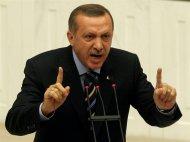
Turkish Prime Minister Recep Tayyip Erdogan has said Ankara has not
raised the issue of deporting Armenian illegal aliens from the
country so far but could be forced to take the step if the Armenian
diaspora keeps up its pressure, CNN Turk TV channel reported.
When asked by Germany’s SPIEGEL magazine about his allegedly "having further inflamed an already difficult debate by mentioning the possibility of deportation of all Armenians working illegally in Turkey", Erdogan said he was disappointed with this approach, adding that illegal immigration was a problem of global scale.
"It saddens me that you see it this way. I talked about what we could do. For years, we have tolerated Armenians without residence permits. All I said was that this doesn't always have to be the case. The problem of illegal workers is discussed openly all over the world, but when someone in Turkey makes such a statement, people feel troubled. Why?"
Under pressure from the Armenian lobby, the US House of Representatives Foreign Affairs Committee on March 4 endorsed a bill on the alleged Ottoman-era genocide of Armenians. On March 11, Sweden's parliament backed a resolution on the alleged genocide, a claim that Turkey resolutely rejects. The moves were followed by the Turkish prime minister’s warning that the 100,000 Armenians illegally residing in Turkey could be deported.
During the interview, Erdogan was also asked why modern Turkey doesn't acknowledge the alleged genocide against the Armenians committed in the Ottoman Empire. The Turkish premier said that "when a journalist uses the word genocide, he should take a careful look at the issue first."
"There can be no talk of genocide against the Armenians. Genocide is a legal term. In 2005, I wrote a letter to then-Armenian President Robert Kocharian, in which I told him that this is not a matter for politicians like us, but one that needs to be studied by historians."
Erdogan went on to say that there are currently millions of documents on the subject in Turkish archives, of which more than one million have been examined since he wrote to Kocharian.
"If there are archives in your country, I wrote to him, then make them accessible. And if historians cannot clarify the subject sufficiently, then let lawyers, political scientists and archaeologists take part in the effort," Erdogan added.
Armenia and Turkey have been at odds for decades, with the "genocide" issue being one of the obstacles to normal relations. In a bid to end the long-standing hostility, the two governments signed protocols in Zurich on October 10, 2009 to establish diplomatic relations and reopen their borders. However, the documents require parliamentary ratification, and Ankara has ruled out normalization with Yerevan until the conflict between Armenia, which occupies part of Azerbaijani territory, and Azerbaijan, Turkey’s ally, has been fairly resolved.*
Here we are to serve you with news right now. It does not cost much, but worth your attention.
Choose to support open, independent, quality journalism and subscribe on a monthly basis.
By subscribing to our online newspaper, you can have full digital access to all news, analysis, and much more.
Subscribe
You can also follow AzerNEWS on Twitter @AzerNewsAz or Facebook @AzerNewsNewspaper
Thank you!