
Turkey one step closer to its energy goals in 2016
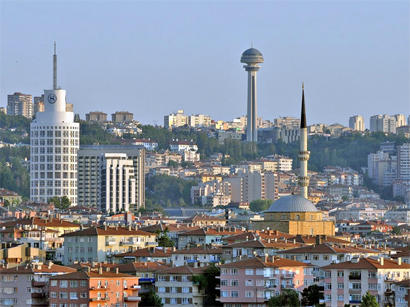
Turkey for over 10 years has been confidently advancing towards
its goals of the "2023 Vision" - when the country will mark its
centenary.
This program envisages a lot of directions. One of those directions
is to transform Turkey due to its geographical location into the
logistics and energy hub. After the crisis in relations with
Russia, Turkey realized the need to diversify its energy sources
and intensified search in this direction.
Having signed new agreements, implementing existing projects and
having planned new ones, Ankara has advanced a step closer to its
energy goals in 2016.
Discount on Iranian gas
The International Court of Arbitration ruled in favor of Turkey in
the long-lasting gas dispute between Ankara and Tehran on February
2, 2016. According to the court decision, Iran must provide Turkey
with a 10-15 percent-discount on gas purchased in 2011-2015.
Ankara and Tehran are still negotiating on the issue. Iran is
expected to supply gas free of charge instead of $2 billion, which
the Islamic Republic is supposed to return to Turkey.
The agreement on the supply of Iranian gas to Turkey was signed in
1996. Turkey has contracts with Iran for the supply of 10 billion
cubic meters of gas per year.
Akkuyu nuclear power plant
The normalization of the Turkey-Russia relations after the incident
with the Russian Su-24 bomber, has triggered the implementation of
joint energy projects. One of the most important projects is the
construction of Akkuyu nuclear power plant.
The construction of Akkuyu nuclear power plant in Turkey's southern
Mersin province was still under preparation in 2016.
Russia's Rosatom state nuclear energy corporation put up for sale a
49-percent share of the first nuclear power plant in Turkey in
April. The Turkish Cengiz Holding A.S. showed interest in the
acquisition of shares.
Initially, only Cengiz Holding participated in the talks with the
Russian side. Afterwards, Kolin Group of Companies and Kalyon Group
joined the talks.
It is planned to get a license in Turkish Atomic Energy Authority
(TAEK) for the construction of Akkuyu nuclear power plant in 2017.
The intergovernmental agreement between Russia and Turkey on
cooperation in the fields of construction and operation of the
country's Akkuyu nuclear power plant in Turkey was signed in
2010.
The project of the Turkish first nuclear power plant includes four
water-water energetic reactors. The capacity of each energy unit of
the nuclear power plant to stand at 1,200 MW. The project's cost is
some $20 billion.
Turkish Stream
Of course, the normalization of the Moscow-Ankara relations allowed
to move forward with the Turkish Stream gas pipeline construction
project.
Russia and Turkey signed an intergovernmental agreement on the
project on October 10. The document envisages the construction of
two branches of the main gas pipeline through the Black Sea, the
power of each branch being 15.75 billion cubic meters of gas.
One branch is to supply gas directly to the Turkish market, the
other – to transit gas through Turkey to European countries. The
realization of the second branch depends on Europe's interest in
Russia's gas and getting necessary guarantees.
The Turkish and Russian governments have already ratified the
agreement on the Turkish Stream project. The State Duma (lower
house of the Russian Parliament) is expected to consider
ratification of the Turkish Stream gas pipeline deal in January
2017.
South Stream Transport B.V. company, a 100-percent subsidiary of
Russia’s Gazprom company, signed an agreement with Switzerland’s
Allseas Group S.A. on construction of the offshore section of the
Turkish Stream pipeline’s first branch.
Allseas will commence the pipelay work in the second half of
2017.
23rd World Energy Congress
The 23rd World Energy Congress was held in Istanbul on Oct. 9-13
upon the initiative of the Turkish Prime Minister Binali Yildirim
and Minister of Energy and Natural Resources Berat Albayrak.
The congress was held under the auspices of Turkey’s President
Recep Tayyip Erdogan. The forum was attended by heads of state,
energy ministers of oil and gas producing countries, as well as
heads of hi-tech companies, international financial institutions,
the UN and the EU agencies, investors, etc.
Energy projects implemented by Turkey in the region, global energy
security, world energy trends as well as oil prices were discussed
at the congress.
Normalization of relations with Israel
Relations between Israel and Turkey deteriorated after the Freedom
Flotilla incident in 2010, when a convoy of six ships, including
one flying Turkey's flag, tried to approach the Gaza Strip with
humanitarian aid and activists on board. The flotilla was blocked
and stormed by Israeli forces, with nine Turkish citizens being
killed as a result.
Turkey signed an agreement with Israel on repairing the relations
June 28. The Israeli government paid a compensation of $20 million
to Turkey for the Freedom Flotilla incident Sept. 30.
The normalization of relations created an opportunity for Turkey to
receive gas from the Eastern Mediterranean. One of such possible
projects is the construction of a pipeline that will run under the
Mediterranean Sea through Cyprus.
Creation of infrastructure for liquefied natural gas terminals
represents another possibility for Turkey to receive the Israeli
gas. The countries are expected to hold intensive talks on this
issue in 2017.
Alternative energy sources
Turkey keeps active interest in alternative energy sources. In this
regard, the country built several solar and wind farms in 2016.
Another similar projects is the construction of solar power plant
in the Konya province. Previously, Turkey’s Energy and Natural
Resources Minister Berat Albayrak said that about $1 billion will
be invested in this project. Albayrak also noted that big wind
parks will be built in the country in 2017.
Trans Anatolian Natural Gas Pipeline (TANAP)
TANAP project envisages the transportation of gas from Azerbaijan’s
Shah Deniz (as part of Stage 2 of the field’s development) gas and
condensate field from the Georgian-Turkish border to the western
border of Turkey. The project’s total cost is estimated at $8.6
billion.
Initial capacity of the TANAP pipeline is expected to be 16 billion
cubic meters of gas per year. The pipeline may be expanded up to 31
billion cubic meters of gas per year in the future. About six
billion cubic meters of gas will be delivered to Turkey, and the
remaining part – to Europe.
TANAP shareholders are: SOCAR (State Oil Company of Azerbaijan) –
58 percent, Turkey’s BOTAS (30 percent), BP – 12 percent. TANAP
pipeline is planned to be put into operation in 2018.
Project status
The Asian Infrastructure Investment Bank (AIIB) approved the
issuance of a loan worth $600 million, World Bank (WB) - $800
million for the TANAP project’s implementation.
Currently, shareholders of the TANAP Consortium discuss the issues
of the project’s financing with the European Bank for
Reconstruction and Development (EBRD) and European Investment Bank
(EIB), which plan to allocate $2.1 billion. An additional $3
billion is planned to be attracted from other financial
institutions. Moreover, the Azerbaijani government plans to
additionally allocate $2.1 billion.
There is a decision on giving an 8-percent share out of the
Southern Gas Corridor company’s 58-percent share in TANAP to
SOCAR’s subsidiary in Turkey – SOCAR Turkey. It is expected that
the deal will be concluded in the near future.
The construction work as part of the TANAP project is 55 percent
complete.
Three companies - "Fernas Insaat A.S.", "Sicim-Yuksel-AKKORD Adi
Ortakligi" and "TEKFEN Insaat ve Tesisat A.S." are contractors for
the construction of the onshore area of TANAP with a length of 1337
kilometers. They will build a section of the gas pipeline till the
Turkish city of Eskisehir.
Turkish Borusan Mannesmann, Noksel Celik Boru and Erciyas Celik
Boru companies will supply the pipes for the TANAP project.
In October 2015, the consortium for the construction of the TANAP
chose a company that will render services of establishing the SCADA
system (supervisory control and data acquisition), as well as
telecommunication system for the pipeline construction project. The
winner of the tender was ABB Elektrik Sanayi A.S. A relevant
contract was signed with this company.
In November 2015, the consortiums of TAP and TANAP signed an
agreement on cooperation during the pipeline’s construction. The
document defines obligations for the construction of an
interconnector as well as technical aspects for the connection of
the two pipelines.
In January 2016, the TANAP consortium defined a company that will
build the 459-kilometer section of the pipeline from Turkey's
Eskisehir up to the border with Greece. Punj Lloyd-Limak JV won the
tender, and a corresponding contract was concluded with the
company.
In February 2016, Turkish company Tekfen won a tender for
construction of compressor and measuring stations for the TANAP
project.
In July 2016, Malaysia’s SapuraKencana Petroleum Berhad company won
the tender for the purchase of fiber optic cables and the
implementation of construction works in Turkey’s Dardanelles
(Canakkale) Strait within the TANAP project.
Floating LNG plant
The first floating LNG (liquefied natural gas) plant of Turkey
started working on December 2016 on the peninsula of Aliaga in
Izmir city of Turkey. The plant will convert 5.3 million tons of
LNG into gas. The plant will be able to transfer about 20 million
cubic meters of gas per day to Turkey.
Turkey’s chairmanship in SCO Energy Club
Turkey will chair the Energy Club of the Shanghai Cooperation
Organization (SCO) in 2017, making it the first non-member country
to do so.
SCO Energy Club was created in 2013 with the participation of
China, Kazakhstan, Kyrgyzstan, Russia, Turkey, Tajikistan,
Afghanistan, India, Iran, Mongolia, Pakistan, Belarus and Sri
Lanka.
-
Follow us on Twitter @AzerNewsAz
Here we are to serve you with news right now. It does not cost much, but worth your attention.
Choose to support open, independent, quality journalism and subscribe on a monthly basis.
By subscribing to our online newspaper, you can have full digital access to all news, analysis, and much more.
You can also follow AzerNEWS on Twitter @AzerNewsAz or Facebook @AzerNewsNewspaper
Thank you!