
U.S.- Russia talks on Syrian conflict resolution reach deadlock
By Gunay Hasanova
The chill in diplomatic relations between the United States and Russia deepened dramatically as the U.S. suspended dialogue between the two countries on ending the war in Syria.
By summarily shutting down lines of communication, the U.S was carrying out a threat it first issued a week ago accusing Moscow of violating the terms of a ceasefire agreement for the country that had been hammered out just weeks earlier.
The steps with regards to the issue undertaken by the U.S. State Department served as a reason for concern whether the tensions between Russian and U.S. forces in Syria may tend to grow more.
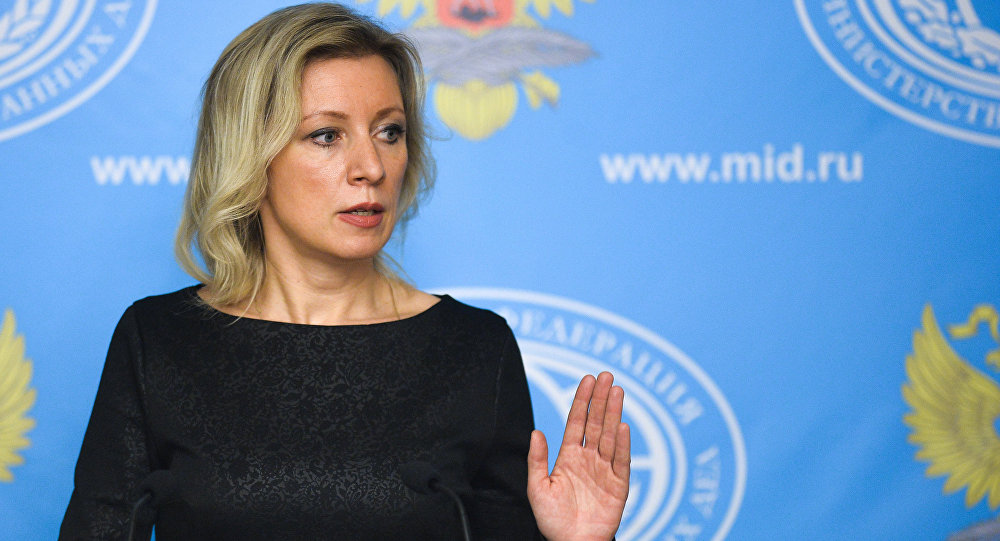
Commenting on that, Russian Foreign Ministry spokeswoman Maria Zakharova has pointed to the agreement between the United States and Russia that protects against unwanted conflicts between the forces of the two countries in Syria, Sputnik International reported.
"A blunt answer could be that we have a relevant agreement, an agreement with the Americans, on the prevention of conflicts," Zakharova said in an interview with the Rossiya 1 channel, commenting on the possibility of any conflicting episodes between the U.S. and Russian forces in Syria.
However, she stressed that the situation is a lot more complex, pointing to the persistent danger of terrorists spread in Syria and difficulties in the peaceful resolution of the civil war in the country.
Earlier, Russian Foreign Ministry spokeswoman expressed dissatisfaction regarding the U.S. decision to suspend the talks with Russia on Syrian conflict settlement.
"We are sorry about Washington's decision to curtail the work of groups of experts in Geneva, to withdraw experts from there and limit the domain of conflict prevention.”
In addition, she said that Washington has simply failed to live up to the key commitment under the agreements — to facilitate the humanitarian assistance to residents of Aleppo city.
"And now, apparently, the Americans are trying to shift the responsibility on somebody else,” she added.
She pointed out that "the United States failed to comply with its obligations pertaining to the delineation of the opposition from the terrorists in Syria."
In response, the U.S. State Department said that the U.S. spared no effort in negotiating and attempting to implement an arrangement with Russia aimed at reducing violence, providing unhindered humanitarian access, and degrading terrorist organizations operating in Syria, including Daesh and al Qaeda in Syria, adding that, unfortunately, Russia failed to live up to its own commitments - including its obligations under international humanitarian law.
Moreover, the U.S. side stressed that Russia was also either unwilling or unable to ensure Syrian regime adherence to the arrangements on which the two sides previously agreed.
Previously, the spokesperson of the U.S. State Department John Kirby announced that the United States has suspended “bilateral channel" with Russia created to maintain the ceasefire in Syria.
In addition, the press secretary of the White House Joshua Ernest expressed disappointment over Russia's response to them by suspending the agreement with the U.S. Plutonium Disposition.
The two countries own the world's largest stockpiles of plutonium that can be used for nuclear weapons.
During the April 2010 Nuclear Security Summit, U.S. Secretary of State Hillary Rodham Clinton and Russian Foreign Minister Sergey Lavrov signed a protocol amending the 2000 Plutonium Management and Disposition Agreement (PMDA), which commits each country to dispose of no less than 34 metric tons (MT) of excess weapon-grade plutonium and envisions disposition of more weapon-grade plutonium over time.
The Protocol reaffirms both countries’ commitment to nuclear disarmament under Article VI of the Nuclear Non-Proliferation Treaty by ensuring that excess weapon-grade plutonium is never again used for nuclear weapons or any other military purpose.
However, a Russian presidential decree made public on October 3 says the implementation of the U.S.-Russia Plutonium Management and Disposition Agreement (PMDA) must be put on hold, "due to Washington's unfriendly actions toward Russia”.
---
Gunay Hasanova is AzerNews’ staff journalist, follow her on Twitter: @gunhasanova
Follow us on Twitter @AzerNewsAz
Here we are to serve you with news right now. It does not cost much, but worth your attention.
Choose to support open, independent, quality journalism and subscribe on a monthly basis.
By subscribing to our online newspaper, you can have full digital access to all news, analysis, and much more.
You can also follow AzerNEWS on Twitter @AzerNewsAz or Facebook @AzerNewsNewspaper
Thank you!