
Azeri-Turkish gas dispute no hurdle to Nabucco: EU envoy
Differences between Azerbaijan and Turkey on gas
supplies are not a major hurdle to the implementation of the
European Union-backed Nabucco pipeline project, head of the EU
delegation to Azerbaijan, Roland Kobia, told the press Tuesday.
According to him, the sides should continue negotiating the price and volume of Azerbaijani gas delivered to Turkey and come to a final agreement.
Kobia noted that all transit-related and technical issues were outlined in the July 2009 agreement signed by Turkey, Bulgaria, Romania, Hungary and Austria.
"It covers all transit countries. Certainly, it would be good if Azerbaijan and Turkey agreed upon the price of exported gas, but we do not consider this a serious obstacle to the implementation of the Nabucco project."
Azerbaijan began exporting its gas to Turkey in April 2007. The price was initially set at $120. However, the gas supply contract, concluded between Turkey and the partners in the project on developing Azerbaijan’s giant Shahdaniz field in the Caspian Sea, stipulated that the price may be reconsidered a year after the start of gas deliveries. Thus, the new price should have gone into effect on April 15, 2008. Azerbaijan and Turkey have been negotiating the issue since then, but have yet to reach agreement. Baku is seeking a price charged in world markets but Ankara insists the price should not exceed $200. Since a new contract has not yet been concluded, Azerbaijani gas is still being exported for $120.
Kobia also said the EU plans to hold a conference to discuss the work being done to materialize the ambitious Nabucco project. He said the venue and date of the event have been determined, adding that this information will be announced soon.
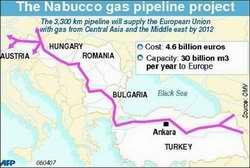
The 3,300-kilometer Nabucco pipeline, which will run from eastern Turkey to the Austrian capital Vienna, is expected to come online in 2014. Azerbaijan is one of the key suppliers for Nabucco, which will carry up to 31 billion cubic meters of gas annually.*
Here we are to serve you with news right now. It does not cost much, but worth your attention.
Choose to support open, independent, quality journalism and subscribe on a monthly basis.
By subscribing to our online newspaper, you can have full digital access to all news, analysis, and much more.
Subscribe
You can also follow AzerNEWS on Twitter @AzerNewsAz or Facebook @AzerNewsNewspaper
Thank you!