
OSCE MG unable to solve Karabakh conflict due to strong Armenian presence in co-chair countries
By Sara Rajabova
The Armenian-Azerbaijani Nagorno-Karabakh conflict continues to be a source of suffering and great danger to the security and stability of the South Caucasus region.
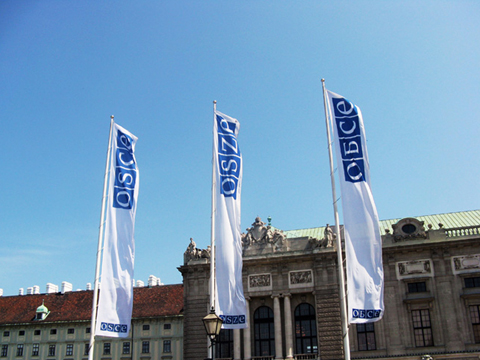
The efforts of international mediators to peacefully settle the conflict have not yet yielded results. Peace talks mediated by Russia, France, and the United States through the OSCE Minsk Group, and on the basis of the Madrid Principles, have been largely unsuccessful.
As the conflict could turn into a bloody war at any time, the situation increases anxieties among those people who have been suffering due to the conflict for over 20 years.
While Azerbaijan is doing its utmost to achieve a peaceful settlement of the conflict, on the contrary, Armenia is doing its utmost to disrupt the efforts to resolve the dispute.
The worst concern is that the international community continues to neglect the Nagorno-Karabakh conflict, which could lead to war, not only in the South Caucasus region, but could involve more states.
Speaking about the reasons for the delay in the settlement of the conflict for so many years, French diplomat of Ukrainian origin Dmitri Kupinov blamed the large presence of Armenians in those countries that have the ability to resolve the problem.
“Most of the minorities inhabiting the OSCE Minsk group co-chair countries are Armenians. For this reason, I think the United States, France and Russia are unable to resolve the Nagorno-Karabakh conflict,” Kupinov told DailyKarabakh website.
Kupinov stressed that 3 of 5 UN Security Council member countries are Minsk Group co-chair countries.
“These countries have a direct role in the decisions and sanctions set down by the UN Security Council. And the co-chair countries have not created conditions for this. That is why the UN cannot put pressure on Armenia,” he believes.
Kupinov went on to say that Azerbaijan has significant financial resources to devote to resolving the Nagorno-Karabakh conflict.
“In addition, Azerbaijan is located in an important geographical position and is a neighbor with regional powers, such as Russia, Turkey and Iran. Azerbaijan is a country possessing an ancient history, natural resources and cultural traditions. Naturally, the Nagorno-Karabakh conflict has made Armenia dependent on other countries. Exactly because of the conflict, Armenia cannot join any large-scale project carried out in the region. I think, in several years, Azerbaijan will liberate its Armenian-occupied territories in a military way, but not peacefully. I believe in it,” the French diplomat concluded.
For over two decades, Azerbaijan and Armenia have been locked in conflict which emerged over Armenia's territorial claims against its South Caucasus neighbor. Since a war in the early 1990s, Armenian armed forces have occupied 20 percent of Azerbaijan's territory, including Nagorno-Karabakh and seven surrounding regions.
Large-scale hostilities ended with a Russia-brokered ceasefire in 1994 but Armenia continued the occupation in defiance of four UN Security Council resolutions calling for immediate and unconditional withdrawal.
--
Sara Rajabova is AzerNews’ staff journalist, follow her on
Twitter: @SaraRajabova
Follow us on Twitter @AzerNewsAz
Here we are to serve you with news right now. It does not cost much, but worth your attention.
Choose to support open, independent, quality journalism and subscribe on a monthly basis.
By subscribing to our online newspaper, you can have full digital access to all news, analysis, and much more.
You can also follow AzerNEWS on Twitter @AzerNewsAz or Facebook @AzerNewsNewspaper
Thank you!