
Yerevan disrupts peace efforts to settle Nagorno-Karabakh conflict
By Sara Rajabova
In a time when mediators are seeking to intensify the peace process over the lingering Nagorno-Karabakh conflict, Armenia is staging provocations on the frontline with Azerbaijan to push aside the talks.
Aggravating the situation on the contact line before important developments in Nagorno-Karabakh conflict’s settlement process has become a tradition for Armenia.
Provocations on the contact line and along the Armenian-Azerbaijani border in fact demonstrate the Armenian military dictatorship’s unwillingness to withdraw from Azerbaijan’s occupied territories and resolve the problem peacefully.
The heavy battles as a result of Armenian military incursions continue to claim the lives of servicemen and civilians.
These acts of aggression on frontline by the Armenian side stem from several reasons.
The recent provocations came as the OSCE Minsk Group co-chairs and the Azerbaijani and Armenian foreign ministers gathered in New York to discuss organizing the next meeting between the leaders of the two conflicting countries.
This outdated violent method by the Armenian dictatorship was also used after the latest meeting between President Ilham Aliyev and President Serzh Sargsyan in France last October. The Paris talks have been assessed to bring some breakthrough in the stalled conflict, but an Armenian army helicopter's incursion into Azerbaijani airspace nearly three weeks after the meeting in France ended up in more fiery outcomes, when Azerbaijani troops shot down the chopper in a retaliatory move.
With destabilizing actions on the contact line and provocative statements, Armenia consistently attempts to change the course of negotiations. The occupant country has one goal -- to disrupt the peace talks and maintain the status quo in the Nagorno-Karabakh conflict, which is the continuation of Azerbaijan’s internationally recognized territories’ occupation.
Though the criminal regime in Yerevan willfully expresses its desire to resolve the conflict with Azerbaijan through peaceful means, its actions convey the contrary.
Unlike Armenia, Azerbaijan remains loyal to the peace process of the conflict and is strongly determined to a peaceful resolution of the Nagorno-Karabakh conflict.
However, Baku also warned that it is not going to wait forever and sees the current status quo in Nagorno-Karabakh conflict as unacceptable and unsustainable.
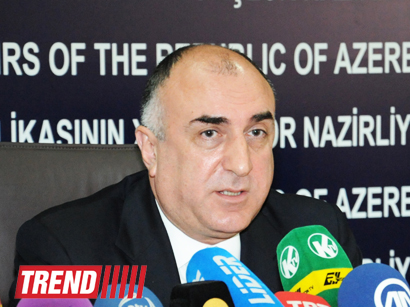
“Armenia aims to harm the negotiation process on Nagorno-Karabakh conflict by taking various provocative steps, in particular, by escalating the tension on the contact line of the troops and along the Armenian-Azerbaijani border,” said Azerbaijan’s Foreign Minister Elmar Mammadyarov in a meeting with Armenia’s Foreign Minister Edward Nalbandian in the presence of the OSCE Minsk Group co-chairs on September 25.
On the other hand, the conflict with Azerbaijan to some extent is in Armenia’s favor, such that with prolonging the conflict that at any time could turn into a bloody war, Armenia’s military junta can divert the attention of Armenia’s impoverished away from their miserable economic conditions.
Sargsyan’s military dictatorship, having faced nationwide discontent, as well as several political, economic, and financial crises, resorts to provocations on the frontline to keep the country’s public in fear.
With such adventurism, Sargsyan, who could be face-to-face with a possible coup attempt, will use all possible mean to preserve his military junta regime. So, the escalation of the conflict plays in his favor and protects the criminal regime from a coup d’état.
Therefore, it is in the best interest of the regime to disrupt the negotiation process and destabilize situation further.
Moreover, with his recent statement that “Nagorno-Karabakh is an inseparable part of Armenia” Sargsyan, seeks to provoke Azerbaijan into an all-out war.
This is yet more proof of Yerevan’s goal to nullify efforts for a peaceful solution to the conflict. It seems utterly useless to discuss the problem with a side that continues to openly violate international law.
In the meantime, the double standards shown by the international community and the ignorance to the Nagorno-Karabakh conflict over the years have done nothing more than add fuel to the fire. This blatant ignorance provokes the two conflicting sides to further increase hostilities.
Armenia’s aggression against Azerbaijan still remains unpunished and such impunity for its crimes encourages Yerevan to continue to ignore international law and maintain the status quo by prolonging the occupation of 20 percent of Azerbaijani territories.
However, the situation continues to escalate as constant ceasefire violations by the Armenian armed forces put the lives of civilians in danger. The intense shelling of Azerbaijan’s border settlements has recently resulted in the killing and wounding of civilians.
The shelling of civilians is prohibited by all international conventions. These acts violate the Geneva Convention with respect to the Protection of Civilian Persons in Time of War.
However, since the emergence of the conflict, Armenia has never fulfilled its obligations under international norms and principles and still continues to deliberately target civilians.
Azerbaijan indeed cannot tolerate this situation and has warned that the military-political regime in Armenia bears full responsibility for the escalation of tensions on the front. Azerbaijani officials have stated that blame for these negative developments will lie with the Armenian side.
Noting that Azerbaijan actively participates in the negotiation process in resolving the conflict peacefully, Mammadyarov exclaimed that if Armenia doesn’t withdraw from the occupied lands, “Azerbaijan will take all necessary steps to restore its territorial integrity, sovereignty, and ensure the inviolability of its borders.”
“As an aggressor and occupier, Armenia will be fully responsible for any step taken,” he added.
Azerbaijan also criticized international organizations for showing indifference to the shelling of Azerbaijani settlements and the killing of Azerbaijani civilians.
Though there is strong evidence proving Armenia’s criminal acts, the international community chooses to remain silent on this issue. To them, there is no difference between an aggressor and a country that is subjected to occupation.
Though the OSCE Minsk Group voiced serious concern about the escalation of tensions between the Armenian and Azerbaijani militaries in its latest report, the institution yet again failed to differentiate aggressor and victim.
The co-chairs called for the Armenian and Azerbaijani presidents to accept an OSCE mechanism to investigate ceasefire violations.
They believe that without such a mechanism, the sides will continue to blame each other for initiating deadly attacks on the contact line and along the Armenia-Azerbaijan border, according to a Minsk Group statement issued on September 26.
Mammadyarov noted that the establishment of mechanism to investigate incidents could only be considered when it doesn’t serve to maintain the current status quo, which the presidents of co-chairing countries called unacceptable and in effect justifying the occupation.
The co-chairs also said the ministers agreed to continue preparations for the next presidential summit, which is expected to be held before the end of this year.
However, taking into account how the recent provocations from Armenia could undermine efforts in the peace talks, the possibility of holding such a meeting seems far from reach.
--
Sara Rajabova is AzerNews’ staff journalist, follow her on
Twitter: @SaraRajabova
Follow us on Twitter @AzerNewsAz
Here we are to serve you with news right now. It does not cost much, but worth your attention.
Choose to support open, independent, quality journalism and subscribe on a monthly basis.
By subscribing to our online newspaper, you can have full digital access to all news, analysis, and much more.
You can also follow AzerNEWS on Twitter @AzerNewsAz or Facebook @AzerNewsNewspaper
Thank you!