
Numbers of refugees at all-time high
By Sara Rajabova
The number of refugees across the globe has reached an alarming level, with more streaming in daily as regional and international conflicts claim more victims, say international relief organizations.
The war in Syria alone has created more than four million refugees. Hundred thousands of people around the world are forced to flee their homes to escape the violence. Even after escaping death the refugees face great hardships, living in uncertainty and difficult situations. The ever-increasing number of refugees creates many problems for the hosting countries as well as for the international organization tasked to help them.
The number of people displaced from their homes living under the protection of the UN High Commission for Refugees, had reached an all-time staggering record number of 46.3 million people, according to a report by the UNHCR, released on January 7.
"As long as the international community continues to fail to find political solutions to existing conflicts and to prevent new ones from starting, we will have to deal with the dramatic humanitarian consequences," Antonio Guterres, UN High Commissioner for Refugees said in a statement.
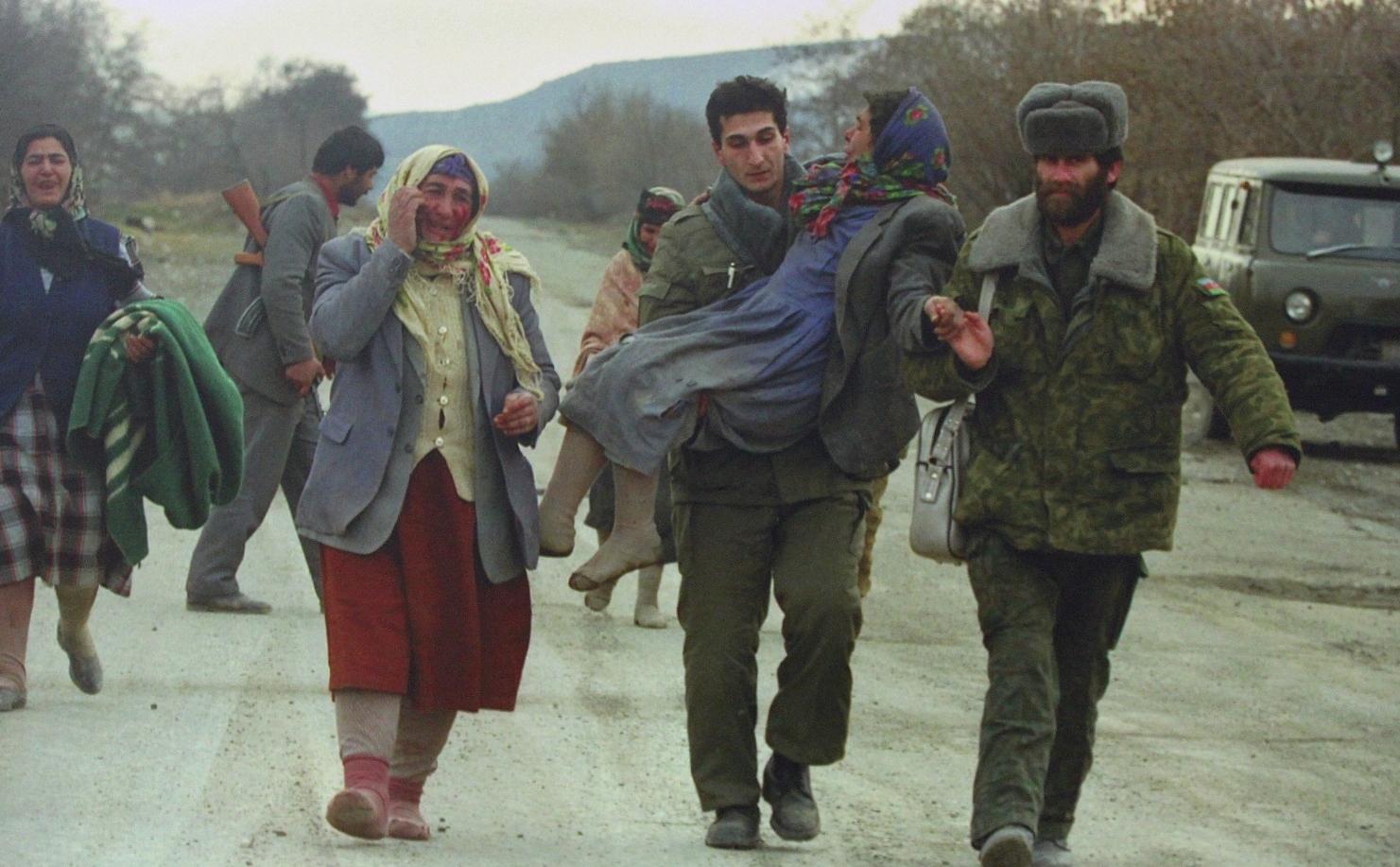
Azerbaijan faces its own refugee problem as a result of the war with Armenia over a number of territories, among them Nagorno-Karabakh, which Armenia occupied over two decades ago.
At least 250,000 Azerbaijanis were expelled from their historical lands as Armenia began an “ethnic cleansing” in 1988-1993. Nearly 50,000 Ahyska (Mesheti) Turks deported from Central Asia in 1990 took refuge in Azerbaijan.
The war which flared up in the late 1980s due to Armenia's territorial claims against its south Caucasus neighbor, left 700,000 civilians of Nagorno-Karabakh and the regions adjoining it, as well as the regions bordering with Armenia and Nagorno-Karabakh without homes.
They are temporarily settled in more than 1,600 settlements across 62 cities and regions of Azerbaijan.
The Azerbaijanis displaced from their homes as a result of the brutal war have been forced to live in very difficult conditions, , as are most refugees. Over the years, the vast majority of IDPs lived under the hardest conditions in tent settlements, pre-fabricated homes, farms, cargo cars on railways, public buildings, hostels, educational institutions and kindergartens, sanatoriums, incomplete building construction sites and other places.
The Azerbaijani government is going to great lengths to meet the needs of refugees and IDPs, as it has spent $5.4 billion to resolve the social problems of these people during the past 20 years.
However, resolving the problems of refugees and IDPs have been the focus of the government's attention since the early days of the occupation.
The State Program on improving the living conditions of refugees and internally displaced persons and their employment opportunities approved by a presidential decree in 2004 were successfully implemented in 2013.
New settlements were built for IDPs in 2001-2003 by the first funds allocated by the State Oil Fund, which enabled the government to demolish five IDP camps in the Beylagan region in 2003 and provide 1,330 refugee and 5,081 IDP families with new houses.
The State Oil Fund and other sources allocated 1.6 billion manats (about $2 billion) to building 82 modern settlements with all social and technical infrastructures in 2001-2013.
The poverty level has dropped from 49 percent to 5 percent in the country and from 75 percent to 15 percent among the IDPs.
Despite the state care and conditions created for them, the refugees and IDPs hope to return to their native lands, an impossible wish so long as the conflict remains unsettled.
Azerbaijan also receives appeals from asylum seekers, the majority of which are Afghans, Chechens with Russian citizenship, persons from Iran, and Syria.
A total of 1,689 refugees and asylum seekers have been registered in Azerbaijan as of January 1, 2015, according to the UNHCR country office's data, which included those registered by the State Migration Service of Azerbaijan.
"Some 1,304 of them are refugees and 385 are asylum seekers," the office added.
The majority of these people are Afghans (46 percent) and Chechens (37 percent), followed by other groups, like Pakistanis (8 percent), Iranians (6 percent), Syrians (0.8 percent) and others (4 percent).
--
Sara Rajabova is AzerNews’ staff journalist, follow her on
Twitter: @SaraRajabova
Follow us on Twitter @AzerNewsAz
Here we are to serve you with news right now. It does not cost much, but worth your attention.
Choose to support open, independent, quality journalism and subscribe on a monthly basis.
By subscribing to our online newspaper, you can have full digital access to all news, analysis, and much more.
You can also follow AzerNEWS on Twitter @AzerNewsAz or Facebook @AzerNewsNewspaper
Thank you!