
Trilateral talks on Garabagh deemed successful
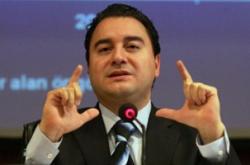
Azerbaijani, Armenian and Turkish foreign ministers held a
tripartite meeting in New York on Friday to mull pressing issues
facing the three countries, including the long-running
Armenia-Azerbaijan Upper (Nagorno) Garabagh conflict.
At the conclusion of discussions, which took place on the sidelines of the UN General Assembly session at the initiative of the Turkish Foreign Minister, Ali Babacan, the parties chose to continue holding meetings using a trilateral format.
The three ministers told reporters, after the talks, that the positive effect of such dialog on the peace process would be realized very soon.
Although co-chairs of the mediating OSCE Minsk Group (MG) - Yuri Merzlyakov of Russia, Bernard Fassier of France and Matthew Bryza of the United States - were in New York, they did not take part in the meeting.
The Turkish Anatolian news agency quoted Babacan as saying, "my like-minded counterparts sought further trilateral meetings to hold more efficient political dialogs."
In an interview with local TRT TV channel, Babacan said talks chiefly focused on the situation in the region, Turkey-Armenia relations and ways of solving the Garabagh problem. He emphasized that Turkish-Armenian relations, and problems between Azerbaijan and Armenia, are inter-related, therefore, progress to be achieved in solving either of these issues will definitely affect the other.
Babacan said a conducive situation has recently emerged for finding a solution to the Garabagh conflict. "The authorities in both countries have the willingness to resolve the conflict," he said.
He noted that the Caucasus is currently very volatile and a great number of conflicts are flaring in the region.
"The Caucasus has great potential. If peace and stability is established in the region, we believe a lot can be achieved here," Babacan said.
Eduard Nalbandian, the Armenian Foreign Minister said, after the ministerial, that important steps have been taken in settling the Garabagh dispute.
Asked about the prospect of reaching a solution by the end of 2008, he said, "We should talk not in terms of years, but the present day."
Elmar Mammadyarov, the Azerbaijani Foreign Minister, said among the issues discussed in the U.S. was Turkey`s recent proposal to set up a five-nation union, called the Caucasus Peace and Cooperation Platform.
"We discussed regional conflicts and believe this trilateral meeting took place on time. I think this is an important step for us to understand each other better."
He welcomed Ankara`s peace plan, stressing its importance for international cooperation.
Following a brief war between Russia and Georgia early in August, Turkish Prime Minister Recep Tayyip Erdogan offered to establish the Caucasus union. Azerbaijan, Armenia and Russia have already expressed their backing of the initiative, while Georgia has yet to state its position.
The possibility of arranging the next meeting of the Azerbaijani and Armenian presidents was also discussed, but no information was immediately available regarding the venue or date for possible talks.
Azerbaijani and Armenian foreign ministers also met to discuss the Garabagh settlement with the participation of the MG co-chairs, followed by their one-on-one meeting. During the discussions, Mammadyarov and Nalbandian cited the need for intensifying peace talks.
Following their meeting, the co-chairs welcomed the ministerial on the Garabagh settlement. "This round of meetings reflected a particularly constructive spirit and a desire by the parties to invigorate the negotiating process," they said in a statement.
"The sides discussed the possibility of a meeting of the two presidents in the near future. With this in mind, the co-chairs reiterated the position of their governments and the OSCE that there can be no military solution to the Garabagh conflict."
The conflict between the two South Caucasus republics reared up in the late 1980s, due to Armenia`s territorial claims. Armenia has been occupying over 20% of Azerbaijan`s internationally recognized territory since the early 1990s. Years of peace talks have brought few tangible results. Azerbaijani officials have repeatedly warned against Armenia`s policy of aggression, saying the country`s land will be freed at any cost.
Here we are to serve you with news right now. It does not cost much, but worth your attention.
Choose to support open, independent, quality journalism and subscribe on a monthly basis.
By subscribing to our online newspaper, you can have full digital access to all news, analysis, and much more.
Subscribe
You can also follow AzerNEWS on Twitter @AzerNewsAz or Facebook @AzerNewsNewspaper
Thank you!