
‘No need for public debate on Garabagh’
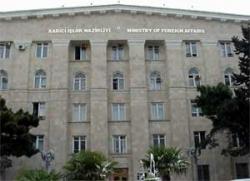
The Azerbaijan Foreign Ministry has said the latest proposals of
the OSCE mediators on settlement to the Upper (Nagorno) Garabagh
conflict should not be in public domain.
"There is no need to put on public discussion the written proposals forwarded to the two countries' foreign ministers in Madrid on November 28," the ministry spokesman Khazar Ibrahim said.
The document submitted by the Minsk Group co-chairs representing the United States, Russia and France is a set of basic principles for the negotiated settlement of the over a decade-long dispute.
Ibrahim said divulging the gist of the proposals was appropriate only if the conflicting sides fully reached agreement.
"We can't put it on public discussion before that. Nonetheless, we regularly provide information about some provisions of the issues being discussed," the spokesman said.
He added that special discussions on the Garabagh problem in the Azerbaijani parliament were not necessary either.
Mostly opposition lawmakers have repeatedly called for launching public debate on the negotiating process and demanded that the Foreign Ministry report to the legislature on the issue.
Ibrahim said such experience was non-existent in republics with the presidential form of government, as the Foreign Ministry "reports directly to the president".
He went on to say that Azerbaijan's territorial integrity could never be bargained upon. "This principle is part of the document currently under discussion. We have nothing to hide here."
The Foreign Ministry official reminded that the Helsinki Act passed in 1975 explicitly states that resolution of conflicts must comply with the territorial integrity of countries.
"It means that the principle of self-determination could stand but this may happen strictly within territorial integrity," Ibrahim added.
The conflict between the two South Caucasus republics reared up in the late 1980s due to Armenia's territorial claims. Armenia has been occupying over 20% of Azerbaijan's internationally-recognized territory since the early 1990s. The ceasefire accord was signed in 1994, but peace talks have been fruitless so far and refugees remain stranded.
Here we are to serve you with news right now. It does not cost much, but worth your attention.
Choose to support open, independent, quality journalism and subscribe on a monthly basis.
By subscribing to our online newspaper, you can have full digital access to all news, analysis, and much more.
Subscribe
You can also follow AzerNEWS on Twitter @AzerNewsAz or Facebook @AzerNewsNewspaper
Thank you!