
Azerbaijani MPs optimistic over Nagorno-Karabakh conflict settlement in 2014
By Jamila Babayeva
Azerbaijani MPs and political analysts are optimistic over the settlement of the Nagorno-Karabakh conflict in 2014.
MP Rovshan Rzayev believes that there is every reason for optimistic forecasts for the year of 2014.
In an interview with Day.Az, he stressed that Azerbaijani government pursued some successful policies in 2013. Rzayev also said that by continuing those policies, Baku will have more victories in 2014.
"Of course, my greatest desire is the return of the occupied Azerbaijani lands. I want young people to be more interested in this issue and to continue the efforts to resolve this problem," he said.
MP Govhar Bakhshaliyeva also expects a lot from 2014.
"I expect a lot from 2014. But first of all, as all Azerbaijanis, I am waiting for resolution of the conflict," she said.
Bakhshaliyeva believes that Baku's voice will be heard more clearly among the voices of other countries and nations in 2014.
"Our country's position in the world will be strengthened and the voice of Azerbaijan will sound louder in 2014," she stressed.
MP Aydin Mirzazadeh also believes that 2013, as its preceding year, was lost in the issue of a final settlement of the Nagorno-Karabakh conflict.
He stressed that due to the unconstructive position of Armenia -
Yerevan's refusal to comply with international law - there were no
achievement or contacts in this issue in the previous year.
He believes that in the settlement of the conflict everything
depends on the position of Armenia, since Azerbaijan is ready to
resolve the issue.
"But apparently, Armenia wants to solve the problem by destroying its independence and establishment of a state without any population, economy, and with no prospects for development," MP said.
Mirzazade believes that 2013 was one of the most successful periods in the development of Azerbaijan.
"In spite of everything, Azerbaijan has further strengthened its position in the Karabakh issue," he said.
Political analyst, Fikret Sadikhov, also believes that some partial results can be achieved at the settlement of the Nagorno-Karabakh conflict.
He believes that a radical solution of the problem in the short term is unlikely due to Yerevan's behavior.
"But the reality is that Armenia is struggling with difficult socio-economic, and domestic political problems that may force the country to take certain steps, which, in turn, will contribute to the final resolution of the problem in the future," Sadikhov concluded.
Political analyst, Rasim Musabeyov, believes that after the last meeting of the presidents of Azerbaijan and Armenia in December 2013 a new round of negotiations has begun.
"This is positive. But based on past experiences, some high expectations are misplaced, because, unfortunately, the talks have been unsuccessful so far. But there is a hope that these efforts will not be fruitless this time, because eventually the Armenian side sees that neither her tenacity, nor the support of countries that usually patronize Armenians, is able to force Azerbaijan to take actions that are inconsistent with the country's sovereignty," Musabeyov stressed.
He further said the social and economic situation of Armenia is getting worse day by day and there is no prospect.
"This will encourage them to take a more realistic approach. Progress in the negotiations can be achieved, but in general, we should still be cautious," he concluded.
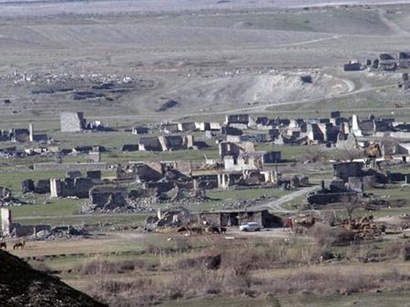
Armenia occupied over 20 percent of Azerbaijan's internationally recognized territory, including Nagorno-Karabakh and seven adjacent regions, after laying territorial claims against its South Caucasus neighbor. The occupation caused a lengthy war in the early 1990s.
The UN Security Council has adopted four resolutions on Armenia's withdrawal from the Azerbaijani territory, but they have not been enforced to this day.
Peace talks, mediated by Russia, France and the U.S. through the OSCE Minsk Group, are underway on the basis of a peace outline proposed by the Minsk Group co-chairs, dubbed the Madrid Principles. The negotiations have been largely fruitless so far.
Here we are to serve you with news right now. It does not cost much, but worth your attention.
Choose to support open, independent, quality journalism and subscribe on a monthly basis.
By subscribing to our online newspaper, you can have full digital access to all news, analysis, and much more.
You can also follow AzerNEWS on Twitter @AzerNewsAz or Facebook @AzerNewsNewspaper
Thank you!