
Stagnation in talks is due to Armenia’s position: official
By Sara Rajabova
At the recent meeting of Azerbaijani and Armenian Presidents, Armenia showed its intention to move the negotiations forward, Deputy Head of Azerbaijan`s Presidential Administration said.
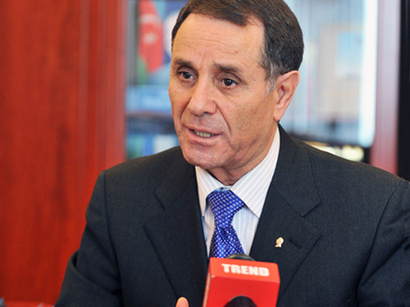
In his interview with local media, Novruz Mammadov said the Azerbaijani and Armenian Presidents have had almost no contact for more than two years and therefore the peace process over the Nagorno-Karabakh conflict had come to a standstill.
The Vienna meeting was the presidents' first meeting since the January 2012 summit in Sochi.
Mammadov said this stagnation in the negotiations was due to the position that Armenia held given its objectives.
Armenia considered the issue and came to the conclusion that this was an ineffective way which promised no success, Mammadov believes.
The key objective was to set up a series of meetings after an interval.
He believes the conditions are good for talks now. "Armenia demonstrated its intention to continue the negotiations based on the lessons he learned from some processes. It is necessary to carry on negotiations over the settlement of the Nagorno-Karabakh conflict."
He said Armenian leadership uses these meetings as a ploy.
Mammadov said they show a good attitude during the meeting and try to behave well in front of the Russian president, the co-chairs, and others.
Unlike the previous meetings, this time they did not make accusatory and provocative statements on various issues after talks, he stressed.
"We did not witness such attitude this time. Still, one cannot rely completely on the Armenian side, as they constantly change their position. It might have been caused by various reasons, but we still need to wait and see," Mammadov said.
Azerbaijani and Armenian Presidents Ilham Aliyev and Serzh Sargsian met in Vienna on November 19.
After the meeting, President Sargsyan said the talks with the Azerbaijani President were normal.
The foreign ministers of Azerbaijan and Armenia will meet in Kiev during the OSCE Ministerial Council meeting on December 5-6 to mull the settlement of the conflict.
Armenia and Azerbaijan fought a lengthy war that ended with signing a fragile ceasefire in 1994. More than 20,000 Azerbaijanis were killed and over 1 million were displaced as a result of the large-scale hostilities. Since the war, Armenian armed forces have occupied 20 percent of Azerbaijan's territory, including Nagorno-Karabakh and seven surrounding regions. Armenia continues the occupation in defiance of four UN Security Council resolutions that call for immediate and unconditional withdrawal.
Peace talks brokered by mediators from Russia, France and the U.S. have produced no results so far.
Here we are to serve you with news right now. It does not cost much, but worth your attention.
Choose to support open, independent, quality journalism and subscribe on a monthly basis.
By subscribing to our online newspaper, you can have full digital access to all news, analysis, and much more.
You can also follow AzerNEWS on Twitter @AzerNewsAz or Facebook @AzerNewsNewspaper
Thank you!