
Minsk Group's fruitless mediation efforts seen as a concern
By Nigar Orujova
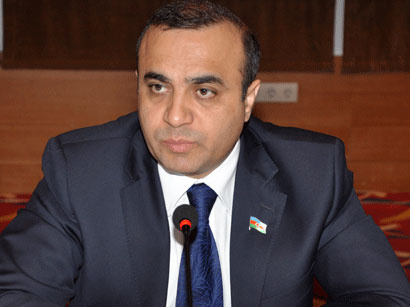
The OSCE summit held in Istanbul in 1999 was of great importance from the viewpoint of security architecture, but many issues remain unresolved, and some of them are long-lasting conflicts like the ones in such regions as Trans-Dniester in Moldova, Abkhazia and South Ossetia in Georgia and, certainly, the Armenia-Azerbaijan Nagorno-Karabakh conflict, Azerbaijani MP Azay Guliyev said at an OSCE meeting held in Istanbul from June 29 to July 3.
The 22nd OSCE Parliamentary Assembly Annual Meeting in the Turkish city discussed a report of the committee on political and security issues.
According to Guliyev, despite the talks, which have been underway for 21 years, the OSCE Minsk Group has failed to achieve any progress and the Nagorno-Karabakh conflict remains unresolved.
Guliyev also said he supports proposals by Deputy Speaker of Azerbaijan`s Parliament Bahar Muradova, and taking into account that the Minsk Group co-chairs have not achieved any progress in peace negotiations, she proposed to convene the Minsk Groupin full composition.
It was noted that a joint meeting of the 11 member states would be effective from the viewpoint of the dynamic of the process of comprehensive and unequivocal search for a solution to the problem. There are questions which should find answers in the course of the Minsk Conference, like "why negotiations are fruitless", "how the problem can be solved peacefully", and "what are the main obstacles". Once again, the format of the Minsk Group should be considered -- should other countries be engaged in this process or should the mandate of the group be strengthened?
The MP also expressed his views on the opinions voiced with regard to the statement adopted by the Armenian delegation at the G8 forum of the co-chairing countries.
Guliyev said that the presidents of the three countries co-chairing the OSCE Minsk Group in their recent statement emphasized that the existing status quo in the conflict is unacceptable. The status quo should be changed, and for this purpose the Azerbaijani lands must first be liberated from the Armenian occupation.
Meanwhile, political analyst Fikret Sadykhov told the local press that when Azerbaijan joined the OSCE in the early 1990s, the country bound great hopes with the organization.
"When the OSCE created the Minsk Group with three co-chairs, our expectations increased, given the fact that the leading states became co-chairs in the settlement of the Karabakh conflict," Sadykhov said.
He said that the Lisbon summit took in 1996 the right decisions supporting Azerbaijan's territorial integrity, and the subsequent summits confirmed this concept, but this yielded no result.
"Time showed that this organization essentially is not trying, is not seeking the triumph of justice, peace and stability in the South Caucasus region, because what has been happening over the course of 20 years with the participation of the OSCE Minsk Group, to put it mildly, does not satisfy Azerbaijan," he said.
Sadykhov also stressed that Azerbaijan does not need co-chairs who are engaged in appeasement of the aggressor, realizing that there are UN Security Council resolutions for immediate withdrawal from the occupied Azerbaijani territories and there are statements by the heads of the leading states.
"We expected more decisive action and specific solutions from the OSCE relating to final restoration of peace and a just solution of the conflict, but we do not see it and that cannot satisfy us. With all due respect to this organization, we cannot be satisfied with the work of the OSCE relating to the settlement of the conflict," he said.
The Nagorno-Karabakh conflict emerged in 1988 when Armenia made territorial claims against Azerbaijan. Since a lengthy war between the two South Caucasus countries that displaced over a million Azerbaijanis and ended with the signing of a precarious cease-fire in 1994, Armenian armed forces have occupied over 20 percent of Azerbaijan's internationally recognized territory, including the Nagorno-Karabakh region and seven surrounding districts. Armenia has not yet implemented the U.N. Security Council's four resolutions on a pullout from the occupied territories.
Peace talks brokered by Minsk Group co-chairs representing the United States, Russia and France have been largely fruitless so far.
The negotiations are underway on the basis of the peace outline dubbed the Madrid Principles, also known as Basic Principles. The document envisions a return of the territories surrounding Nagorno-Karabakh to Azerbaijani control; determining the final legal status of Nagorno-Karabakh; a corridor linking Armenia to the region; and the right of all internally displaced persons to return home.
Here we are to serve you with news right now. It does not cost much, but worth your attention.
Choose to support open, independent, quality journalism and subscribe on a monthly basis.
By subscribing to our online newspaper, you can have full digital access to all news, analysis, and much more.
You can also follow AzerNEWS on Twitter @AzerNewsAz or Facebook @AzerNewsNewspaper
Thank you!