
Georgia, Azerbaijan committed to close ties after election
By Sabina Idayatova
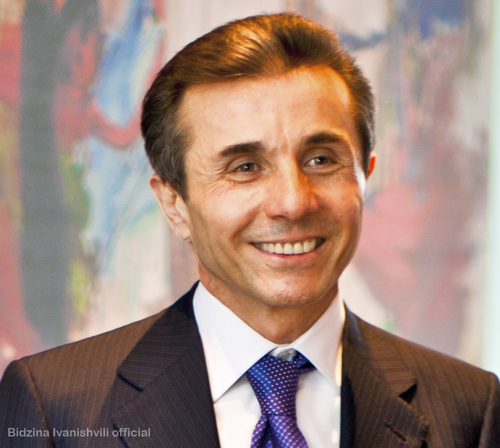
Georgian billionaire Bidzina Ivanishvili, the leader of the Georgian Dream coalition that won October 1 parliamentary elections, intends to strengthen his country's historical partnership with neighboring Azerbaijan.
Ivanishvili, who is likely to become prime minister, told a briefing in Tbilisi that Georgia will establish close and friendly relations with the Azerbaijani government.
"We have all the opportunities to establish such relations and we will do our best to do so," Ivanishvili noted.
He thanked Azerbaijan's government for supplying gas to Georgia for social needs on preferential terms.
Ivanishvili also said that there are suitable conditions to establish close relations between the two South Caucasus neighbors.
"I have established friendship with our fellow citizens Azerbaijanis during my pre-election trips and got acquainted with many Azerbaijanis. I have grown to love these hard-working people, so, I am going to do everything for their integration into Georgian society, for them to hold senior positions in the government," Ivanishvili added.
Georgian Dream won 83 out of 150 seats in the Georgian parliament at the elections. The United National Movement (UNM) of President Mikheil Saakashvili, who will remain president until his current term ends in October 2013, will have 67 seats.
The majority of the president's executive powers will be transferred to the new prime minister under constitutional reforms that take effect in January.
Azerbaijan has also pledged to continue maintaining fraternal relations with Georgia.
"I believe that the relations between Georgia and Azerbaijan are deep, friendly and rely on close partnership," the Azerbaijani Presidential Administration's head of foreign relations, Novruz Mammadov, told Trend news agency. "These friendly, fraternal and good neighborliness relations between the two countries and peoples will further continue in the same direction and in the same content."
Mammadov stressed the fact that President Saakashvili's party failed to rally Georgian public support was surprising not only for him, but for everyone to some extent.
According to Mammadov, victory in the elections surprised both the opposition itself and the international community.
"It is necessary to wait a little, as the Georgian election body is to make its position public. Then we can express our opinion," Mammadov said.
Azerbaijan respects the will of the Georgian people, Foreign Ministry spokesman Elman Abdullayev told Trend while commenting on the results of Georgia's parliamentary elections.
Obviously, the strategic partnership with Azerbaijan is vital for Georgia, particularly an economic one. The history of Azerbaijan and Georgia dates back many centuries. The two countries have maintained close relations ever since gaining statehood in 1918. Both states became republics of the Soviet Union in 1922 and continued to maintain good relations.
With the collapse of the USSR In 1991, both Azerbaijan and Georgia restored their independence, and established diplomatic ties on November 18, 1992. In an effort to balance regional interests, on October 10, 1997, Azerbaijan and Georgia became two of the four founding members of GUAM, or the Organization for Democracy and Economic Development, which also comprises Ukraine and Moldova.
Azerbaijan and Georgia broadly cooperate in regional energy development, transport, economic and other important projects.
The two countries have long-standing and successful cooperation in the energy sector. The main routes for the delivery of Azerbaijani oil and gas lie through Georgia, including the Baku-Supsa and Baku-Tbilisi-Ceyhan oil piplelines and Baku Tbilisi-Erzurum gas pipeline. Azerbaijani state oil company SOCAR is closely involved in the energy market of Georgia.
Georgia plans to implement projects to build new hydro-power plants, which will increase its capacities in the electricity sector, and Azerbaijan has pledged to invest in the project.
Another important joint project is construction of a new SOCAR plant in the free industrial zone in Kulevi, Georgia for carbamide production.
Also, the two countries are implementing the Baku-Tbilisi-Kars railway project. The rail line aims to directly link the railway systems of Azerbaijan, Georgia and Turkey to transport large amounts of cargo and passengers.
Azerbaijan has long been the second biggest trade partner of Georgia. According to the Georgian statistics body, Azerbaijan accounts for 12.2% of Georgia's foreign trade.
Georgian exports to Azerbaijan include cement, locomotives and other railway vehicles, mineral and chemical fertilizers, alcoholic beverages, glass and glass products, pharmaceuticals, etc. Azerbaijan, in turn, exports oil and oil products, natural gas, plastic products, furniture, and other goods.
The two countries have so far signed 90 bilateral agreements, with 50 of them associated with the regulation of economic relations.
Azerbaijan and Georgia have been bound by a strategic and firm partnership and friendly relations for centuries, and hardly any political force that comes to power in Georgia could ignore or do away with the gained experience and successful cooperation between the two countries.
In short, good relations with Azerbaijan can be considered as a key to the successful development of Georgia, regardless of who is in power in the country.
Here we are to serve you with news right now. It does not cost much, but worth your attention.
Choose to support open, independent, quality journalism and subscribe on a monthly basis.
By subscribing to our online newspaper, you can have full digital access to all news, analysis, and much more.
You can also follow AzerNEWS on Twitter @AzerNewsAz or Facebook @AzerNewsNewspaper
Thank you!