
Iran’s capture of US drone threat to Azerbaijan – scholar
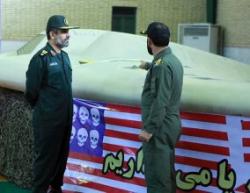
Iran’s capture of an American drone early last month will have "profoundly negative consequences" in the Caspian region and particularly neighboring Azerbaijan, a scholar at a U.S.-based think tank said in a story published by The Washington Times.
Iran on December 8 displayed one of America’s most advanced intelligence-gathering aircraft after the US drone crashed on its territory. US media reported that the drone was aimed to track down Iran’s nuclear sites.
The RQ-170 Sentinel, built by Lockheed Martin, was first acknowledged by the U.S. Air Force in December 2009. The drone has a full-motion video sensor that was used this year by U.S. intelligence to monitor al Qaeda leader Osama bin Laden's compound in Pakistan ahead of the raid that killed him.
Stephen Blank, a professor for the Strategic Studies Institute at the U.S. Army War College in Carlisle, Pennsylvania, wrote in the article that every Central Asian state, as well as Azerbaijan, "harbors suspicions" about Iran. He wrote that Tajikistan called home its students in Iranian religious establishments out of fear that they were being infected with a revolutionary Islamist indoctrination. None of the other Central Asian states wants Iran to be a member of the Shanghai Cooperation Organization, nor do they support its nuclear program. They all suspect Iran’s potential for inciting insurgents and terrorists in their countries. Iran also has regularly thwarted efforts by Azerbaijan, Kazakhstan and Turkmenistan to expand energy production into the Caspian Sea, the analyst said.
But the most overt displays of Iranian power and threats, Blank continues, have been employed against neighboring Azerbaijan, not least because Tehran "suspects Baku of being pro-American and pro-Israeli, but also because it fears that Azerbaijan may seek to exploit the ethnic grievances of Iranian Azerbaijanis in northwestern Iran and detach the area from Iran with great power support".
"This is not a groundless fear, as the Soviet Union sought to do so in 1920-21 and 1945-46. Nevertheless, this fear of the Azerbaijani minority is more a pretext for Iran’s current threats against Azerbaijan than a rational basis for Iranian policy. Iran’s real fear is Azerbaijan’s support for the United States and Israel and its apprehension that Azerbaijan might become a platform for a U.S. operation against it," Blank wrote.
He stressed that Iran has been threatening Azerbaijan for more than a decade.
"Iran has staunchly supported Armenia’s conquest of undisputed Azerbaijani territory in the Nagorno-Karabakh crisis to the point that Armenia regularly votes against sanctions on Iran in the United Nations. In 2001, Iran shot up an Azerbaijani oil-exploration platform in the Caspian Sea. Apart from blocking the legal resolution of that sea’s status, Iran regularly threatens Azerbaijan with invasion and other unspecified military action if it supports a U.S. base in its country and because of its close ties with Israel."
The article says further that more recently, Iranian incitement is clearly behind the "anti-government campaign by religiously inclined Shiites", who are protesting the government’s "anti-religious" policies.
"Whatever the merits of those policies and resistance to it, the evidence of Iran’s support for agitation and propaganda, its regular efforts to delegitimize the Azerbaijani government and continuing overt military threats against the regime are indisputable," Blank says.
He said that as Iran’s missile and satellite capabilities grow, and should it get a nuclear weapon, these threats become "all the more frightening", whatever Tehran’s intentions may be.
"Iran’s acquisition of the reconnaissance, surveillance and potential strike capabilities that this drone and others like it possess adds immeasurably to its capabilities to threaten not only its Middle Eastern neighbors but its Central Asian and Caucasian neighbors."
Blank says the current assessment of the damage caused by the loss of the RQ-170 Sentinel drone reminds policymakers and analysts that the threat posed by Iran is not just to the Middle East, Israel, Saudi Arabia and the other Gulf states but also to Iran’s northern neighbors and international security in general.
"Proliferation of this technology might not be as great a threat as an Iranian nuclear weapon, but it is hardly a small threat. Consequently, Iran’s likely mastery of this system would intensify significantly the threat in the Middle East, the Caucasus and Central Asia. The United States and those governments, too, must take that threat into account and respond to a visibly more dangerous situation," Blank concludes.
Azerbaijani analysts, however, do not believe the capture of the US drone poses a threat to Azerbaijan. Pundit Rasim Musabayov believes Iran is in no need to use spy drones in the neighboring country.
"For this purpose they [Iranians] have certain persons who are engaged in spying activity here. And, naturally, Azerbaijani security agencies are taking due action to crack down on them," Musabayov said.
Jumshud Nuriyev, PhD in political science, said the US professor’s views are baseless. He said Iran’s accusations against Azerbaijan after the capture of the US drone "do not have legal, military or political basis".
"In addition, Iran is leveling various claims against Azerbaijan. [This is despite the fact that] the Azerbaijani government has never reproached Iran over having established ties with Armenia or other Christian countries in this shape or another," Nuriyev said.
Here we are to serve you with news right now. It does not cost much, but worth your attention.
Choose to support open, independent, quality journalism and subscribe on a monthly basis.
By subscribing to our online newspaper, you can have full digital access to all news, analysis, and much more.
You can also follow AzerNEWS on Twitter @AzerNewsAz or Facebook @AzerNewsNewspaper
Thank you!