
“Egypt events were people’s quest for democracy”
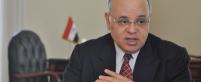
BAKU - AssA-Irada presents an interview with Egyptian Ambassador to Azerbaijan Saber Mansour, another in the series of interviews with diplomats based in the country.
Q. Mr. Ambassador, Egypt was one of the first countries to have
recognized Azerbaijan’s independence. When did the Egyptian embassy
in Azerbaijan begin operating?
A. Egypt recognized Azerbaijan’s independence in 1992, and in 1993
our embassy started work here. We were one of the first among Arab
and Middle Eastern countries to open an embassy in Baku.
I have been here since September 2008. The embassy has consular and political affairs sections. Also, we have a culture center in Baku based outside the embassy compound.
Q. What are the goals of the culture center?
A. The center is engaged in cultural and educational exchanges. For
instance, we grant scholarships to students. As part of these
programs, Azerbaijani students receive bachelor’s, master’s and PhD
degrees in Egyptian universities. There are currently at least 150
Azerbaijani students in Egypt. They major in Arabic, medicine,
political and economic science, history, and literature.
Egyptian students study in Azerbaijan too. 29 Egyptian aspirants to study for PhD at Baku state university.
Moreover, the Culture Center organizes cultural events like festivals, film weeks and Days of Culture. The Days of Culture take place every year in Egypt and Azerbaijan interchangeably. Solemn events were held in Cairo as part of the Days of Azerbaijan in January 2010. The Egyptian people took great interest in these events, because Azerbaijani culture is known well around the world and has very ancient history.
It is worth mentioning that the cultures of Egypt and Azerbaijan are very close. Both countries have ancient history. We are linked with common culture, in particular, religion. You are an Islamic country, and we are too. Throughout history, there has been movement of people from this area to the Middle East, to Egypt, and from there to this region. That is why we have a lot of common values.
Q. What is the current level of bilateral trade?
A. When I started working here as ambassador in 2008, bilateral
trade turnover was $2 million per year. Just one year later, in
2009, the figure reached to $10 million. Azerbaijan imports
medicine from Egypt and exports petrochemicals to the country.
The volume of trade surged last year, as Azerbaijan started supplying its crude to Egyptian refineries in Alexandria. The oil products produced there are delivered to the domestic market or other countries. Some experts say that the trade turnover between our countries could hit $1 billion soon.
Our cooperation is expanding rapidly particularly in the oil and gas sector. As you know, Egypt is also rich in oil and gas. We want to explore these fields jointly with Azerbaijan, because your country possesses history-long experience in the area of oil and gas production and geology, and we are looking to capitalize on that experience.
At the same time, I would like to avail of this opportunity to invite Azerbaijani businessmen to invest in other fields of the Egyptian economy. I can assure them that our country has extensive potential in this regard.
Q. As you know, 20 percent of Azerbaijan's territory is under
Armenian occupation. In your opinion, how should the Nagorno
Karabakh conflict be resolved in line with international law?
A. The Egyptian government unequivocally supports Azerbaijan’s
territorial integrity and applauds all steps taken to reach a
peaceful settlement of the conflict and the efforts of the OSCE
Minsk Group (which is mediating peace talks). We are on the side of
international law, and it stipulates that Azerbaijan’s territorial
integrity cannot be a subject of negotiations.
Q. Egypt has been in international limelight in past months due
to the developments ongoing there. How would you describe what is
happening?
A. It was right of the people to look for democracy, for justice
and for more opportunities, for work and so on. That’s the main
reason of what is happening. People took to the streets to call for
a better standard of living. In other words, they advocated for
some rights that they deemed to have been deprived of. But first
and foremost, it was peaceful. And I believe that Egypt was a good
example for other nations.
We can see the benefits of this process. For example, people in Egypt can now express themselves freely. Military units have taken the situation under control and a transitional government is in place. 13 clauses of Egypt’s Constitution have been amended. Our main goal is for the change of government in Egypt to comply with the will of the people.
New political parties have been established in the country. We have a parliamentary election in September, and after that we will hold a presidential election. There is free and democratic rivalry, and people are able to freely express their views about election candidates.
Q. Do you agree to some extent with the views that the
developments in Egypt were fueled by the West?
A. It is a fact that the people took to the streets on their own
free will. The demands for change were mainly laid down by youths.
Afterwards, other groups of society joined this movement. So, no
one could say that this was done by the United States or the West.
You cannot blame the expression of will by hundreds of thousands of
people on outside forces.
Q. Al-Fatah and Hamas have recently signed a unity agreement
with Egypt’s mediation. This was a crucial step not only for the
region but for the whole world. In this context, how do you see the
future relations between Egypt and Israel?
A. We want to cooperate with all countries in accord with
international law. Regional stability is one of our top priorities.
We don’t see anyone as our enemy.
We want to do our utmost to reach a solution to the many-year-long Palestine problem. So, we are now focused on Palestine. The first step has been taken: the Palestinian sides have been united. The next step will be extricating Gaza from blockade, as people are suffering there. This problem must be resolved. People are tired of the negotiating process, and we have to move forward.
As another step, the Egyptian government plans to hold an international conference soon to facilitate a solution of the problem. Based on the decisions to be passed there, the conflict should find its solution.
Q. Mr. Ambassador, let’s go back to Azerbaijan. You have been in
Baku for about three years. What are your impressions about the
city?
A. I had never been here before my appointment as ambassador.
Certainly, I had read about the country. But the day I arrived here
I was very impressed indeed. My wife, children and myself have
grown fond of Baku and Azerbaijan.
Baku has developed greatly. Egyptians coming here are dazzled with the beauty of your country. But above all, the people here are very friendly and sociable. Very close to us. I feel at home here. And if I don’t talk, the Azeris think that I and my wife are from here. Sometimes they even ask my wife "you are Azeri, why didn’t you speak Azeri?"
We are very close. Both you and us respect family traditions. Your lifestyle and even weddings are similar. I have been to a number of weddings here. Let me tell you, they are the same as ours. Just as you do, family members and friends come to the wedding, and the groom and bride get presents, we call it "nokta" in Egypt. And families visiting each other is exactly what we do in Egypt. Our cuisines are very similar too. Azerbaijan is like another homeland to me. My children go to school here. My family members are very happy here.
Q. Have you been to Azerbaijani regions?
A. I have been to Shaki, Guba and Sumgayit together with my family.
We love nature. And the nature is beautiful in Azerbaijan.
Q. What are the similarities and differences between our culture
and music?
A. Our way of life, our senses are so close that our customs and
traditions, our cultures become similar as a result.
I can relate to your music too. As you know, there are different types of Mugam. We have Mugam too. Sometimes when I am in the city I often hear Egyptian music.
At the same time, during the Days of Azerbaijan in Egypt local residents admired your music, songs, folklore, dance and other arts.
Biography
Ambassador Saber Abdel Kader Mansour was born on August 26, 1953 in
Giza, Egypt. He graduated from the University of Cairo in 1975 as
Bachelor of Economics and Political Sciences. In 1977-1979 he was
political analyst and reporter at the Egyptian radio and TV
association under the ministry of information and also at
AL-Gomhuria newspaper. In 1979-1980 Mr. Mansour joined the ministry
of foreign affairs. In 1981-1987 he served at the Egyptian Embassy
in Baghdad. He served at the Egyptian Embassy in Madrid from
1987-1991 and as Consul of the Consulate General of Egypt in New
York from 1991-1995. Mr. Mansour then rejoined the ministry of
foreign affairs. From 1996-2002 he served at the Egyptian Embassy
in Cameroon and headed the department of Sudan. From 2002-2006 he
served as Ambassador of Egypt to the Philippines. Until 2008, he
acted as Director of the Sudan department.
Since 2008, he has acted as Ambassador of the Arab Republic of Egypt to Azerbaijan.
Mr. Mansour is fluent in English, French and Spanish.
He is married and has three sons.
Here we are to serve you with news right now. It does not cost much, but worth your attention.
Choose to support open, independent, quality journalism and subscribe on a monthly basis.
By subscribing to our online newspaper, you can have full digital access to all news, analysis, and much more.
You can also follow AzerNEWS on Twitter @AzerNewsAz or Facebook @AzerNewsNewspaper
Thank you!