
EU assesses Azeri record on co-op program
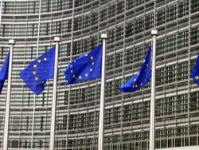
The European Union has issued its first annual report on Azerbaijan
assessing the country's progress in meeting its international
commitments.
It said there has been "limited tangible progress" in 2007 in meeting the objectives of the Action Plan signed within the European Neighborhood Policy (ENP) in the area of democratic governance.
"These largely reflect the commitments entered into when Azerbaijan became member of the Council of Europe (CE) and the OSCE. The Azerbaijani government has not exploited the opportunities offered by the ENP Action Plan to carry out political and economic reforms in the country, in areas such as democracy, rule of law (particularly reform of the judiciary and fight against corruption), human rights and fundamental freedoms, sustainable economic development and the business environment. Carrying out the reform agenda will in the long term promote political stability and economic development."
The EU welcomed the reforms carried out in the judiciary system, local self-administration and citizens' military service. It also cited progress in the solution of the "political prisoners" problem in the country as well as vigorous efforts made by the government in fighting drug smuggling, human trafficking and terror.
The report also contains a number of critical remarks. Despite certain improvements documented during the 2003 presidential elections, international groups cited some problems regarding the electoral process.
"The reform of the electoral framework, in line with the recommendations of the OSCE/ODIHR and the CE Venice Commission, has yet to be addressed. While cooperation with these organizations continued throughout 2007, the revision of the electoral code (in particular related to the composition of the electoral commissions and to the complaints and appeals procedures), as well as the update of electoral rolls and the equitable access to news coverage of political parties and candidates, need to be addressed as a matter of urgency, in the perspective of the presidential elections in 2008," the EU said.
It said ensuring that electoral campaigns, access to media and the elections themselves are free and fair would strengthen Azerbaijan's credibility and its aspirations to come closer to Europe.
The EU also pointed to problems with freedom of speech. It said the issue of freedom of expression and media remains "a source of serious concern" and requires urgent action by the authorities in order to conform to the corresponding provisions in the ENP Action Plan, the Partnership and Cooperation Agreement and the relevant obligations contracted by the country upon membership of the OSCE and the CE.
"Media pluralism is limited, especially in the electronic media, and self-censorship among journalists is widely observed. Several leading independent media were closed down by the authorities. A number of cases of violence and harassment against independent journalists have been reported, yet these have rarely been investigated or prosecuted," according to the report.
The continued criminalization of defamation and libel has led to an increase in the number of charges against independent journalists and the imprisonment of journalists. Five of the eight journalists jailed in 2007 were released following a presidential pardon in December 2007.
"A rapid and positive solution to the case of the remaining three journalists in jail and a revision of the current norms on libel and defamation would certainly contribute to improving the attainment of the relevant Action Plan objective," the document said.
Concerns have been expressed regarding pre-trial detention, in particular restrictions on access to a lawyer and persistent allegations of torture. Effective investigation of allegations of torture and ill-treatment remained minimal. Efforts have however been made to improve the human rights training of law enforcement officials. These include the introduction of a new recruitment examination, the adoption and distribution of training material to police officers, the establishment of a 24-hour complaints mechanism. The Interior Ministry has developed constructive cooperation with civil society and the Ombudsperson. The latter is allowed to visit any detention center without prior notice or permission.
With regard to anti-corruption combat, the EU said that although some legislative steps were taken, corruption remains pervasive including at high level. The former state program on combating corruption for 2004-2006 was succeeded by a national strategy on increasing transparency and combating corruption adopted in June 2007. The national strategy provides for a number of activities aimed at increasing transparency in decision-making mechanisms and rules, admission to the civil service, revenues and expenditures of the state budget, financing of political parties, government procurements, privatization, the functioning of state authorities and municipalities, and other areas. In July 2007, a presidential decree on transparency and the development of anticorruption strategies paved the way for stronger sanctions and stronger prosecutorial measures, which remain to be confirmed in practice.
In October 2007 the law "On changes and addenda to a number of laws of Azerbaijan on the fight against corruption" was adopted obliging state officials and civil servants to provide annual declarations of income. Despite these legislative acts, implementation and enforcement, as well as a change of culture and mentality still remain to be seen. The backsliding in corruption is confirmed by international surveys.
Regarding the protection of national minorities, the EU believes the authorities did not address the absence of a legislative and institutional framework. Issues of concern include the limited access to education in minority languages and the lack of a dedicated complaints mechanism.
It also said that the last two years Azerbaijan began exporting significant quantities of hydrocarbons, resulting in very high government revenues and making it one of the fastest growing economies in the world. Nevertheless, diversified development of the non-oil economy will be critical for the country's overall development. This would require that the government of Azerbaijan also target its efforts to improve the social services and infrastructure, to tackle poverty and generate employment.
Head of the EU office Alan Waddams said while presenting the report that it contained a great number of critical remarks but this should be of no concern "as they are meant for the country's good".
"Azerbaijan is still under development, and I believe it is on the right path," he added.
Waddams said the EU's objective was not to pressure Azerbaijan but to make recommendations on ways of improving the situation, while conducting reforms and improving laws was in the competence of the government.
"We are merely guiding Azerbaijan as it takes steps along the path of democracy. Western organizations should praise the newly-independent states, besides criticizing them, to encourage them to reach democratic standards. Our key goal here is to assist countries that are keen on development," the EU official said.
Waddams said the country's admission to the EU was possible in the foreseeable future, but the requirements put forth by the organization before the government should be met first.
"There are guidelines referred to as the Copenhagen criteria that Azerbaijan has yet to comply with. These mainly include economic liberalization, embracing European values and democracy."
Touching on economic relations, Waddams said Azerbaijan was currently the EU's key trade partner and the 27-member bloc therefore attached tremendous importance to its cooperation with the South Caucasus republic.
Waddams emphasized that Azerbaijan's trade turnover with the EU states increased 85.3% in 2006 compared to the previous year to hit 7.42 billion euros. The growth somewhat slowed down in 2007, rising 20.8% to reach 8.96 billion euros.
Azerbaijan and the EU first established contractual relations in 1996 through a Partnership and Cooperation Agreement which entered into force in 1999. The document aims to bring democracy, the rule of law, respect for human rights, market economy reforms and trade liberalization to international standards.
The ENP Action Plan was adopted in November 2006 for a period of five years.
Here we are to serve you with news right now. It does not cost much, but worth your attention.
Choose to support open, independent, quality journalism and subscribe on a monthly basis.
By subscribing to our online newspaper, you can have full digital access to all news, analysis, and much more.
Subscribe
You can also follow AzerNEWS on Twitter @AzerNewsAz or Facebook @AzerNewsNewspaper
Thank you!