
Challenges to NATO expansion
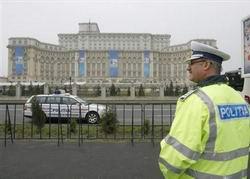
The NATO summit in Bucharest will be undoubtedly this week's most
intensely-watched political event. The alliance's expansion toward
South Caucasus will be among issues to be tabled by world
leaders.
Georgian President Mikheil Saakashvili has visited the United States on the eve of the event to take place April 3-4. Political analysts in CIS are now contemplating the response that the Western-leaning former Soviet republics of Ukraine and Georgia are awaiting from NATO concerning their membership bids.
The presidents of Azerbaijan and Armenia - the two South Caucasus republics facing a long-standing conflict - are due to attend. However, neither of the two countries is predicted to appeal to the alliance for any status in the foreseeable future. Thus, clear geo-political tendencies discern in the South Caucasus: Georgia is aspiring to enter NATO, while Azerbaijan is using anticipation tactics, while Armenia, which cooperates in the region with Russia that is vehemently against Ukraine and Georgia's NATO membership, is not considering to forge close ties with the alliance at all.
Under any scenario, S. Caucasus states' integration into NATO is not expected to be an easy road. Germany and France are opposed to Ukraine and Georgia's NATO admission. The U.S. will most likely undertake the mission of convincing these two countries. It is not by mere chance that US President George Bush is visiting Kiev and has vowed to press for the two former Soviet republics to be allowed to start the process of joining NATO.
Azerbaijan's position and conduct is of particular interest. Local analysts and politicians differ on the issue of the country's integration into the military bloc, with some saying NATO is to blame for the process proceeding rather slowly, while others link it with Baku.
Under the first presumption, NATO is not ready to admit Azerbaijan at this point. Some pundits say the alliance does not allow entry to countries with conflicts flaring in their territories. Nonetheless, there are two hot spots in Georgian territory. Overall, NATO has not opened up its doors to this country, and it is actually Tbilisi that is persistently seeking entry to the alliance.
Integration into NATO has turned into the Georgian government's policy. A separate ministry dealing with related matters is operating in the S. Caucasus republic and a referendum has recently been held there on prospects for NATO membership. All these efforts are being made not by the alliance but by Georgia itself.
The second assumption regarding Azerbaijan therefore appears more credible. Baku is in no rush to seek admission to NATO as it approaches the issue from the standpoint of state security. Observers cite two key factors in this respect. The first one is potential pressure from Russia in case Azerbaijan applies for NATO admission. This appears convincing given Moscow's statements that Kosovo's declaration of independence could set a precedent for the Georgian republics of Abkhazia and South Ossetia. Nonetheless, Georgia already faced all these challenges after its "gas war" with major supplier Russia but remained committed to its stance. What are the threats posed to Azerbaijan? Russia is not turning Upper (Nagorno) Garabagh into a subject of discussion but is sticking to its policy. During a recent vote on a resolution on the situation in the occupied territories of Azerbaijan at the UN General Assembly, Russia not only voted against the document but also instigated other countries to do the same. Do Azerbaijani officials hope that after this, Moscow will alter its position on Garabagh some day? There is unfortunately no answer to this question.
Some local analysts presume that another argument of Azerbaijan's not being keen on NATO membership is the lengthy admission process. Azerbaijani officials ponder as to who will ensure the country's security in the process, and this is a valid question.
Head of the President's Office international relations department, Novruz Mammadov, said Azerbaijan had "concrete expectations" from NATO.
He told Radio Liberty that the first expectation concerned conflicts, and Baku was anticipating endorsement of the principles once adopted by the alliance.
"Conflicts should be a top priority for NATO. But unfortunately, it is the case only when necessary -- when it comes to the Kosovo problem in Europe -- but it is not otherwise. Azerbaijan too is a European state, and this should not be so."
Mammadov emphasized that Azerbaijan plays a key role in Europe's energy supplies, and NATO should acknowledge and value that.
"We are cooperating with NATO within a great number of programs and taking successful steps, although we are in a very complex geo-political location. There is so far no substantial reaction to our expectations," Mammadov said.
He said Baku's ultimate expectation from NATO was related to inter-civilization dialog. "NATO should not think that there is only the West on this planet. There is also the East and the Islamic world. This should be taken into account and fair, sincere cooperation forged."
Mammadov added that Azerbaijan could serve as a bridge for collaboration between NATO and Muslim nations.
Here we are to serve you with news right now. It does not cost much, but worth your attention.
Choose to support open, independent, quality journalism and subscribe on a monthly basis.
By subscribing to our online newspaper, you can have full digital access to all news, analysis, and much more.
Subscribe
You can also follow AzerNEWS on Twitter @AzerNewsAz or Facebook @AzerNewsNewspaper
Thank you!