
Aliyev condemns Armenia’s genocide in nationwide address
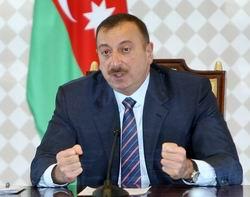
President Ilham Aliyev has condemned the nearly two-century long
Armenian policy of aggression and genocide in an address to the
nation over March 31, the anniversary of the massacre of
Azerbaijanis.
On that day in 1918, Armenian nationalists unleashed an unprecedented carnage of residents in Baku with the support of Bolsheviks. The Armenians then continued their sinister actions throughout the country. The massacre was perpetrated in Shamakhi, Khachmaz, Lankaran and other districts. Over 50,000 Azerbaijanis were brutally killed, including women and children. About 10,000 Azerbaijanis were ousted from their native land. Tens of thousands of people were killed by Armenian terrorists in the Azerbaijani capital alone.
"Azerbaijanis and [other] Turkic people have been subject for decades to persistent Armenian ideological, military and cultural aggression that aimed to drive Azerbaijanis out of their historical land and to establish the mythical 'Great Armenia,'" the president said. "The history of our people has been blatantly distorted, while our culture and geographical names appropriated by Armenians."
The head of state stressed that the massacre had been perpetrated in different periods by various means. These atrocious actions included mass killings and military operations.
President Aliyev's appeal stressed that Armenians were settled in the Azerbaijani territories of Zangazur and Garabagh from Turkey and Iran in the 19th century, which altered the demographic composition of the region. In 1905 and 1918, mass killings of Azerbaijanis were committed. In 1918, the Armenian state was established in the historical Azerbaijani territories, and Irevan (present-day Yerevan), a major Azerbaijani cultural center, was conceded to Armenia as the capital city. In 1920, the Soviet government transferred Zangazur to Armenia and granted Upper (Nagorno) Garabagh the status of autonomy.
In 1948-1953 hundreds of thousands of Azerbaijanis were ousted from Armenia. These developments lingered on until 1988, when Armenia explicitly stated its intention to annex Upper Garabagh.
The hostile nation's aggression and occupation plans were bolstered by outside forces. The hostile policy reached its peak in February 1992, when Armenian forces brutally killed thousands of civilians in the Khojaly district. Similar actions were committed in other Azerbaijani territories captured during the war. The Armenian aggression turned about a million people into refugees and displaced persons.
Azerbaijan and Armenia fought a lengthy war that ended with the signing of a precarious cease-fire in 1994, but Armenia continues to occupy Upper Garabagh and seven other Azerbaijani districts in defiance of international law. The OSCE-mediated peace talks have been fruitless so far.
The head of state went on to say that the Armenian nationalists who are experienced in political and ideological propaganda and misinformation continue waging a propaganda war against Azerbaijan the world over in a bid to mislead the international community and divert attention from the ongoing occupation of Azerbaijan's territories.
"At a time civil co-existence and cooperation principles and comprehensive integration are increasingly gaining ground in the world, Armenian nationalists' propaganda of the fake genocide [of Armenians in the Ottoman Empire] and their territorial claims against neighboring states play the role of a destructive factor aimed at disrupting stability and world order, pit nations against each other and instigate national and religious stand-off. But the Armenian state and lobby's policy of aggression is doomed to failure. The experience of the past years shows that the opportunities of Armenian invaders and their benefactors are not endless at all and are being exhausted. The powerful Azerbaijani state, its political influence, the increasingly strengthening solidarity of world Azerbaijanis and Azerbaijan's friends, and finally, a strong Azerbaijani army, stand opposed to this policy."
The appeal said further that Azerbaijan was working closely and productively with countries setting the tone in world politics, striving to put an end to the stereotypes and false approaches that have lingered on for decades, and often succeeds in accomplishing these goals. Despite double standards and pressure from pro-Armenian forces, the world community is prompted to acknowledge the truth more frequently when it is confronted with clear-cut facts. The activities on commemorating the massacre victims are becoming more scalable and organized around the world and are in international spotlight.
As a dynamically developing country in the region and the world, Azerbaijan today is also deemed an example of cooperation and tolerance, the president said, pointing to social, national and religious solidarity in the country.
"No matter how hard it may be, we have no intention to use the facts of genocide as an excuse to spill hostility and hate upon other nations. We merely want historical justice and truth to prevail and assurances that such tragic developments will not reoccur elsewhere in the world."
President Aliyev underlined that economic, moral and political degradation is exacerbating, and social and demographic problems are aggravating in Armenia. The country's policy of aggression has isolated it from all regional economic, energy and transport projects. The political crisis in Armenia and undemocratic developments indicate the near-sighted and aggressive policy of its authorities and the lack of public confidence in the government.
"The sooner the Armenian leadership relinquishes its aggressive and belligerent policy and bases the policy toward its neighbors on cooperation and mutual respect, the better it will be for itself.
"I assure you that thanks to the patriotism, unity and solidarity of our people, and the political will of the Azerbaijani leadership, we will achieve all outstanding objectives, including restoration of our territorial integrity and sovereignty, and exposing the perpetrators of the genocide and those trying to sow the seeds of discord among peoples and nations," the president indicated.
A total of 2.5-3 million Azerbaijanis perished as a result of the policy of genocide pursued by Armenians in the past 200 years, an Azerbaijani historian says.
Atamoghlan Mammadli, who authored the "Armenian elite speaks" book, told an international conference entitled "History as it is" and dedicated to the massacre anniversary on Sunday that superpowers were largely to blame for Armenia's hostile policy against Azerbaijanis. "They used Armenia to achieve their goals."
Armenians burned over 2 million books during the Garabagh war in the early 1990s. Over 40,000 Azerbaijani historical monuments remain in the occupied territories. Armenians looted 195,000 carpets from the Kalbajar district alone. 412 mineral water and 17 hot wells were destroyed in this district. 30 tons of gold have been appropriated to date from three deposits in the occupied territories.
Mammadli said that as of 1988, Armenians published 26,000 books describing their unfair struggle against Azerbaijanis and that he published his book in response to those publications.
"I have collected materials for the book over 20 years. Armenia's policy of genocide against Azerbaijanis was covered with the views of well-known historians, politicians and political analysts. All the information in the book is based on official documents."
Mammadli said the materials obtained confirmed that Armenians were an ethnic group that came to eastern Anadolu and the Caucasus.
Sichan Siv, former US representative to the United Nations Economic & Social Council, suggested establishing a court martial to arraign Armenians who committed massacre against Azerbaijanis. He said the UN should put forth political will to make this possible by condemning the acts of genocide. "Regardless of the part of the world they occur in, such developments should be denounced and prosecuted."
Siv, who is originally from Cambodia, said his family members were once subjected to genocide. He reminded that tens of thousands of people were killed in his country in 1975, and the world community then confined to observing the atrocities. "I believe the world should not remain indifferent to such developments."
The event was attended by academics and analysts from US Universities of Columbia, Harvard and John Hopkins, German Siegen and Turkish Marmara Universities, as well as those from Japan, Portugal, France and Georgia.
Here we are to serve you with news right now. It does not cost much, but worth your attention.
Choose to support open, independent, quality journalism and subscribe on a monthly basis.
By subscribing to our online newspaper, you can have full digital access to all news, analysis, and much more.
Subscribe
You can also follow AzerNEWS on Twitter @AzerNewsAz or Facebook @AzerNewsNewspaper
Thank you!