
U.S. worried by lagging Karabakh talks
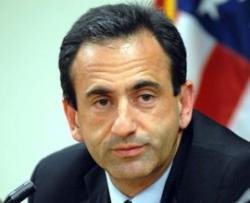
BAKU – The United States is concerned over the slow pace of talks on resolving the Armenia-Azerbaijan conflict over Nagorno Karabakh, gaps in the peace process and recent ceasefire violations on the contact line of the two countries’ troops, US Assistant Secretary of State Philip Gordon was quoted as saying by Azerbaijan’s state news agency AzerTAj.
"This is a dangerous situation. It is for this reason that we are working hard to move forward on the basis of the Helsinki principles that have been emphasized by all OSCE members," Gordon told a news briefing in Washington in his comments on the OSCE summit held in Astana last week.
Gordon welcomed the joint statement adopted in the Kazakh capital by the presidents of Azerbaijan and Armenia and the mediating OSCE Minsk Group countries’ senior officials.
The statement said "the time has come for more decisive efforts" to resolve the Nagorno Karabakh conflict. The Azerbaijani and Armenian presidents reaffirmed their commitment to seek a final settlement of the Karabakh conflict, based upon the principles of international law; the United Nations Charter; the Helsinki Final Act; as well as the statements of Presidents Dmitry Medvedev, Nicolas Sarkozy, and Barack Obama, at L'Aquila on July 10, 2009, and at Muskoka on June 26, 2010. The three countries’ presidents said in their joint statements, issued at the G8 summits, that a solution of the Karabakh conflict must be based on a number of principles, including returning the Armenia-occupied territories surrounding Nagorno Karabakh to Azerbaijani control, an interim status for the Azerbaijani region, and determination of the future status of Nagorno Karabakh through "a legally binding expression of will" and the right of internally displaced persons and refugees to return home, and international guarantees of security, including peacekeeping operations.
Gordon disagreed with statements about Russia’s having stepped up its mediating efforts, while the United States’ being rather inactive, saying that just like Moscow, Washington is seeking a solution of the Karabakh problem in keeping with the Basic Principles agreed with the mediation of the Minsk Group. Gordon added that he and his counterparts are in close contact with the conflicting sides.
"Secretary of State Hillary Clinton, who paid visits to Azerbaijan and Armenia this July, is also regularly briefed on the issue, is closely following the process and keeps in touch with the Azerbaijani and Armenian leaders. The U.S. will be closely involved in the process given the importance it attaches to the conflict settlement."
The Karabakh conflict flared up in the late 1980s due to Armenia's territorial claims. Armenia has been occupying over 20 percent of Azerbaijan's internationally-recognized territory in defiance of international law. The ceasefire accord was signed in 1994, but peace talks have been largely fruitless so far.
Commenting on the impact of the leaked State Department cables released by the WikiLeaks website on the atmosphere of the Astana summit, Gordon said Secretary Clinton had clearly stated her position on the issue to the OSCE member states.
"I can say that a number of leaders said they understood the situation, noting that they wanted to continue working together," he added.
Here we are to serve you with news right now. It does not cost much, but worth your attention.
Choose to support open, independent, quality journalism and subscribe on a monthly basis.
By subscribing to our online newspaper, you can have full digital access to all news, analysis, and much more.
You can also follow AzerNEWS on Twitter @AzerNewsAz or Facebook @AzerNewsNewspaper
Thank you!