
Turkey warns U.S. against ‘genocide’ bill passage
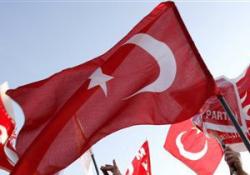
Turkish Prime Minister Recep Tayyip Erdogan has issued warnings to
the United States ahead of Thursday’s discussion of a bill on the
alleged 1915 genocide of Armenians in Ottoman Turkey by a
congressional panel, Turkish Hurriyet newspaper reported.
Erdogan said intense talks were underway in Washington to counter a vote on the issue at the House of Representatives Foreign Relations Committee. Also, a group of Turkish lawmakers are visiting the U.S. for the purpose, he said.
Erdogan warned that the passage of any decision defying Ankara’s stance would damage the ongoing process of Turkish-Armenian reconciliation.
"There is a process that was launched in Switzerland, and it is continuing. If good intent is displayed on both sides, I believe there will be results. But if erroneous steps are taken on March 4 and on April 24 [the date considered by Armenians to be the anniversary of the alleged mass killings], this will derail the process. But I do presume that Congress members will approach the issue sensitively."
Meanwhile, Turkey’s Foreign Ministry sent a letter to the US Congress saying the consideration of a "genocide" bill would have an adverse impact on efforts aiming to restore peace in the volatile South Caucasus region, CNN Turk TV channel reported.
Expressing disappointment with the planned congressional debate, the spokesman for the Turkish Foreign Ministry, Burak Ozugergin, said: "We have stated this stance to US officials of different ranks. We expect the committee to reject this bill, which would hurt US-Turkey relations and undermine efforts aimed at normalizing Turkish-Armenian relations. We would like to believe that the committee members will realize the damage that the passage of this bill would inflict upon US-Turkey ties and the endeavors toward establishing peace and stability in the South Caucasus, and, with this is mind, will proceed with a sense of responsibility."
Armenia and Turkey have been at odds for decades, with the "genocide" issue being one of the obstacles to normal relations. In a bid to end the long-standing hostility, the two governments signed two protocols in Zurich on October 10, 2009 to establish diplomatic relations and reopen their sealed borders. However, the documents require parliamentary approval, and Ankara has ruled out normalization with Yerevan until the conflict between Armenia, which occupies part of Azerbaijani territory, and Azerbaijan, Turkey’s ally, has been fairly resolved.*
Here we are to serve you with news right now. It does not cost much, but worth your attention.
Choose to support open, independent, quality journalism and subscribe on a monthly basis.
By subscribing to our online newspaper, you can have full digital access to all news, analysis, and much more.
Subscribe
You can also follow AzerNEWS on Twitter @AzerNewsAz or Facebook @AzerNewsNewspaper
Thank you!