
Baku hails raising Garabagh at Turkish PM’s talks with Obama
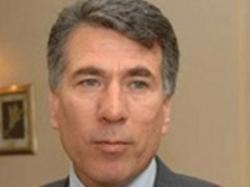
Azerbaijani First Vice-Speaker Ziyafat Asgarov has said Baku
welcomes the fact that the Armenia-Azerbaijan conflict over Upper
(Nagorno) Garabagh was discussed during Turkish Prime Minister
Recep Tayyip Erdogan’s meeting with US President Barack Obama in
Washington on Monday.
Asgarov said Erdogan’s telling Obama that normalization of Turkey-Armenia relations depends on a settlement of the Garabagh dispute has been hailed in Baku.
"We would like to express our gratitude to the Turkish prime minister. He indeed particularly brought the Garabagh issue to the forefront during his meeting with the US president, just like he said in Turkey and Azerbaijan. He unequivocally stressed that a solution of this issue is very closely linked with the Turkey-Armenia rapprochement.
"Raising the Armenia-Azerbaijan conflict before Obama will facilitate securing a victory for Azerbaijan’s fair cause," Asgarov said.
The vice-speaker said he was unaware of the White House leader’s attitude on the matter but noted that the overall tone of Erdogan-Obama negotiations suggested that the U.S. is in great need of Turkey in the Middle East.
"You know, the events ongoing in Iraq, Afghanistan and Pakistan today are unfortunately not heading in a positive direction. In this sense, Turkey, as an ally, plays a priority role in American policy," Asgarov concluded.
Turkey and Armenia have faced hostility for decades. Turkey closed its border with the South Caucasus republic in 1993 due to Armenian occupation of a part of Azerbaijan’s territory and claims on the World War I-era "genocide." On October 10, in Zurich, the two governments signed two protocols to establish diplomatic relations and reopen their borders, in a bid to normalize their strained relations. However, Turkish officials have pledged that the border will not open until the Armenia-Azerbaijan conflict has been fairly settled and ruled out approval of the protocols in the Grand National Assembly before progress is made in the conflict resolution.
Yerevan has expressed discontent with the outcomes of the discussions between Prime Minister Erdogan and President Obama.
"Speaking the language of pre-conditions in Armenia-Turkey dialog today is just meaningless," Armenia’s News.am news website quoted Foreign Minister Eduard Nalbandian as saying on Wednesday.
Nalbandian claimed that Yerevan-Ankara dialog had begun "in the environment of mutual understanding" and putting forth pre-conditions now would mean "a return to the previous vicious circle."
"And whoever does this will assume responsibility for that," said Nalbandian.
The Armenian minister also alleged that Ankara’s recognizing the so-called "genocide" in the Ottoman Empire could help to intensify dialog between the two countries.*
Here we are to serve you with news right now. It does not cost much, but worth your attention.
Choose to support open, independent, quality journalism and subscribe on a monthly basis.
By subscribing to our online newspaper, you can have full digital access to all news, analysis, and much more.
Subscribe
You can also follow AzerNEWS on Twitter @AzerNewsAz or Facebook @AzerNewsNewspaper
Thank you!