
Former UN envoy accused of 'spying'
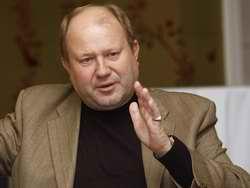
A former senior KGB officer has accused Azerbaijan's
representative to the United Nations in the 1990s of links to
Russian intelligence, a claim the ex-diplomat dismissed as
outrageous and false.
The 51-year-old Sergei Tretyakov, who served as deputy head of
intelligence at Russia's U.N. mission from 1995 to 2000, defected
to the United States with his family in 2000 saying he lost faith
in the former Soviet republic. One of the most senior Russian
agents to defect, he has now published a book whereby he levelled
his spying allegations.
"I don't want to and won't comment on this nonsense," the former
Azerbaijani envoy Eldar Guliyev told local Turan news agency.
Guliyev brushed off the statements, saying he had not been in touch
with Tretyakov. "I never knew him and don't want to talk about this
traitor who flung mud at hundreds of people."
Asked about his presumptions as to why the former secret service
agent accused him of spying, Guliyev said he was unaware of this.
"If someone is pursuing a PR campaign, this is their private
business, but doing so by such filthy methods is unacceptable."
Guliyev, who was also asked if he would sue Tretyakov, said he had
no such plans as he did not deem it necessary "to react to such
stupidity".
The Azerbaijan Foreign Ministry spokesman Khazar Ibrahim,
commenting on the matter, reminded that Guliyev had served in
Azerbaijani diplomatic missions till 2001 but his current
activities had no bearing on diplomatic service.
"Eldar Guliyev headed the Azerbaijani representation at the UN from
1994 and quit the diplomatic system in 2001. He currently acts as
executive director of the all-Russia Congress of Azerbaijanis," the
spokesman said.
Ibrahim added that the background of all persons serving in
diplomatic missions is checked both prior to hiring and before they
begin working in embassies.
The row sparked off after an account of Tretyakov's experience was
published last week in a book by the American journalist Pete
Earley entitled "Comrade J.: The Untold Secrets of Russia's Master
Spy in America after the End of the Cold War".
Tretyakov maintained that he had recruited Eldar Guliyev, who
allegedly frequently met with former Secretary of State Madeleine
Albright and her deputy Strobe Talbott.
In a sensational revelation, the Russian colonel claimed that
Talbott "could be influenced". While making it clear that the US
assistant secretary of state was far from being "a Russian spy", he
indicated that Talbott considered himself an expert on Russia and
could be talked into acting on the Kremlin's behest, Russian media
reported.
Tretyakov has told US media that his agents helped the Russian
government skim profits to the tune of $500 million from the U.N.
oil-for-food program in Iraq before Saddam Hussein was toppled in
2003.
Former Federal Reserve chairman Paul Volcker who led an 18-month
investigation into the case reported in October 2005 that U.N.
management and the world's most powerful nations were responsible
for corruption in the $64 billion program. The report accused more
than 2,200 companies from some 40 countries of colluding with
Hussein 's regime to bilk the humanitarian program in Iraq of $1.8
billion.
The program was aimed at easing Iraqi suffering under U.N.
sanctions imposed after Hussein's 1990 invasion of Kuwait. It
allowed Iraq to sell oil provided the bulk of the proceeds were
used to buy food, medicine and other humanitarian goods and to pay
war reparations.
The book also gives insights into how a network of Russian spies
operated in New York.
"It's an international spy nest," Tretyakov said of the U.N.,
during an interview this week with The Associated Press. "Inside
the U.N., we were fishing for knowledgeable diplomats who could
give us first of all anti-American information.
In his revelations Tretyakov cited some names but stuck mainly to
code names. Among the spies he says he recruited for Russia were a
Canadian nuclear weapons expert who became a U.N. nuclear
verification expert in Vienna, a senior Russian official in the
oil-for-food program and a former Soviet bloc ambassador.
Some of the people referenced by a code name in the book have
denied Tretyakov's claims. The Russian mission to the U.N. said
Friday it had no immediate comment.
Stephane Dujarric, a spokesman for U.N. Secretary-General Ban
Ki-moon, described Tretyakov's allegations as potentially serious
violations of law and U.N. rules.
But Dujarric said it would be up to others to prosecute if the
allegations are substantiated: "Since the U.N. can't prosecute, it
is now up to national governments to prosecute."
Tretyakov called his defection "a major failure of Russian
intelligence in the United States" and warns that Russia, despite
the end of the Cold War, harbors bad intentions toward the United
States.
Tretyakov also pounded criticism at Russian President Vladimir
Putin, calling him "a KGB loser". He termed Putin's anointed
successor Dmitry Medvedev as "a puppet," predicting elections in
March would not bring any change. "I don't see any light at the end
of the tunnel."
Tretyakov said Russian intelligence was just as active now as it
ever was in Soviet times. "The Cold War never ended, it's
transformed, it's like a virus mutating," he said, adding that he
hoped the book would be a "wake-up call" to Americans.
The difference, he said, is the motivation. "When I joined the
service we were driven by extreme patriotism."
The decision to defect, he said, was made only after his mother
died in 1997, and he had no other close relatives alive in Russia
who could be used to blackmail him. The Tretyakovs now live in
retirement in an undisclosed location.
Russia's foreign intelligence service SVR said on Monday that
revelations by the former spy represented "self-publicity based on
treachery".
"We leave on Tretyakov's conscience the so-called revelations made
in the book," the agency said in a statement. "In any secret
service of the world using treachery for self-publicity has always
been considered disgusting, and treachery is viewed as a criminal
act."
"In October 2000, Tretyakov, a Russian citizen, decided to stay in
the United States after a making a written statement saying: 'My
resignation will not harm the interests of the country'," the SVR
said but declined to comment on the topic any further.
Here we are to serve you with news right now. It does not cost much, but worth your attention.
Choose to support open, independent, quality journalism and subscribe on a monthly basis.
By subscribing to our online newspaper, you can have full digital access to all news, analysis, and much more.
You can also follow AzerNEWS on Twitter @AzerNewsAz or Facebook @AzerNewsNewspaper
Thank you!