
Baku suggests European, US peacekeepers in conflict zone
A senior Azerbaijani official has said certain
differences remain in the principles on settling the Upper
(Nagorno) Garabagh conflict supported by Azerbaijan and
Armenia.
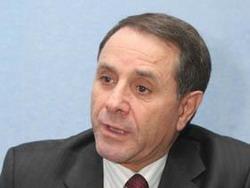
Novruz Mammadov, the head of the Presidential Administration international relations department, told local Turan news agency that Baku`s position remains unchanged: Armenia must withdraw its armed forces from the occupied Azerbaijani territories around Upper Garabagh stage by stage and Azerbaijani refugees displaced by the armed conflict in the early 1990s are to return home. This must be followed by the liberation of the strategic Lachin and Kalbajar districts, simultaneously with creating a corridor between Upper Garabagh and Armenia. These activities are to be accompanied by the demining of territories and rehabilitation work. All this may take five to ten years.
"Further, the return of IDPs to Upper Garabagh proper and the stationing of peacekeeping forces are to follow. After 60,000 Azerbaijanis return there and the 1991 situation is reinstated, a legal status of Upper Garabagh may be developed. All this may take up to ten years," Mammadov said, reiterating that the status determination must be in line within Azerbaijan`s territorial integrity.
The presidential administration official noted that it was impossible to cite specific timeframes at this point, as it is currently uncertain how the developments will unfold.
760,000 IDPs are expected to return to their homes in the seven Azerbaijani districts around Upper Garabagh that are currently under Armenian occupation.
"All the houses, production, industrial and social infrastructure there is destroyed. The entire rehabilitation cannot be done overnight. Mine clearance alone may take several years. This being said, the whole settlement process may drag on for 15 to 20 years," Mammadov said.
Mammadov did not delve into details of the updated Madrid principles, a proposed peace outline brought forward in November 2007, but noted that they pertain to developing the Garabagh`s status, i.e. when and who will determine it, and how this decision will be made.
"There are issues concerning peacekeeping forces, their composition and the time of their stationing, and there are certain issues concerning the corridor [linking Upper Garabagh and Armenia].
The conflict between the two South Caucasus republics reared up in the late 1980s due to Armenia`s territorial claims. Upper Garabagh has been occupied by Armenia since a 1994 cease-fire ended hostilities that killed an estimated 30,000 people and ousted about a million Azerbaijanis out of their homes. Years of peace talks, brokered by US, Russian and French mediators through the Minsk Group (MG), have brought little tangible result.
Mammadov agrees with the MG co-chairs that Baku and Yerevan are close to reaching agreement, but added that, at times, "a little detail affects the entire settlement process."
"Certainly, Armenia wants the legal status of Upper Garabagh to be developed during the initial stage. But the general consent and the consent among the co-chairs is for all the seven districts around Upper Garabagh to be freed first."
Mammadov emphasized that, according to Azerbaijan`s stance, peacekeeping forces should not include servicemen from neighboring states. "In our view, it would be good for the peacekeeping mission to be comprised of the armed forces of European countries and the United States."
As for the location of peacekeepers, it would be appropriate to station them on the contact line between Upper Garabagh and the adjacent districts.
Regarding ways of determining the region`s status, Mammadov stressed that it should comply with Azerbaijan`s Constitution.
"The status issue will be resolved during the last stage [of the conflict resolution], and discussions over this continue. So, we can`t say anything specific to that end now," he said.
If the peace process proceeds successfully, railway links will open up first. Along with that, local communications may be restored. Further, the issue of opening roads may arise. Then, an air link may be opened. "I believe that Armenia is primarily interested in opening the railway, as it feels like being in a blockade, which it dragged itself into," Mammadov added.
Here we are to serve you with news right now. It does not cost much, but worth your attention.
Choose to support open, independent, quality journalism and subscribe on a monthly basis.
By subscribing to our online newspaper, you can have full digital access to all news, analysis, and much more.
Subscribe
You can also follow AzerNEWS on Twitter @AzerNewsAz or Facebook @AzerNewsNewspaper
Thank you!