
Helicopter carrying oil workers crashes
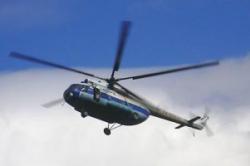
A helicopter from Azerbaijan's state airline, AzAL,
crashed into the Caspian Sea on Sunday afternoon while carrying oil
workers and a flight crew.
The accident involving the Mi-8 helicopter occurred at around 4.30 p.m. near the Gunashli field, which is part of the major Azeri-Chirag-Gunashli (ACG) offshore oil fields.
Six people - three crew members and three oil workers - were on board at the time of the crash. One of them was killed in the accident, while four - the captain, the second pilot, the mechanic and an oil worker - have been rescued. Search for the other oil worker that is presumably dead is underway. The Prosecutor-General's Office has launched a criminal case, and an ad hoc group of investigators has been set up.
"Sounds started coming from the back all of a sudden," said Adil Azimov, the helicopter mechanic who survived. "The commander asked what was going on. We wanted to look and see what had happened, but the helicopter suddenly plummeted into the sea."
Azimov is currently being treated at the Central Oilworkers Hospital for head, chest and leg injuries. Despite the injuries, he saved his life by managing to swim to the shore before the rescue team arrived.
Azimov said he had been on flights for 32 years, and included ten years in which he had maintained the helicopter that crashed. According to Azimov, though those helicopters have been in operation since Soviet times, they have been properly maintained and even underwent capital repair once or twice. Moreover, the helicopter was examined before each flight and, as before, no malfunctions had been revealed during the routine check-up conducted prior to the latest flight.
The mechanic dismissed as baseless the reports saying the helicopter had stuck to the platform in the take-off area. He said that only after the helicopter was a short distance from the platform could unusual sounds be heard from the motor, adding that everything will be clear after the "black box" is read.
According to Maharram Safarli, the AzAL spokesman, the helicopter that crashed was manufactured in Russia in 1992 and delivered to Azerbaijan that same year. The lifespan of the machine is 25 years, which means that it could have been used for another eight years. It was last repaired at the Engels Russian plant two years ago, and an operating certificate was issued, which had provided clearance for the helicopter to fly safely for the following three and a half years. According to Safarli, several more such helicopters are currently at AzAL's disposal.
This is the second Azerbaijan Airlines helicopter that crashed into the sea in the past two years. Another Mi-8 plummeted into the Caspian in October 2007, killing four crew members and two employees of the state oil company SOCAR.
Manufacturing of Mi-8 helicopters began in the early 1960s. The two-engine machines have been widely used in over 50 countries for both civilian and military purposes.
Here we are to serve you with news right now. It does not cost much, but worth your attention.
Choose to support open, independent, quality journalism and subscribe on a monthly basis.
By subscribing to our online newspaper, you can have full digital access to all news, analysis, and much more.
Subscribe
You can also follow AzerNEWS on Twitter @AzerNewsAz or Facebook @AzerNewsNewspaper
Thank you!