
OSCE rep cites `good possibility` for Garabagh settlement in 2009
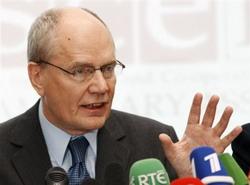
The OSCE Parliamentary Assembly`s special
representative on the Armenia-Azerbaijan Upper (Nagorno) Garabagh
conflict, Goran Lennmarker, has said there is a "good possibility"
for the dispute to be solved this year, but "time is scarce" and it
is now "critically important to seize the opportunity."
In an interview on the OSCE PA website, Lennmarker expressed hope
that he would receive positive signals that the conflict is on its
way to a peaceful resolution, where the two countries "are prepared
to agree on a solution that is mutually beneficial for both of
them, particularly for the peoples of the two countries, especially
the refugees and the internally displaced persons (IDPs)."
Elaborating on prospects for reaching peace in 2009, Lennmarker
said there is a good possibility for that, however it is "very much
up to the leadership of the two countries" to take responsibility
for resolving the conflict.
"We from the outside can support and help and also give support
after a solution. But it`s the responsibility of the two countries,
particularly the leadership and also the two parliaments, to
actually reach a peaceful solution."
He emphasized that "time is a scarce commodity," adding that it is
important that solutions are reached early-on, as with the slow
peace process, the situation on the ground deteriorates and people
have less and less hope.
Lennmarker will visit all three countries in the South Caucasus
this week. His trip to the region includes visits to Armenia
February 9-10, Georgia February 10-12, and Azerbaijan February
12-14 where he will hold talks with leaders in the parliaments,
governments and with NGOs.
Azerbaijan and Armenia have been locked in conflict for nearly two
decades. A lengthy war ended with the signing of a cease-fire in
1994 but Armenia continues to occupy Upper Garabagh and seven other
Azerbaijani districts in defiance of international law. Peace talks
that kicked off after the hostilities have resulted in few
accomplishments but remain ongoing.
Presidents Ilham Aliyev and Serzh Sarkisian held another round of
talks in Zurich on January 28. The meeting, lasting over two hours,
was described as constructive but no comprehensive information was
divulged about the discussions.
Novruz Mammadov, head of the international relations department of
the Azerbaijan President`s Office, said Presidents Aliyev and
Sarkisian might hold another meeting this year. While commenting on
the Zurich meeting, Mammadov said that despite having achieved some
progress, it was not enough to take substantial steps aimed at
reaching a solution.
Mammadov emphasized that, so far, Armenia has been trying to drag
out the talks and does not appear to be interested in compromising.
He added that for Yerevan to take a stance on compromising,
international groups and world powers must put pressure on
Armenia.
`Framework agreement`
Baku and Yerevan may sign an agreement on establishing a framework
for a Garabagh settlement this summer, Marie Yovanovitch, the US
ambassador to Armenia, has told Radio Liberty.
She said the intense talks underway between the parties and efforts
being made to resolve the long-standing dispute enabled this
conclusion.
Yovanovitch said the United States, as one of the countries
co-chairing the mediating OSCE Minsk Group, was ready to provide
any assistance to speed resolution of the long-standing
conflict.
Yovanovitch also said Washington was interested in the development
of Turkey- Armenia relations, which have been strained for many
years, and supported Ankara`s efforts at solving the Garabagh
problem.
The presidential administration official Novruz Mammadov said this
possibility is not ruled out if Yerevan "relinquishes its insincere
actions."
But Azerbaijani experts lack confidence that such a document will
be inked this year.
"The positions being clearly stated by the heads of state once
again show that expecting any agreement in the near future would be
gullible," said the former state adviser, analyst Vafa
Guluzada.
"This framework agreement has been brought up so many times.
Moreover, Serzh Sarkisian has made it clear that Armenia`s making
concessions is a fairy tale, in other words, saying that if
Azerbaijan concedes its land, then such an agreement will be
signed. I don`t think the Azerbaijani leadership will ever agree to
this. Therefore, I think this is nothing but empty talk."
Arif Yunus, an expert on conflicts, said that even if the framework
deal is reached, confidence of this being a step forward in the
peace process was slim.
"This is similar to the Moscow declaration. The parties did sign
it, but nothing has been achieved. If a major organization like the
United Nations passes four resolutions [urging unconditional
pullout of the Armenian armed forces from the occupied Azerbaijani
territories] and these resolutions merely remain on paper, why
should we think that things will improve after some framework
agreement is signed?"
The Azerbaijani and Armenian leaders signed a declaration after
talks in Moscow on November 2, 2008 that took place on the
initiative of Russian President Dmitry Medvedev. The first document
inked by the two heads of state in the past 16 years, it called for
settling the Garabagh conflict in line with the principles of
international law and respective decisions and resolutions passed
so far.
Here we are to serve you with news right now. It does not cost much, but worth your attention.
Choose to support open, independent, quality journalism and subscribe on a monthly basis.
By subscribing to our online newspaper, you can have full digital access to all news, analysis, and much more.
You can also follow AzerNEWS on Twitter @AzerNewsAz or Facebook @AzerNewsNewspaper
Thank you!