
Most Azeris keep money in local currency: Gallup
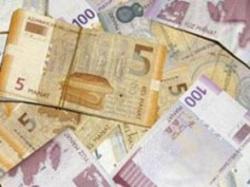
BAKU – Three-fourths of Azerbaijanis keep their savings in manats, the local currency, while the rest – in US dollars, a Gallup poll has found.
The US group said in a report issued on Friday that residents of former Soviet Union countries in 2010 for the most part said they would prefer to keep any extra money they have in their local currency.
As for foreign currencies, they prefer US dollars over euros by a margin of 29% to 9%. Hardly any residents would keep their extra funds in Russian rubles, the poll revealed.
The findings are from Gallup surveys conducted in Azerbaijan, Armenia, Belarus, Georgia, Kazakhstan, Kyrgyzstan, Moldova, Russia, Tajikistan, Ukraine, and Uzbekistan between May and September 2010. The responses show the relative strength of the local currency, the US dollar, the euro, and the Russian ruble in terms of how consumers perceive them. Gallup also asked about the Japanese yen, but less than .5% of respondents in any country selected it.
Gallup’s findings reveal that Azerbaijanis have the most confidence in the domestic banking system. Gallup explained 75 percent of Azerbaijanis’ confiding in the local currency with the central bank’s policies pursued at the time of the global financial crisis.
Gallup said the Azerbaijani manat remained stable during the financial crisis, partly because the Central Bank of Azerbaijan lowered interest rates from 15% to 2%, increased the allowable amount of foreign ownership in the banks to 50%, and dropped reserve requirements down to a historically low 0.5%. Azerbaijan continues to show positive GDP growth and this week reported that its strategic monetary reserves of $40 billion are seven times the value of its foreign debts.
Azerbaijan is closely followed by Armenia where 63 percent of the people prefer the local currency.
As for Georgia, another South Caucasus republic, Gallup said its strong relations with the U.S. are evident in that a relatively high 38% of residents prefer the US dollar over their own currency and the euro. In contrast, 56% of Russians choose their own currency, and more choose the euro than choose the US dollar.
Besides Georgia, residents of Tajikistan, Uzbekistan, Kyrgyzstan and Belarus were also the most likely to prefer to keep money in dollars, Gallup concluded.
Like others in the region, residents of Tajikistan, Uzbekistan, and Kyrgyzstan almost universally reject Russian rubles, even though residents of these countries heavily depend on temporary work in Russia. For example, 39% of Tajikistan residents say someone in their household works temporarily in another country and report at least one adult working in Russia, Gallup said.
The report said ten of the 11 countries surveyed use the US dollar for major financial transactions, including the purchase or rental of property or vehicles, with only Moldova relying instead on the euro for such transactions. This reality may explain residents' tendency to prefer US dollars, though it is also possible that residents' preference also helped establish the dollar as the transactional currency of choice. Still, the differences across countries reveal the US dollar's relative strength and weakness from a behavioral economic perspective beyond measurable transactions, the report said.
The tendency to prefer the U.S. dollar over the euro in former Soviet Union countries in 2010 suggests the dollar still carries clout despite the euro's higher exchange rate versus the dollar.
Gallup noted that economic data were collected in 2010, and do not reflect the latest fiscal challenges facing the eurozone countries of Greece, Ireland, Portugal, Italy, and Spain as well as the U.S.
Here we are to serve you with news right now. It does not cost much, but worth your attention.
Choose to support open, independent, quality journalism and subscribe on a monthly basis.
By subscribing to our online newspaper, you can have full digital access to all news, analysis, and much more.
You can also follow AzerNEWS on Twitter @AzerNewsAz or Facebook @AzerNewsNewspaper
Thank you!