
Azerbaijan among least informed nations on budget – report
Azerbaijan is among the countries disclosing the
least amount of information to citizens about their country`s
budget, an international group charges.
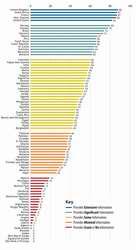
The South Caucasus republic ranked 50th among 85 states, scoring 37 points in the Open Budget Index 2008 released by the International Budget Partnership (IBP).
The group maintained that the lack of transparency allows the government to keep unnecessary and exaggerated budgetary expenses undisclosed. This trend is particularly seen in allocations for investment projects.
However, the government disagrees with the conclusions. Fazil Farajov, a department head at the Ministry of Finance, said the drafting and execution of Azerbaijan`s budget was being carried out transparently as data is consistently disclosed to the public.
In its assessment on budget transparency worldwide, IBP concluded that eighty percent of the world`s governments fail to provide adequate information for the public to hold them accountable for managing their money.
The group claims that nearly 50 percent of the 85 countries whose access to budget information was carefully evaluated by IBP provide such minimal information that they are able to hide unpopular, wasteful, and corrupt spending. Thirty-two percent provide some information; only five countries provide extensive information.
The worst offenders, the countries that make scant, if any, information available are: Saudi Arabia, Algeria, the Democratic Republic of Congo, Sudan, Rwanda, Equatorial Guinea, and Sao Tome e Principe.
According to the OBI, the most transparent countries are: United Kingdom, South Africa, France, New Zealand, and United States.
These top performers include both developed and developing countries. The strong showing of South Africa, as well as that of Slovenia, Sri Lanka, and Botswana demonstrate that developing countries can achieve transparency given sufficient willingness of their governments to be open and accountable to their people.
The first Open Budget Survey was completed in 2006; 59 countries were studied. The 2008 survey includes 85 countries chosen to provide a balanced geographic sample of countries around the world.
In the 59 countries where the study was repeated, there has been a slight improvement in some of the countries. Based on comparative data from the first two surveys, improvements in overall performance can be attributed primarily to changes in government policies.
For instance, the desire to join the European Union led to greater budget transparency in Bulgaria and Croatia.
The countries that showed improvement include, among others, Ghana, Egypt, Uganda, Georgia, Indonesia, El Salvador, Ecuador, Mongolia, and Morocco.
The IBP assists non-governmental organizations and researchers in their efforts both to analyze budget policies and to improve budget processes and institutions. The project is especially interested in assisting with applied research that is of use in ongoing policy debates and with research on the effects of budget policies on the poor. The IBP works primarily with researchers and NGOs in developing countries or new democracies.
Here we are to serve you with news right now. It does not cost much, but worth your attention.
Choose to support open, independent, quality journalism and subscribe on a monthly basis.
By subscribing to our online newspaper, you can have full digital access to all news, analysis, and much more.
Subscribe
You can also follow AzerNEWS on Twitter @AzerNewsAz or Facebook @AzerNewsNewspaper
Thank you!