
Asia stocks climb with U.S. futures after $2.7 trillion wipeout
By Bloomberg
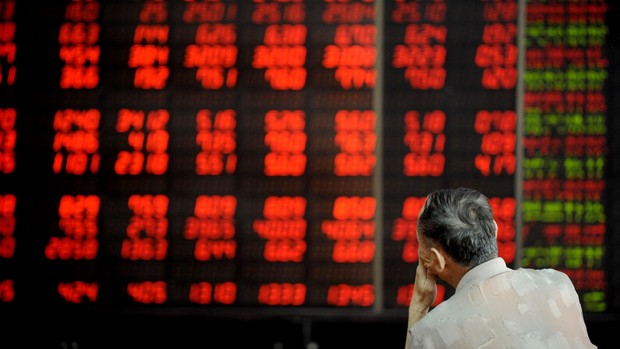
Asian stocks rose with U.S. index futures after a selloff that wiped $2.7 trillion from global equity markets on Monday. Oil climbed from six-year lows, while the yen retreated with government bonds.
Australian and Korean equities led gains through Asia, while Chinese shares dropped a fourth day. Futures on the Standard & Poor’s 500 Index rallied 2.2 percent after the U.S. benchmark entered a correction for the first time since 2011. The dollar strengthened versus major peers as 10-year Treasury yields rose for the first time in five days. Oil climbed 1.6 percent in New York after falling to $38.24 a barrel.
“Our bottom line is that the world’s still not a bad place,” said David McDonald, Sydney-based chief investment strategist for Australia at Credit Suisse Group AG’s wealth management and private banking unit. “Fundamentals aren’t as bad as the headlines would suggest. It’s just a case of whether you would want to rush in now or perhaps wait until it settles down a bit more.”
China’s decision to cut the value of the yuan two weeks ago has sent convulsions through global markets, sending all but the safest of assets tumbling amid speculation that the world’s second-largest economy is in more trouble than previously thought. The rout has driven gauges of volatility to multi-year highs and sent bond yields tumbling as investors wound back bets that the Federal Reserve will begin raising interest-rates as soon as next month.
Asia Rebound
The MSCI Asia Pacific Index rose 0.5 percent by 12:52 p.m. in Hong Kong, as the S&P/ASX 200 Index climbed 2.5 percent and the Kospi index added 1.2 percent in Seoul. Taiwan’s benchmark stock gauge jumped 3.3 percent, while Singapore’s advanced 1.8 percent.
Japan’s Topix index increased 0.4 percent, erasing a loss of as much as 4.7 percent, as the yen retreated. The currency weakened to 119.04 per dollar after surging 3 percent to 118.41 on Monday, the strongest since February.
U.S. futures signaled the first day of gains for the S&P 500 since Aug. 17. The U.S. benchmark dropped 3.9 percent to 1,893.21 at the close in New York, 11 percent below its May record. Contracts on the Dow Jones Industrial Average advanced 2.2 percent and those on the Nasdaq 100 Index increased 1.8 percent.
A gauge of options prices on U.S. equities surged as much as 90 percent Monday to touch the highest level since January 2009. The Chicago Board Options Exchange Volatility Index, or VIX, finished the day at 40.74, the highest close since October 2011.
Quake Levels
Measures of price swings retreated across Asia, with the Hang Seng Volatility Index sliding 1.1 percent and the Kospi 200 Volatility Index falling 2.2 percent. Both gauges hit almost four-year highs Monday.
Japan’s Nikkei Stock Average Volatility Index was little changed as stocks in Tokyo erased losses. The measure had earlier surged as much as 30 percent, at one point heading for its biggest-two day jump since the March 2011 earthquake, tsunami and nuclear disaster.
Chinese equities defied the rebound, with the Shanghai Composite sliding 4.3 percent and a gauge of Chinese companies in Hong Kong fluctuating. The Hang Seng Index, which entered a bear market Friday, climbed 1.6 percent.
The mainland’s benchmark equity index has lost almost 20 percent since Wednesday and is down 40 percent since peaking on June 12. Unprecedented efforts by the government to halt the rout have come to nothing, with the gauge erasing all gains since the beginning of rescue efforts before going on to wipe out 2015’s advance.
“It’s panic selling and it’s an issue of confidence,” said Wei Wei, an analyst at Huaxi Securities Co. in Shanghai. “It looks like investors have all lost their confidence so there’s still room for the market to go down further. The government won’t step in to rescue the market again as it’s a global sell- off and it’s spreading everywhere now. It’s not going to work this time.”
China’s central bank added the most funds to the financial system in open-market operations since February as currency- market intervention to prop up the yuan strained the supply of cash.
The offshore yuan rallied 0.4 percent in Hong Kong. The one-week interbank savings rate for offshore yuan jumped as much as 840 basis points to 22.9 percent, the highest in data going back to 2010. That compares with 3.3 percent at the start of the month.
Here we are to serve you with news right now. It does not cost much, but worth your attention.
Choose to support open, independent, quality journalism and subscribe on a monthly basis.
By subscribing to our online newspaper, you can have full digital access to all news, analysis, and much more.
You can also follow AzerNEWS on Twitter @AzerNewsAz or Facebook @AzerNewsNewspaper
Thank you!