
Asia stocks tumble as China PMI hits six-year low; gold climbs
By Bloomberg
Asian stocks tumbled with U.S. index futures, oil and emerging currencies as a gauge of Chinese manufacturing plunged to the lowest since 2009, underscoring the weakness in global demand. Gold and the yen extended gains.
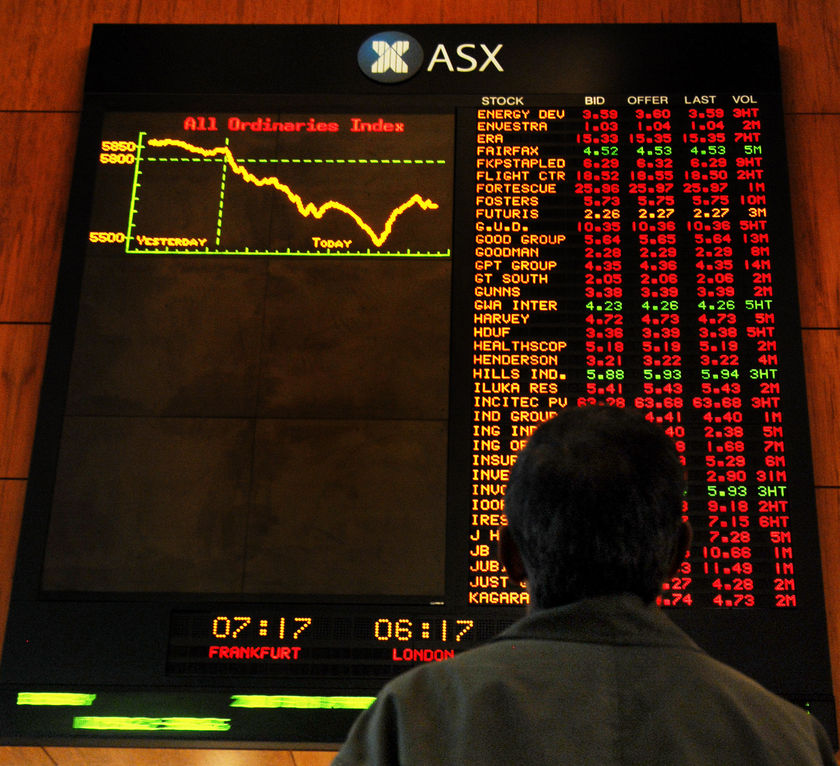
Benchmark gauges in Hong Kong, Taiwan and Indonesia headed for bear markets, dragging down the MSCI Asia Pacific Index by 2.4 percent at 2:34 p.m. in Tokyo. Standard & Poor’s 500 Index futures dropped 0.5 percent after the gauge fell the most in 18 months. Gold is set for its biggest weekly advance since January as the selloff in emerging markets spreads. U.S. oil headed for an eighth straight weekly slide, its longest streak since 1986.
“We’ve been expecting a correction and it looks like we’re getting one,” said Mark Lister, head of private wealth research at Craigs Investment Partners Ltd. in Wellington, which manages about $7.2 billion. “The S&P had held up, now it’s back in negative territory. The whole world’s looking a little bit sad. China still looks really worrying on a number of fronts.”
China’s decision to devalue its currency amid slowing growth and the prospect of higher U.S. interest rates has spurred a wave of selling across emerging markets and commodities. The first read on Chinese economic activity in August added to concern that the slowdown in global growth is deepening, boosting the appeal of haven assets such as gold, the yen and sovereign bonds.
Oil Drops
The MSCI Asia Pacific Index is heading for its biggest weekly loss since 2011. Japan’s Topix index slid the most since July 8 on Friday and the Kospi gauge in Seoul set for its worst week since May 2012. The MSCI All-Country World Index has lost 3.1 percent this week.
Hong Kong’s Hang Seng Index dropped 2.3 percent, taking declines since an April high beyond 20 percent. Taiwan’s benchmark gauge dropped 2.7 percent to finish in a bear market and the Jakarta Composite Index slid 2.1 percent.
The Shanghai Composite Index slumped 3 percent, taking the week’s loss beyond 10 percent. The gauge briefly erased all its gains since the government began efforts to prop up the market in July.
About $2.2 trillion was wiped from the value of global stocks in the first four days of the week. The S&P 500 slipped out of the 70-point trading range it has been stuck in since March, falling below 2,040 to as low as 2,035.73 on Thursday. It closed below its 200-day moving average for the first time since July 9.
Fed Bets
The Federal Reserve will decide whether to raise interest rates for the first time since 2006 on Sept. 18. Bets on liftoff taking place next month have been wound back since the last meeting as oil slumped, China cut the value of its currency and the Fed’s own minutes showed concern among policymakers about the pace of inflation.
The decision is “only four weeks away and the world’s looking pretty vulnerable,” said Stephen Halmarick, Sydney- based head of economic and market research at Colonial First State Investment Ltd., which oversees about $150 billion. “If they delay you might see some support coming through to U.S. markets because then the dollar probably comes down a bit from where it is now and some of those pressure points may be relieved, at least in the short term.”
The bloodletting among emerging-market currencies shows no signs of abating, with a measure of 20 developing economy currencies set to extend its longest streak of weekly losses since 2000 after Vietnam and Kazakhstan devalued. The Korean won weakened 0.8 percent Friday, its fifth drop in six days, while Malaysia’s ringgit sank 1.3 percent to a new 17-year low.
China’s yuan fell the most in more than a week. The preliminary Purchasing Managers’ Index from Caixin Media and Markit Economics was at 47.1 for August. That compared with a median estimate of 48.2 and the final reading of 47.8 the previous month. Numbers below 50 indicate contraction.
Funds Dumped
Redemptions from emerging-market funds picked up in the week ended Aug. 19, EPFR Global said, citing preliminary data. Net outflows from bond funds climbed to the highest level since the first quarter of 2014 and those from equities at a one-month high. China bond funds had record redemptions and more than $4 billion was pulled from Asia excluding Japan stock funds.
West Texas Intermediate crude fell 1.3 percent to $40.77 a barrel. Copper fell 0.9 percent and is on its way to a seventh straight weekly loss. The Bloomberg Commodity Index slipped 0.3 percent, taking the week’s loss to 1.5 percent. The gauge has dropped 13 percent since the end of June and on Wednesday closed at a 13-year low.
Gold climbed a fifth straight day, while Australian bonds advanced. The yield on 10-year Treasuries slipped two basis points to 2.05 percent. The rate on benchmark securities has retreated 15 basis points this week, the most since March.
The yen strengthened to 122.88 per dollar, the strongest since July 10.
Here we are to serve you with news right now. It does not cost much, but worth your attention.
Choose to support open, independent, quality journalism and subscribe on a monthly basis.
By subscribing to our online newspaper, you can have full digital access to all news, analysis, and much more.
You can also follow AzerNEWS on Twitter @AzerNewsAz or Facebook @AzerNewsNewspaper
Thank you!