
Threat of deflation still stalks the euro zone
By Bloomberg View
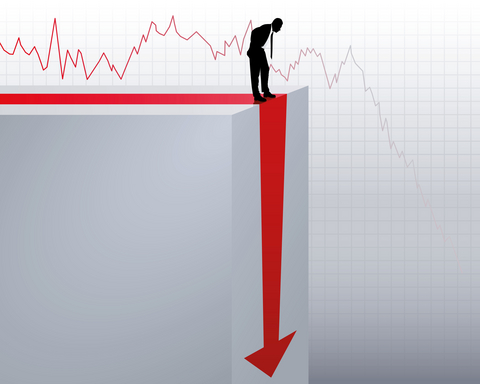
The euro zone is poised to record its ninth quarter of economic growth, with economists predicting that gross domestic product figures scheduled for release Friday will show the economy expanded by 0.4 percent in the second three months of the year. Unfortunately for the European Central Bank, that revival isn't dispelling the risk that disinflation will worsen into deflation.
QuickTakeThe Trouble With Falling Prices
For reasons that future historians of economic policy may struggle to unravel, modern central bankers have decided that the Goldilocks rate of acceleration for consumer prices to run not too hot, not too cold, is 2 percent. And while forecasts compiled by Bloomberg suggest that economists expect the U.S. to achieve that state of inflationary nirvana in the first three months of next year, prices in the euro region are seen languishing at 1.5 percent in the first quarter of 2016 and then decelerating:
That outlook helps to explain why almost a quarter of the market for euro-zone government bonds has negative yields, meaning investors are paying for the privilege of keeping their money in $1.5 trillion of securities, according to data compiled by Bloomberg reporters Lukanyo Mnyanda and David Goodman. It has been almost a year, for example, since German two-year notes paid more than zero:
The disparity in the inflation outlooks for the euro region and the U.S. is also driving a divergence in borrowing costs. As Bloomberg strategist Simon Ballard points out, investment-grade borrowers are paying more to borrow dollars than euros, and the gap has reached its widest level since at least December 2009:
All of this is terrible news if you're Mario Draghi and your job as head of the ECB is to reinforce the improvement in the growth outlook by pointing to consumer price inflation heading back to your 2 percent target. What's worse is that Draghi's favorite measure of future inflation expectations -- the five-year rate on inflation swaps in five years' time -- has been ticking lower in the past few weeks, after seeming to have reached a bottom at the start of the year:
The economist Paul Krugman has argued that even though deflation -- commonly defined as a sustained period of falling prices -- is relatively rare, a "price stability trap" can fool central banks into thinking all is well just because prices aren't actually declining:
As the inflation rate goes toward zero, it seems to become 'sticky': In the modern world, rapid deflation doesn't happen, and in fact slight positive inflation often persists in the face of an obviously depressed economy.
Consumer price gains have averaged just 0.1 percent so far this year in the euro bloc, and July saw a gain of just 0.2 percent after the first three months of the year all posted price declines. So while Friday's growth figures will show the euro region has successfully dragged itself out of recession, the inflation backdrop suggests there's still work to be done to dispel the threat of deflation.
Here we are to serve you with news right now. It does not cost much, but worth your attention.
Choose to support open, independent, quality journalism and subscribe on a monthly basis.
By subscribing to our online newspaper, you can have full digital access to all news, analysis, and much more.
You can also follow AzerNEWS on Twitter @AzerNewsAz or Facebook @AzerNewsNewspaper
Thank you!