
FIFA scandal unearths Brazilian power broker atop soccer fortune
By Bloomberg
Jose Hawilla’s power over Brazilian soccer seemed unbeatable, with O Globo, Rio de Janeiro’s largest newspaper, dubbing him the “owner of Brazilian soccer.”
For decades, he reaped profits through his marketing firm Traffic Group by brokering broadcasting agreements for Latin America’s biggest tournaments and sponsorship deals between Brazil’s national team and companies such as Nike Inc. and Coca- Cola Co. He also took a cut of earnings made by young players he groomed in Brazil who went to play in Europe, and owned soccer teams on three continents.
“It’s no secret that the buying and selling of media rights for tournaments is where the most money changes hands,” said Davi Bertoncello, president of Hello Group, which does market research intelligence and sports marketing. “Hawilla was owner of the company that had the transmission rights for the biggest tournaments, which is why he was one of the most important personalities in the sport.”
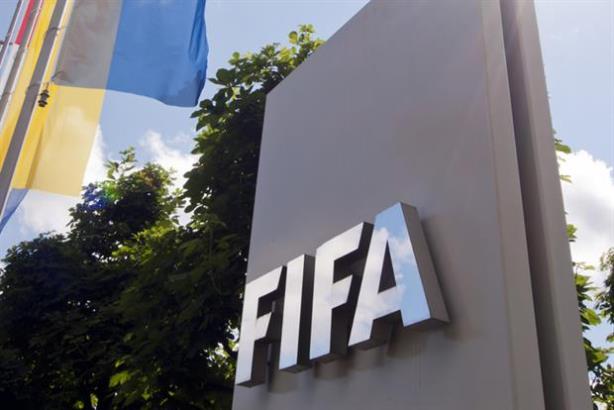
Now the 71-year-old Hawilla is a main character in the FIFA scandal involving 14 top global soccer officials and executives. He’s detailed to U.S. prosecutors how he was at the center of more than $100 million in bribes to secure commercial rights, and agreed to forfeit $151 million. He’ll also have to sell Traffic, according to court documents.
Beating Pele
Hawilla, the son of dairy plant owners from Sao Paulo state, started his empire with 30 hot-dog carts. He built that business after being suspended from his job as a sports reporter for Brazilian network TV Globo.
In 1980, he bought Traffic, a company that sold advertising for bus stops. Seven years later, he secured a contract for marketing of the TV rights and sponsorship for one of the major international soccer competitions, Copa America, by brokering a deal with the association that manages Brazil’s national soccer team.
His soccer dominance even surpassed Pele, Brazil’s three- time World Cup champion, who lost a broadcasting contract bid for a Brazilian tournament in the 1990s to Traffic.
In the latest phase of his career, Hawilla became a resource for prosecutors in their investigation, wearing a wire tap during a meeting in Miami in May where bribes were allegedly agreed upon for the Copa America tournament in Chile this year, court documents show.
Hawilla’s lawyers in the U.S. and Brazil didn’t respond to requests for comment by phone and e-mail. His Brazilian lawyer Jose Luis Oliveira Lima has said that Hawilla remains free in the U.S. after pleading guilty and is cooperating with the investigation.
2001 Inquiry
Hawilla turned some of his commissions for sponsorships and broadcast deals into bribes to soccer officials in Brazil and elsewhere, he told investigators in his confession announced last week by the U.S. Department of Justice. He was one of the four convicted defendants in the 47-count indictment released on May 27 against nine officials and five executives for racketeering, wire fraud and money laundering conspiracies, among other allegations.
The investigation comes after growing resentment in Brazil over corruption surrounding the 2014 World Cup. Outrage over the use of public money for World Cup stadiums fueled the biggest street protests in Brazil in two decades in 2013. An investigation into a kickback scandal at state oil company Petrobras -- which involved companies that built World Cup stadiums -- has kept pressure on President Dilma Rousseff with protests and calls for impeachment.
The indictment by U.S. prosecutors wasn’t the first time authorities focused on Hawilla. He was called in for questioning in Brazil during a 2001 congressional inquiry into the body that oversaw the national team, the CBF. The inquiry didn’t lead to any charges.
During the questioning, it was disclosed that his company had annual revenue of $262 million at the time, and that Hawilla had negotiated a 20 percent cut on the Brazilian team’s Coca- Cola contract in 1994, and a 5 percent commission on the team’s $369 million, 14-year sponsorship deal with Nike in 1996. Hawilla paid half the money he made on a 1996 sportswear sponsorship to an unnamed CBF official, according to court documents. Coca-Cola and Nike weren’t named in the indictment. Spokesmen for the companies didn’t immediately respond to requests for comment.
When lawmakers asked him in 2001 how he profited while Brazil’s national team suffered financially, he said his Brazil operations weren’t that lucrative -- 98 percent of his revenue came from other countries.
TV Stations
“We are not rich and neither is our company,” Hawilla said at the time. “The contract with CBF was very important for our company internationally. While it wasn’t such a good contract financially, it was very important for us institutionally, because Brazilian soccer, we all know, is world famous.”
A spokesman for CBF didn’t immediately respond to a request for comment.
Based on the estimated revenue of Traffic, his real estate interests and his cash position, Hawilla may have been a billionaire at his peak -- at least in Brazilian reais. The Justice Department can go after his other assets if he can’t sell Traffic for the target price of $126.7 million, according to court documents.
In Sao Jose do Rio Preto, his hometown, Hawilla’s family owns the Georgina Park real estate development and the Quinta do Golfe residential development, each worth hundreds of millions of reais, according to local media. His son Rafael, the director for the developer of Georgina Park, didn’t respond to a phone request for comment.
Hawilla also owns TV Tem, a network of TV stations in Sao Paulo state affiliated with Globo, the media holding of the billionaire Marinho family.
Young Talent
In 2005, Hawilla began a new venture, Desportivo Brasil, which grooms young talent for professional clubs in Brazil and abroad, with Traffic getting a cut of their future pay. Under his agreement with U.S. prosecutors, Hawilla will have to sell Desportivo Brasil along with Traffic.
Not all is lost. If he can sell Traffic for more than the $126.7 million target price, the Justice Department will let him keep 25 percent of the amount above that value.
The owner of Brazilian soccer always gets his cut.
Here we are to serve you with news right now. It does not cost much, but worth your attention.
Choose to support open, independent, quality journalism and subscribe on a monthly basis.
By subscribing to our online newspaper, you can have full digital access to all news, analysis, and much more.
You can also follow AzerNEWS on Twitter @AzerNewsAz or Facebook @AzerNewsNewspaper
Thank you!