
Ericsson, Qualcomm, multi screen media: intellectual property
By Bloomberg
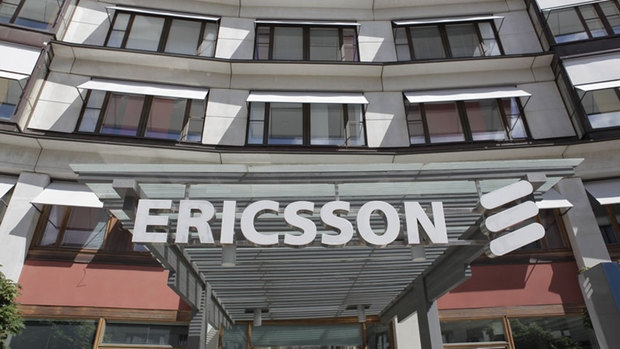
Ericsson AB said it sued Apple Inc. in three countries as it ratcheted up a global licensing battle.
The suits in Germany, the U.K. and the Netherlands add to U.S. filings seeking a patent-licensing agreement for technologies fundamental to the way mobile devices communicate and for intellectual property related to user interfaces, batteries and operating systems. Apple continues to sell products globally without a license from Ericsson, the wireless- network maker said May 8.
“Everybody needs to take a license for the technologies we are providing to them,” Kasim Alfalahi, Ericsson’s chief intellectual-property officer, said in a phone interview from the company’s Stockholm headquarters. “It’s a very serious thing, regardless of who the company is.”
The issue has split the technology industry between those who have created some of the basic ways phones operate and those that use the technology in complex devices.
Apple had been paying royalties to Ericsson before a license expired in January. When talks over renewal failed, the companies sued each other, seeking court rulings on whether Ericsson’s royalty demands on fundamental technology were fair and reasonable.
An Apple spokeswoman declined to comment on the matter and referred to a January statement that the company’s “always been willing to pay a fair price to secure the rights,” and that legal action was needed to help strike an agreement with Ericsson.
In its complaint against Ericsson in January, Apple said the price of today’s electronics is driven by things like design, operating system and touch capabilities that are unique to each product.
Ericsson offered to have an arbitrator determine the proper rates, while Apple refused to promise that it would abide by any decision, Alfalahi said.
Qualcomm Isn’t Being Probed by EU Over Key Industry Patents
Qualcomm Inc., a maker of digital wireless communication equipment, isn’t being probed by European Union antitrust regulators over possible abuses of key industry patents, the European Commission and the company said in separate statements.
The commission “is currently not investigating a possible abuse by Qualcomm with regard to the licensing of standard essential patents,” the Brussels-based authority said in e- mailed statement
The commission has confirmed that “there is no European investigation relating to Qualcomm’s standard essential patents,” the San Diego-based company said in separate e-mailed statement Friday.
South Korea’s antitrust watchdog agency said May 6 that it would look at possible patent abuse by Qualcomm Inc., relating to licensing fees for key patents covering smart phones.
For more patent news, click here.
Copyright
Multi Screen Media Gets Order Blocking Access to ‘Piku’ Film
Multi Screen Media Pvt Ltd., a Mumbai-based entertainment company, persuaded the Delhi High Court to issue orders against 100 defendants to block access to the film “Piku-Motion Se Hi Emotion.”
In its May 1 order, the high court said Multi Screen had made a case that it would suffer irreparable loss if unlicensed and unauthorized exploitation of the film were to continue.
The film’s official release date was May 8.
New York-based Vimeo LLC’s video-sharing website was among those targeted by the complaint. Others included Internet service providers, websites through which unlicensed content is shared, cable operators, 25 unnamed defendants and India’s Ministry of Communication and Information Technology.
According to the court order, the government office was included “for the limited purpose for enabling compliance of the orders passed by this court.”
The case is Multi Screen Media Pvt. Ltd. V. Www.Vomeon.com, s-34, In the High Court of Delhi(New Delhi).
For more copyright news, click here.
Trademark
Whyte & Mackay Given Go-Ahead to Register ‘Jura Origin’ Mark
Whyte & Mackay Ltd., a Glasgow, Scotland-based producer of whisky, won a U.K. court ruling permitting it to register “Jura Origin” as a trademark.
In a May 6 ruling by Judge Richard Arnold, the U.K.’s High Court Chancery Division said there was little possibility of consumer confusion between “Jura Origin” and the name of Origin Wine Ltd. of Banbury, England.
Because Jura is an island in the Southern Hebrides, the average consumer would be likely to understand that “Jura Origin” functioned as an indicator of the source of the whisky, the court said.
There’s a low level of similarity between White & Mackay’s product and the wines sold by Origin, the court said.
The judge also found that the word “origin” doesn’t have an independent distinctive role in the “Jura Origin” trademark, and authorized White & Mackay to register the phrase as a U.K. trademark. Jura Origin Scotch Whisky sells for 35 pounds ($54) a bottle, according to the company website.
The case is White & Mackay Ltd. v. Origin Wine U.K. Ltd., [2015] EWHC 1271 (Ch), High Court of Justice, Chancery Division.
For more trademark news, click here.
Trade Secrets/Industrial Espionage
Maryland Law Firm Seeks Dismissal of Trade-Secret Theft Claims
Joseph, Greenwald & Laake PA, a Greenbelt, Maryland, law firm, asked a federal judge to dismiss a trade-secret misappropriation and copyright infringement suit filed against it by companies owned by the estranged spouse of a client it’s representing in a divorce action.
In a May 5 filing, the firm said it couldn’t have taken trade secrets belonging to companies owned by two companies based in Lanham, Maryland, because the information at issue didn’t fit the legal definition of trade secrets and because the information wasn’t acquired unlawfully.
Addressing the copyright claim, the firm said that the use of copyrighted materials for litigation purposes falls within the law’s “fair use” exceptions.
The firm also asked the federal court to decline to hear the case, saying it was all part of a domestic dispute properly belonging in Maryland state court.
At issue is a computer program for a travel-management system developed by the company owner. The firm said in its court filing that Aldmyr Systems Inc. and Zegato Solutions Inc. had failed to state claims for trade-secret misappropriation and copyright infringement for which the court could offer relief.
The firm asked the court to dismiss the case with prejudice, which would bar the two companies from re-filing their complaint.
In the initial court filing, the two companies claim that the firm’s divorce client “gleefully” uploaded the program at issue to the firm’s computers without authorization.
The case is Aldmyr Systems Inc. v. Joseph, Greenwald & Laake PA, 8:15-cv-00864, U.S. District Court, District of Maryland (Greenbelt).
Here we are to serve you with news right now. It does not cost much, but worth your attention.
Choose to support open, independent, quality journalism and subscribe on a monthly basis.
By subscribing to our online newspaper, you can have full digital access to all news, analysis, and much more.
You can also follow AzerNEWS on Twitter @AzerNewsAz or Facebook @AzerNewsNewspaper
Thank you!