
Putin can't help Tsipras get debt flexibility from Europe: View
By Bloomberg View
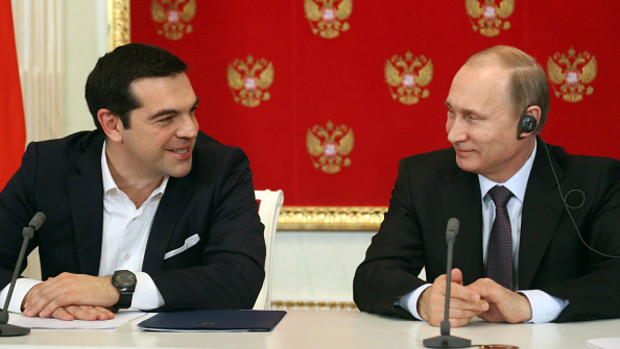
Greek Prime Minister Alexis Tsipras has returned from a journey to Moscow that he says wasn't about asking for financial aid and that Russian President Vladimir Putin says wasn't an attempt on his part to exploit Europe's divisions. Both claims should be taken with a Siberian-sized pinch of salt.
Tsipras's trip was a ploy for leverage in his effort to persuade the European Union and the International Monetary Fund to soften the terms of their loans to Greece. If the EU doesn't relent, Tsipras wanted to show, Greece can one day find other benefactors. And, by the way, as an EU member, it can veto the renewal of economic sanctions on Russia when these come up in July.
As much as Greek Finance Minister Yanis Varoufakis eloquently denied any such linkage in an interview Thursday with Bloomberg Television, the message was clear.
Putin, for his part, has a demonstrated interest in dividing Europe as he seeks to end its sanctions over the war in Ukraine. He's been working assiduously to persuade wavering countries such as Hungary, the Czech Republic, Bulgaria and now Greece that cooperating with Russia brings rewards, typically in the form of investments in energy infrastructure.
If Putin succeeds in dividing the EU, as he might, Russia stands to benefit. But Tsipras's gambit, if pursued, would be dangerous to Greece. It looks like another in a series of combative, amateurish moves Tsipras has made toward Greece's creditors -- including his government's recent demand for $300 billion in war reparations from Germany.
This approach undermines Tsipras's legitimate argument that the German-led bailout strategy for Greece has failed and needs to change. Winning this debate calls for serious diplomacy, not theatrics. To solve Greece's financial crunch at the negotiating table, Tsipras needs to bring clear proposals for economic reforms that are capable of restoring growth. Once he does that, he may find he has more allies than he thought in his effort to stop the downward spiral of austerity -- from Paris to the European Central Bank in Frankfurt.
Russia, meanwhile, can be a friend to Greece, too. The two countries have deep historical and cultural ties, and Tsipras has every reason to encourage Russian tourism and investment. But Russia can't replace the EU as an export market or as an anchor for economic and political stability in the Balkans. Nor can Russia guarantee Greece's security as the North Atlantic Treaty Organization does: Greece remains on alert with Turkey over disputes from Cyprus to the Aegean Sea.
Greece's payment of a 450 million-euro installment on a loan to the IMF, an ECB decision to further raise its cap on loans to Greek banks, and an assurance from Varoufakis that he's ready to work "within the European family" all suggest it's possible to reach agreement on further debt relief for Greece. But it will require a more constructive approach than Tsipras took with his ill-timed trip to Moscow.
Here we are to serve you with news right now. It does not cost much, but worth your attention.
Choose to support open, independent, quality journalism and subscribe on a monthly basis.
By subscribing to our online newspaper, you can have full digital access to all news, analysis, and much more.
You can also follow AzerNEWS on Twitter @AzerNewsAz or Facebook @AzerNewsNewspaper
Thank you!