
Iran’s middle class awakens on prospect of sanctions relief
By Bloomberg
One of the first things Leila Daneshvar did after Iran agreed to a framework for a nuclear accord was to contact European suppliers that had shunned her company because of the sanctions imposed on the Islamic Republic.
Trade restrictions had forced Daneshvar to rely on Chinese suppliers to make the medical rehabilitation equipment her Tehran-based company sells. Sanctions that cut off Iranian banks from the global financial system meant she had to fly with cash to Beijing and Shanghai to pay suppliers in person.
Now European suppliers say her requests are under consideration. “Finally the gates open,” she says. “I know it’s not going to be immediately all right, but we’re happy that things are moving forward.”
Daneshvar is a member of Iran’s much-battered middle class, which has been waiting for sanctions to end so they can rebuild careers and businesses at home. After the April 2 agreement, thousands took to the streets to celebrate what many see as a milestone in the quest to end the country’s pariah status. A survey by the Islamic Republic News Agency said 82.6 percent of Iranians expressed “optimism” and “happiness” over the accord.
Stocks in Tehran rallied 3.2 percent after the announcement, even though negotiators aren’t expected to reach a final agreement until June to curb Iran’s nuclear program in exchange for easing sanctions. The deal faces opposition from Israel, conservatives in the U.S., and some hard-liners at home.
Justice Shares
The previous government, led by President Mahmoud Ahmadinejad, focused on giving assistance to poor Iranians to earn their political allegiance. His government distributed stock in privatized firms, dubbed justice shares, to low-income households and the families of those killed in the war with Iraq in the 1980s.
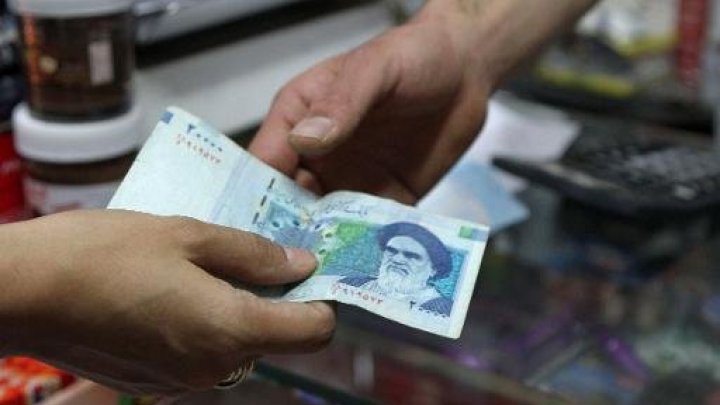
In 2012 and 2013, Ahmadinejad’s last years in office, the rial, Iran’s currency, lost more than two-thirds of its value against the dollar as families turned to gold and foreign currency to safeguard their savings.
The middle-class’s purchasing power was hurt by the “highly inflationary environment and the erosion of the rial’s value,” Toby Iles, a senior Middle East analyst at the Economist Intelligence Unit, said in a phone interview from Singapore on Wednesday.
The administration of President Hassan Rouhani has stabilized the currency and reduced inflation, which had accelerated to more than 40 percent under Ahmadinejad, to 15 percent. That’s still the second-highest in the Middle East after Sudan, International Monetary Fund data show. As the economy emerges from recession, growth in non-oil industries remains well below the level needed to create enough jobs.
Dollar Demand
In downtown Tehran, foreign-exchange traders on the unregulated market said the framework accord has yet to weaken demand for dollars as customers wait to see what negotiations yield in June. “That’s when you know it’s a deal and not an understanding,” says Khosrow Abdi, a trader.
Private manufacturers and importers have been squeezed hard by the sanctions, which increase transportation, insurance, and transaction costs: Unlike state-owned companies, they have no government aid to fall back on.
Many university graduates have been leaving the country instead of seeking careers at home. Tehran’s Enghelab Square daily becomes a market where fixers prepare and translate the documents needed to move abroad. Those who study overseas often don’t come home. A 2012 survey by the Washington-based National Science Foundation said 89 percent of Iranian doctoral students remained in the U.S. after graduation.
Working Overtime
Municipal worker Ali Reza says it’s a challenge to make ends meet on his monthly income of 14 million rials (about $500), half of which he earns working overtime. “I control the household expenses, and it’s been really bad at times,” says his wife, Masoumeh.
A final nuclear accord would gradually ease economic sanctions, paving the way for increased foreign investments in the energy-rich country.
The lifting of sanctions would “help both general economic activity, which the middle-class might be best positioned to take advantage of, and trading that would help the small-medium size businesses,” said Iles of the Economist Intelligence Unit.
Mehdi Karbasian, Iran’s deputy minister for industry, mines and trade, said foreign investors are already looking for opportunities.
“Many, many foreigners have contacted me; they are ready to jump in,” he said in an interview in a steel factory in the central city of Yazd. E-mails have already come from France, Germany, Belgium, the U.K., Australia and Canada, he said.
Shahnaz Khonsari, an art gallery owner in Tehran, says the mood among people has changed.
“Difficulties and lack of hope in the future had made Iranians very frustrated,” she said. Now “a beautiful feeling of optimism is palpable in Tehran. You see people smiling at one another and saying, ‘Hey! It did happen!’ ”
Here we are to serve you with news right now. It does not cost much, but worth your attention.
Choose to support open, independent, quality journalism and subscribe on a monthly basis.
By subscribing to our online newspaper, you can have full digital access to all news, analysis, and much more.
You can also follow AzerNEWS on Twitter @AzerNewsAz or Facebook @AzerNewsNewspaper
Thank you!