
Ruble rises as brent rebound spurs Russia stocks after Iran deal
By Bloomberg
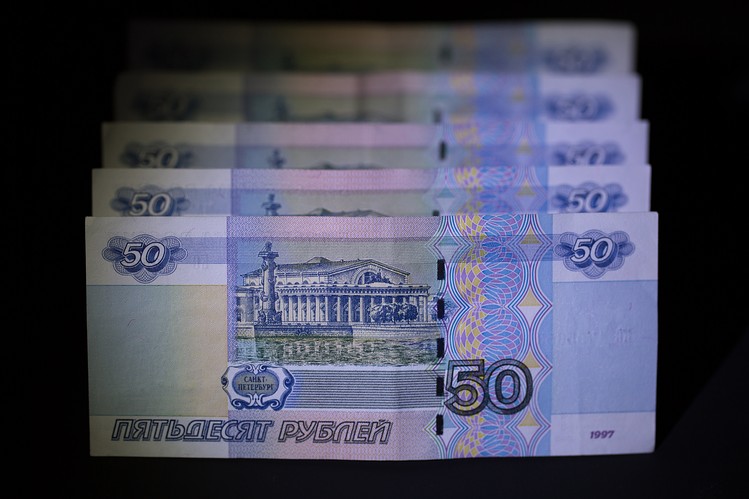
The Russian ruble rose and stocks headed for their longest stretch of advances in five months as climbing Brent crude prices boosted appetite for assets of the world’s biggest energy exporter.
The currency jumped for a fourth day versus the dollar, taking the gain this year to 7.3 percent, the best performance among its emerging-market peers. The dollar-denominated stock index was poised for the highest close in four months. Brent, the oil grade traders use to price Russia’s main export blend, added 2.7 percent to $56.45 per barrel on Monday.
While Russian assets moved out of step with oil in the first quarter, the Micex, ruble and bonds have tracked the commodity in April. A cease-fire that’s holding in Ukraine and Russian interest-rate cuts totaling 300 basis points have also boosted the allure of the country’s securities. Brent rose as much as 3.6 percent on Monday as a nuclear accord between Iran and world powers left the timing of increased crude supplies from the OPEC member uncertain.
“Oil is the key driver for the Russian market today,” Anvar Gilyazitdinov, who manages $10 million at Rye, Man & Gor in Moscow, said by phone. “Stocks that have been particularly hit over the past few weeks are rebounding.”
The dollar-denominated RTS stock index jumped as much as 2.1 percent on Monday, the highest intraday level since Dec. 4, before trading 1.8 percent higher as of 12:12 p.m. in Moscow. The Micex increased 0.1 percent. The ruble is up 3.2 percent so far this month, on par with the 2.3 percent gain in crude.
Bonds Rise
Five-year government bonds rose, cutting the yield eight basis points to 12.07 percent. Bond yields are still among the highest in emerging markets and Morgan Stanley warned last week that the ruble’s rally poses a threat to Russia’s budget in a year when analysts are projecting the widest fiscal-deficit ratio since 2010.
The bank projects Russia’s economy will contract 5.6 percent in 2015, weighed down by sanctions over the conflict in Ukraine and the 48 percent slide in Brent crude in the past 12 months.
“Oil’s gains are spurring interest for OFZs and bonds are currently pricing in a rate cut of about 2 percent,” Konstantin Artemov, a money manager at Raiffeisen Capital in Moscow, said in e-mailed comments.
Even with the rate reductions, the ruble offered an 8.7 percent carry-trade return in the first three months of the year, the biggest in the world. In a carry trade, investors borrow where rates are low and buy currencies in countries where they are high.
Here we are to serve you with news right now. It does not cost much, but worth your attention.
Choose to support open, independent, quality journalism and subscribe on a monthly basis.
By subscribing to our online newspaper, you can have full digital access to all news, analysis, and much more.
You can also follow AzerNEWS on Twitter @AzerNewsAz or Facebook @AzerNewsNewspaper
Thank you!